
Textile Water Treatment: Water Treatment Solutions for the Textile Industry
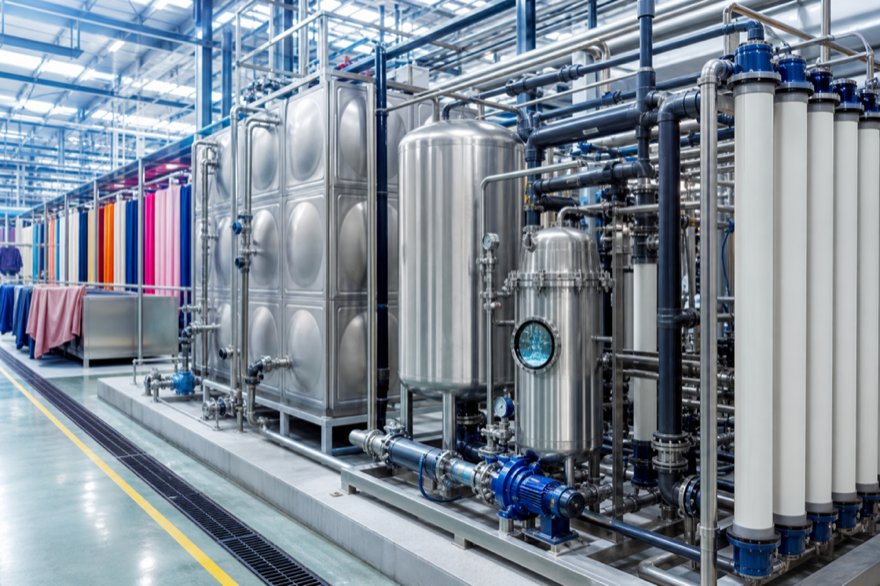
Textile water treatment is a water treatment system designed to meet the needs of the textile industry, from production process water, boiler water, and cooling water to wastewater treatment. The textile industry uses large volumes of water for washing, dyeing, coloring, printing, bleaching, finishing, and cleaning production areas.
Unsuitable water quality can affect production results, cause inconsistent fabric colors, create scale on machinery, increase chemical use, and raise the risk of environmental pollution. Textile water treatment is therefore essential for maintaining product quality, operational efficiency, and compliance with environmental standards.
Why Does the Textile Industry Need Textile Water Treatment?
The textile industry has complex water-use characteristics. Raw water may come from groundwater, surface water, municipal supplies, or other sources with different quality profiles. This water may contain silt, iron, manganese, hardness, microorganisms, color, odors, and certain organic substances.
In textile production, water quality significantly affects the finished fabric. Water with high hardness can interfere with dyeing and produce uneven colors. Iron and manganese can stain fabrics, while suspended particles can clog nozzles, damage equipment, and reduce production efficiency.
In addition to requiring clean water, the textile industry generates wastewater from dyeing, washing, printing, bleaching, and finishing. Textile wastewater typically contains color, surfactants, process chemicals, COD, BOD, TSS, and other pollutants that must be treated before discharge or reuse.
Main Objectives of Textile Water Treatment
Textile water treatment ensures that water used in production has stable quality. It also helps reduce the pollution load from textile wastewater.
Its main objectives include:
- Maintaining production process water quality.
- Reducing the risk of stains and uneven fabric colors.
- Preventing scale in boilers, pipes, heat exchangers, and production machinery.
- Reducing excessive chemical consumption.
- Lowering pollutant levels in wastewater.
- Supporting water reuse and recycling systems.
- Helping the industry meet environmental quality standards.
- Reducing long-term operating and maintenance costs.
Stages in a Textile Water Treatment System
A textile water treatment system is generally designed according to raw-water quality, production capacity, process requirements, and the targeted water quality. The following stages are commonly used in water treatment for the textile industry.
1. Pretreatment
Pretreatment is the initial stage for removing coarse particles, silt, sand, turbidity, and other physical contaminants. It is critical for protecting downstream systems such as softeners, reverse osmosis, UV sterilizers, and membrane systems.
Common pretreatment units include multimedia filters, sand filters, carbon filters, and cartridge filters. For high-volume operations, the filtration system must be designed for stable long-term performance.
For further reference, read our article about filtration systems for high-volume operations, which discusses the importance of filtration in high-capacity water treatment systems.
2. Softening to Reduce Hardness
Water hardness is a common problem in the textile industry. High concentrations of calcium and magnesium can cause scale in boilers, pipes, heat exchangers, and production machinery.
In dyeing processes, hardness can also interfere with chemical reactions and affect fabric color quality. A softener is therefore used to reduce hardness and make the water more suitable for production.
With the right softening system, textile factories can reduce scaling risks, maintain equipment efficiency, and lower maintenance costs.
3. Reverse Osmosis for More Stable Water Quality
Reverse osmosis, or RO, is used when the textile industry requires higher-quality water. RO systems can reduce TDS, dissolved salts, and certain contaminants that may disrupt production.
RO is commonly used for boiler water, specific dyeing processes, washing, and production processes that require consistent water quality. In some cases, RO can also be combined with a water reuse system to reduce the consumption of new raw water.
4. UV Sterilizers to Control Microorganisms
Microorganisms in water can cause odors, biofilm, and problems in piping systems. In some textile processes, microorganisms can also affect production quality.
UV sterilizers can provide disinfection without excessive chemical addition. This technology uses ultraviolet light to help inactivate certain microorganisms in the water.
To learn more about UV use in water treatment systems, read our article on ultraviolet technology for water treatment.
5. Wastewater Treatment for Textile Effluent
In addition to clean-water treatment, textile water treatment also covers wastewater. Textile effluent commonly has intense color, high organic content, process chemicals, surfactants, and suspended solids.
A wastewater treatment system for the textile industry may include coagulation-flocculation, sedimentation, biological treatment, advanced oxidation, filtration, carbon treatment, membrane filtration, and sludge handling.
The system design must be tailored to wastewater characteristics, production capacity, discharge standards, and the potential reuse of treated water.
How Textile Water Treatment Supports Operational Efficiency
Textile water treatment does more than produce quality water; it also improves operational efficiency. Water that does not meet the required standard can cause scaling, corrosion, clogging, production downtime, and higher maintenance costs.
Similar trade-offs apply to the treatment system itself. Read our article on how much power is consumed for water treatment to understand the energy side of running large-scale water treatment systems.
In the textile industry, good water quality can help stabilize colors, reduce product defects, extend equipment life, and save operating costs.
Water Parameters to Consider
Raw water and wastewater quality must be analyzed before designing a textile water treatment system. The analysis results provide the basis for selecting the most appropriate technology.
Commonly evaluated water parameters include:
- pH
- TDS
- TSS
- Hardness
- Iron
- Manganese
- Turbidity
- Color
- COD
- BOD
- Chloride
- Sulfate
- Conductivity
- Microbiological content
For textile wastewater, color, COD, BOD, TSS, pH, and process chemicals are key concerns. Laboratory testing is essential to ensure that the system design matches actual site conditions.
Benefits of Textile Water Treatment for the Textile Industry
Implementing textile water treatment provides many benefits for factory operations:
- Maintains process water quality for more consistent production.
- Reduces the risk of stains and uneven fabric colors.
- Protects boilers, pipes, nozzles, valves, and production machinery.
- Reduces maintenance costs and downtime.
- Helps meet wastewater quality standards.
- Supports the reuse of treated water.
- Reduces new raw-water consumption.
- Improves chemical-use efficiency.
- Supports corporate sustainability and ESG programs.
- Improves compliance with environmental regulations.
Recommended Textile Water Treatment System
Not every textile factory needs the same system. Each facility has different water sources, production capacities, processes, chemicals, and target water quality.
In general, a textile water treatment system may consist of:
- Raw water tank
- Chemical dosing
- Multimedia filter
- Activated carbon filter
- Softener
- Cartridge filter
- Reverse osmosis
- UV sterilizer
- Wastewater treatment plant
- Water recycling system
- Sludge handling system
- Monitoring and automation system
These technologies can be combined according to the factory’s needs. With the right design, the textile industry can obtain stable process water, better-controlled wastewater, and more efficient operations.
Textile Water Treatment and Sustainability
Sustainability is a major concern in the modern textile industry. Many companies are focusing on water conservation, waste reduction, energy efficiency, and more responsible environmental management.
Textile water treatment can help companies reduce their dependence on raw water, reuse treated water, and lower their pollution load. A well-designed system can also support environmental audits, production standards, and corporate sustainability targets.
Conclusion
Textile water treatment is an essential solution for textile companies seeking to maintain production quality, improve efficiency, reduce the risk of equipment damage, and manage liquid waste more effectively.
By combining pretreatment, softening, reverse osmosis, UV sterilization, filtration, and wastewater treatment, textile factories can operate more consistently and sustainably.
Each system must be designed according to raw-water quality, wastewater characteristics, production capacity, and targeted water quality. Technical consultation is therefore essential before selecting the most appropriate technology.
Discuss Your Textile Water Treatment Requirements
Water.co.id provides a range of water treatment application solutions for industrial needs, including textile, manufacturing, power generation, food and beverage, pharmaceutical, and other sectors.
Explore our complete solutions here: