
Membranes
Industrial Reverse Osmosis Systems Indonesia
Design an industrial reverse osmosis system from water data, flow, recovery, pretreatment, membranes, pressure vessels, automation, and permeate targets.
Reverse Osmosis System
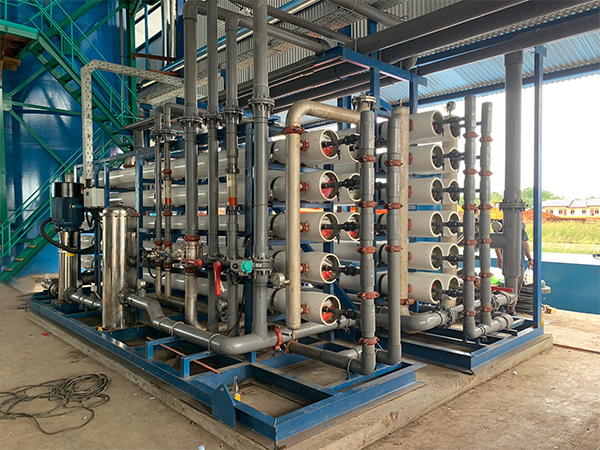
An industrial reverse osmosis system separates feed water into permeate and concentrate by applying pressure across a semipermeable membrane. Reliable design starts with water analysis, flow, and recovery targets, then matches pretreatment, membranes, pressure vessels, pumps, dosing, instruments, and controls. PT Watermart Perkasa supplies these RO components in Indonesia.
Recommended Watermart Products for RO Systems
For an industrial RO system, components must work as a treatment train: RO membranes, Codeline pressure vessels, GreensandPlus for iron and manganese pretreatment, DIONIX ion exchange resin, and valves and controllers for automatic filters. Review the filter-media selection guide before fixing the pretreatment design.
When does RO pretreatment need automatic backwash?
Pretreatment needs automatic backwash when a media filter must be cleaned in a consistent sequence and delayed or incorrect manual operation would create unacceptable risk. AQ Matic valves, stagers, and controllers can sequence service, backwash, rinse, and return to service; selection follows the process diagram, valve count, backwash flow, pressure, control signals, and panel conditions.
| Operating data | Decision it affects | Risk when omitted |
|---|---|---|
| Feed turbidity, iron, manganese, and suspended solids | Type and number of media filtration stages | Faster fouling or an unsuitable medium |
| Service and backwash flow | Vessel diameter, valve size, pump, and drain | An unclean bed or loss of filter media |
| Pressure drop across the filter | Backwash trigger and alarm settings | Operating a blocked filter or washing too often |
| Residual chlorine or oxidant before the membrane | Activated carbon, dosing, and monitoring point | Membrane damage or unstable oxidant control |
| Start, stop, flush, and interlock sequence | Controller, valve sequence, and panel | Water hammer, wrong-way flow, or off-specification feed |
How Reverse Osmosis Works
Reverse osmosis works by utilizing a semipermeable membrane that allows water molecules to pass through while rejecting most dissolved salts, organic compounds, bacteria, and pyrogens. This process occurs when pressure is applied to a highly concentrated solution to force the pure solvent (water) through the semipermeable membrane to the more dilute side.
In an RO system, raw water is pumped at high pressure into the membrane module. This pressure must be sufficient to overcome the natural osmotic pressure, forcing the water through the membrane while retaining contaminants. Purified water (permeate) is collected, while water containing contaminants (concentrate or reject) is discharged or recycled.
RO System Components
- Pre-treatment filter: Removes sediment, chlorine, and other contaminants that can damage the RO membrane. These filters typically use HydroPro or Aqualine filter cartridges.
- RO membrane: The heart of the system, usually made of thin-film composite material. Various options are available such as DuPont Filmtec, CSM, or Toray membranes.
- Pressure vessel: The container that holds the RO membranes and is able to withstand high operating pressures. Codeline and HydroPro provide high-quality pressure vessels.
- High pressure pump: Provides the necessary pressure to overcome osmotic pressure. Pumps from Fluidotech are often used for this application.
- Control system: Regulates system operation and monitors performance parameters. Create Instruments offers reliable control solutions.
- Post-treatment systems: Can include UV, RO water remineralization and pH adjustment, or polishing selected for the final-water target. HydroPro UV can be considered within a treatment train that has been designed and verified.
Reverse Osmosis Applications
Reverse Osmosis systems are used in a variety of applications, including:
Industrial Applications
- Boiler feed water purification: RO removes minerals that can cause scaling and corrosion in boilers, improving efficiency and extending equipment life. These systems often use DuPont Filmtec membranes for optimal performance.
- Semiconductor manufacturing: The electronics industry requires ultrapure water for the production process. The combination of RO with Purolite ion exchange resin can achieve the required purity standards.
- Pharmaceutical production: High-quality water is required for drug formulation and cleaning processes. RO systems with Filmtec membranes and Pentair UV systems ensure compliance with pharmaceutical standards.
- Food and beverage processing: RO is used to purify water used in the production of beverages, sauces and other food products. Pentair membranes are often used in these applications.
- Wastewater treatment and recycling: RO can recover water from industrial waste, reducing clean water consumption and disposal costs. Toray membranes are specifically designed for wastewater recycling applications.
- Electroplating: The electroplating industry requires high-quality water for the metal plating process. Our electroplating-specific solutions combine RO technology with suitable pre-treatment systems.
Commercial Applications
- Hotels and restaurants: RO provides high-quality water for cooking, drinking and ice making. Pentair systems are ideal for these needs.
- Car wash facilities: Mineral-free water prevents stains on vehicles after washing. RO systems with Fleck control valves provide reliable operation.
- Laundry services: Mineral-free water improves detergent efficiency and reduces chemical use. CSM membranes are suitable for this application.
- Hospitals and healthcare facilities: High-quality water is required for equipment sterilization and dialysis. The combination of RO with Wedeco UV systems ensures consistent water quality.
Residential Applications
- Drinking water purification: Undersink RO systems remove harmful contaminants from drinking water. Pentair systems offer a compact and efficient solution.
- Water filtration for the whole house: Whole-house RO systems protect household appliances and provide high-quality water at every tap. Pentair control valves ensure reliable operation.
- Aquarium water treatment: RO removes chlorine and contaminants harmful to fish and aquatic plants. Pentair membranes are ideal for this application.
Advantages of Reverse Osmosis
- Measured rejection: Salt and contaminant rejection depends on membrane model, pressure, temperature, recovery, and feed quality; use model data at the design conditions.
- Controlled water quality: Permeate quality can remain stable when feed stays within the design envelope and pretreatment, monitoring, and cleaning are maintained.
- Separation without regenerant: A membrane does not use resin regenerant, although pretreatment, dosing, and cleaning chemicals may still be required.
- Flexibility: Can be combined with other treatment technologies such as ion exchange or UV systems for optimal results.
- Modular design: Allows for easy expansion of the system according to increased needs.
- Automation: With modern control instruments, the system can operate automatically with minimal intervention.
- Operating-point selection: Compare membranes such as DuPont OMEXELL at the same feed quality, flux, pressure, recovery, and permeate target.
Challenges and Solutions in RO Systems
Membrane Fouling
Membrane fouling (clogging) is a major challenge in RO system operation. It occurs when particles, colloids, minerals, or microorganisms build up on the membrane surface, reducing the performance and lifespan of the membrane.
Solution:
- Proper pre-treatment: Using Clack filtration media or HydroPro filter cartridges to remove suspended particles.
- Anti-scalant: Addition of anti-scaling chemicals to prevent mineral deposition.
- Scheduled cleaning: Use a cleaning protocol and cleaning chemicals selected for the diagnosed foulant and membrane limits.
- Monitoring: Using Create instruments to monitor operating parameters and identify problems early.
Energy Consumption
RO systems require high pressure, which can result in significant energy consumption.
Solution:
- Energy-efficient membranes: Using DuPont Filmtec or Xelect membranes designed for low pressure operation.
- Energy recovery system: Utilizing energy recovery devices to reduce electricity consumption.
- Efficient pumps: Using high-efficiency pumps and inverters to optimize energy consumption.
Concentrate Discharge
RO systems produce a concentrate stream containing concentrated contaminants, which can be challenging to dispose of.
Solution:
- Concentrate recycling: Use some of the concentrate for applications that do not require high water quality.
- Multi-stage RO system: Increase recovery rate by using a multi-stage RO system.
- Concentrate treatment: Using technologies such as evaporation or crystallization to reduce the volume of wastewater.
RO System Design and Implementation
Important Design Factors
- Raw water analysis: Understanding the raw water characteristics is the first step in designing an effective RO system. Measurement instruments help determine key parameters.
- Capacity requirement: Determine the volume of water required per day to select the right system size.
- Desired water quality: Determines the water quality standards required for the specific application.
- Pre-treatment requirements: Designing a suitable pre-treatment system using the right filtration media and filter cartridge.
- Recovery rate: Optimize the percentage of raw water converted to permeate for maximum efficiency.
- Energy consumption: Designing a system with energy efficiency using the right pumps and membranes.
Implementation Steps
- Needs analysis: Evaluate the specific needs and site conditions.
- System design: Design an RO system that meets the needs and constraints.
- Component selection: Selecting appropriate membranes, pressure vessels, pumps, and other components.
- Installation: Installing the system according to the design specifications.
- Commissioning: Testing and adjusting the system for optimal performance.
- Operator training: Provide comprehensive training to personnel who will operate the system.
- Monitoring and maintenance: Establish protocols for routine monitoring and preventive maintenance.
RO System Maintenance
Routine Maintenance
- Pre-treatment filter replacement: Replacing the filter cartridge regularly to prevent membrane fouling.
- Membrane cleaning: Perform chemical cleaning (CIP - Clean In Place) using appropriate cleaning chemicals.
- Instrument calibration: Ensuring the measurement instruments give accurate readings.
- Pump inspection: Ensuring the pump is operating at optimum efficiency.
- Water quality monitoring: Regularly monitor water quality parameters to ensure the system is functioning properly.
General Troubleshooting
- Decrease in permeate production: May be caused by membrane fouling, requiring membrane cleaning or replacement.
- Decrease in permeate quality: May indicate a membrane, seal, instrumentation, or operating-condition problem that requires diagnosis before replacement.
- High operating pressure: Usually caused by membrane fouling or problems with the pump.
- Leaks: Checking seals and o-rings to prevent leaks in the system.
Trends and Innovations in RO Technology
New Generation Membranes
Manufacturers such as DuPont Filmtec and Toray continue to develop membranes with higher performance, lower operating pressure, and better fouling resistance.
Digitalization and IoT
The integration of smart instruments and Internet of Things (IoT) technology enables remote monitoring, predictive analysis, and automatic optimization of RO systems.
Hybrid Systems
The combination of RO with other technologies such as UV or ion exchange creates a more comprehensive water treatment solution.
Energy Efficiency
Innovations in system design and energy recovery devices continue to improve the energy efficiency of RO systems.
Our Reverse Osmosis Solutions
We offer comprehensive reverse osmosis solutions tailored to your specific needs. Our systems integrate high-quality components from leading manufacturers including DuPont Filmtec membranes, Codeline pressure vessels, and high-performance pumps.
Our technical team provides expert design, installation, and maintenance services to ensure optimal system performance and lifespan. We also offer water quality testing and monitoring services to validate system performance and compliance with regulatory requirements.
Contact our team today to discuss your reverse osmosis needs and discover how our solutions can help you achieve your water quality goals.
Questions to answer before selecting an RO system
What data are required for an industrial RO quotation?
Provide a complete water analysis, temperature, average and peak flow, operating hours, permeate-quality target, recovery target, available pressure, installation space, power, and concentrate-disposal plan. Include seasonal source-water changes when the feed varies.
Can an RO membrane be selected from capacity alone?
No. Capacity must be evaluated with feed quality, pressure, temperature, recovery, elements per vessel, pretreatment, and the permeate target. The same membrane model can perform differently when its design conditions change.
How does AQ Matic relate to an RO system?
AQ Matic is not an RO membrane. AQ Matic valves, stagers, and controllers are used on pretreatment or regeneration stages that require several valves to operate in sequence, such as media filters and softeners upstream of RO. The final model must follow the hydraulic data and process diagram.
Related Products
RO Membrane
Pressure Vessel
Pre-treated Filters
- HydroPro Cartridge
- Aqualine Cartridge
- Osmonics Cartridge
- Pentair Pentek Cartridge
- Clack Filtration Media
- Jacobi Filtration Media