
Accessories & Ancillaries
Water Softener Resin & Valve Indonesia
Select a water softener from hardness, peak flow, resin volume, FRP vessel, automatic valve, regeneration, drain capacity, and verified outlet-water results.
How should water-softener resin, vessels, and valves be selected?
Select a water softener from total hardness with a stated unit, minimum/normal/peak flow, daily volume, outlet target, resin working capacity, vessel volume, backwash capacity, valve program, salt dose, and drain capacity. Vessel diameter or the valve’s maximum flow alone cannot establish system capacity.
PT Watermart Perkasa, operating at water.co.id, supplies DIONIX ion exchange resin, FRP filter and softener vessels, Pentair Fleck control valves, and Pentair Autotrol in Indonesia. Final models and settings must match water-test results, the resin datasheet, the valve manual, and installed hydraulic conditions.
Updated 3 August 2026.
Minimum evidence for water-softener capacity
| Decision | Data to prepare | Acceptance evidence |
|---|---|---|
| Hardness load | Total hardness with a clear unit, source variation, Fe/Mn where present, TDS, pH, temperature, and daily volume | Representative sample report and a reproducible load per cycle |
| Resin | Brand/model, ionic form, working capacity at the selected regenerant dose, volume, batch, and operating limits | Current datasheet, capacity calculation, and batch documents |
| Vessel and internals | Diameter/height, pressure rating, resin volume, freeboard, riser, distributors, and openings | Nameplate, drawing, and compatibility with resin and valve |
| Automatic valve | Service flow, backwash/rinse flow, injector, meter, cycle sequence/time, voltage, and spares | Model manual, recorded program, and one observed cycle |
| Brine and drain | Salt dose per resin volume, refill water, brine draw, tank capacity, rinse water, and drain capacity | Salt/water balance, actual flow, rinse endpoint, and no overflow |
| Outlet performance | Outlet hardness at startup, normal and peak flow, and near run end; pressure drop; volume between regenerations | Commissioning baseline and approved action limits |
Do not use a universal capacity figure without stating its unit and basis. Total exchange capacity on a datasheet is not the same as field working capacity. Use the softener salt, brine-tank, and regeneration guide to structure calculations and logs. If the outlet will be used as drinking water, softening alone does not prove it is ready to drink; applicable Indonesian requirements, sanitation, representative sampling, and laboratory verification remain necessary.
Water softening is a water treatment technology designed to remove hardness-causing minerals such as calcium and magnesium from water. These systems are essential in various industrial and commercial applications as hard water can cause scaling in pipes, equipment, and machinery, leading to decreased efficiency, equipment damage, and increased operational costs. Water softening technology uses an ion exchange process to replace calcium and magnesium ions with sodium ions that do not form scale.
How Water Softening Systems Work
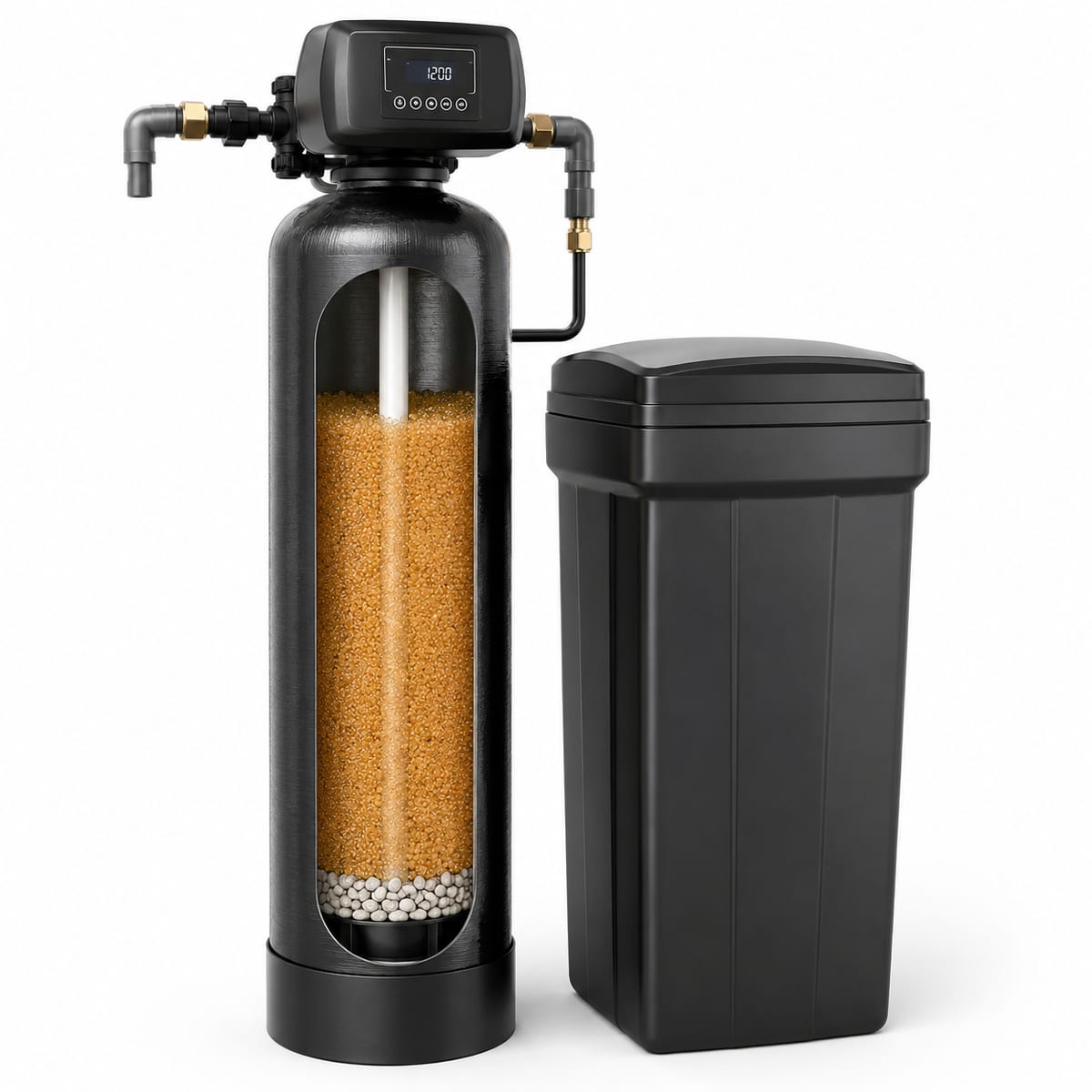
Water softening systems work on the principle of ion exchange, where cation exchange resins are used to capture calcium and magnesium ions from water and exchange them with sodium ions. Here are the basic processes that take place in a water softening system:
- Ion Exchange: Hard water flows through a tank containing cation exchange resin. This resin is initially filled with sodium ions. When the hard water comes in contact with the resin, calcium and magnesium ions which have a stronger positive charge replace the sodium ions in the resin.
- Regeneration: Over time, the resin will become saturated with calcium and magnesium ions and needs to be regenerated. The regeneration process involves the flow of sodium salt solution (brine) through the resin, which replaces the calcium and magnesium ions with sodium ions, returning the resin to its initial condition.
- Rinsing: After regeneration, the resin is flushed to remove any remaining brine and calcium/magnesium ions that have been released.
Main Components of Water Softening System
- Resin Tank: A container containing ion exchange resin, usually made of FRP (Fiber Reinforced Plastic) material that is resistant to corrosion.
- Ion Exchange Resin: The medium that performs the ion exchange process, generally a cation resin with a high exchange capacity.
- Control Valves: Regulates the flow of water through the system and controls the regeneration process automatically.
- Salt Water Tank: Stores and prepares salt solution (sodium chloride) for the resin regeneration process.
- Bypass System: Allows water to bypass the softening system when needed, such as during the regeneration process.
- Water Meter: Measures the volume of water that has been processed to determine when regeneration is required (on demand-based systems).
Applications of Water Softening Systems
Water softening systems are used in a wide range of applications across various industrial and commercial sectors:
Industrial Applications
- Manufacturing Industry: Protecting production equipment from scale and corrosion, improving operational efficiency.
- Power Generation: Boiler feed water treatment to prevent scale formation in heating and heat transfer systems.
- Food and Beverage Industry: Ensuring consistent water quality for production and equipment cleaning.
- Textile Industry: Improving the effectiveness of dyeing and rinsing processes by removing minerals that can interfere with chemical reactions.
- Pharmaceutical Industry: Provides high quality water for the production of pharmaceuticals and sterile equipment.
- Oil and Gas Industry: Treats water for various process purposes and prevents scaling in drilling equipment.
Commercial Applications
- Hotels and Restaurants: Protects kitchen equipment, dishwashers and water heating systems from scale.
- Car Wash Facilities: Prevents mineral stains on vehicles after washing and protects wash equipment.
- Commercial Laundry: Improves detergent efficiency, reduces chemical usage, and prevents scaling of washing machines.
- Hospitals and Healthcare Facilities: Provides quality water for equipment sterilization and various medical needs.
- Fitness Centers and Swimming Pools: Improves water quality and protects heating and filtration systems.
Residential Applications
- Household Water Softening Systems: Protects household appliances such as water heaters, washing machines, and kitchen appliances.
- Piping Protection: Prevents scale buildup on pipes and fittings, extending the life of plumbing systems.
- Residential use: Softening can reduce hardness deposits on showers, heaters, and fixtures; taste and bathing preference remain individual.
Advantages of Water Softening Systems
- Scale Prevention: Removes hardness-causing minerals that form scale on pipes and appliances.
- Extended Equipment Life: Equipment that is protected from scale has a longer service life and lower repair frequency.
- Heater scale control: Lower deposits can support heat transfer; quantify energy effects from before-and-after operating data.
- Reduced Chemical Use: Soft water requires fewer detergents and cleaning agents.
- Reduced Maintenance Costs: Fewer equipment breakdowns mean lower maintenance costs.
- Auditable operating cost: Compare salt, rinse water, energy, maintenance, downtime, and component replacement before claiming savings.
- Improved Product Quality: In the food, beverage, and pharmaceutical industries, softened water helps maintain product consistency and quality.
Types of Water Softening Systems
Based on Regeneration Method
- Time-Based System: Regeneration is done at predetermined time intervals, regardless of actual water usage.
- Demand-Based System: Regeneration is triggered from measured volume or calculated capacity and can avoid unnecessary cycles when the meter and setpoints are correct.
- Twin Tank System: Utilizes two resin tanks that operate alternately, ensuring an uninterrupted supply of soft water even during regeneration.
By Size and Capacity
No universal GPM ranges separate small, medium, and large softeners. Establish capacity from hardness load, peak flow, resin volume, working capacity at the chosen salt dose, vessel/valve hydraulics, and the need for softened water during regeneration.
Considerations in Water Softening System Selection
- Water hardness level: Determines the capacity and size of the system required.
- Volume of Water Use: Affects system size and regeneration frequency.
- Peak Water Demand: The system must be able to handle the maximum water demand.
- Available Space: Consider the physical dimensions of the system and installation space requirements.
- Operating Costs: Include salt consumption, water for flushing, and electricity.
- Maintenance Requirements: Frequency and complexity of maintenance required.
- Automation: Desired level of automation for operation and regeneration.
Water Softening System Maintenance
To ensure optimal performance and a long service life, water softening systems require regular maintenance:
- Salt Addition: Checking and refilling the salt tank regularly.
- Salt Tank Cleaning: Periodically cleaning the salt tank to remove dirt buildup.
- Resin Inspection: Evaluate hardness leakage, capacity recovered after regeneration, differential pressure, fouling, bead condition, and chemical history before deciding on replacement.
- Control Valve Calibration: Ensures control valves are functioning properly and set appropriately.
- Leak Check: Checking the system regularly for leaks and repairing them immediately.
- Water Testing: Conducts periodic testing to ensure the system is working effectively in reducing water hardness.
Innovations in Water Softening Technology
The water softening industry is constantly evolving with various innovations to improve efficiency and sustainability:
- Demand-initiated regeneration: Meter and regenerant settings can reduce waste when verified from treated volume, outlet hardness, salt use, and rinse water per unit of recovered capacity.
- Smart Control Valves: Equipped with sensors and IoT connectivity for remote monitoring and control.
- High Performance Resin: New resin with higher ion exchange capacity and longer service life.
- Hybrid System: Combines water softening technology with other water treatment technologies such as carbon filtration or RO systems for a more comprehensive solution.
- Saltless Water Softening System: An alternative to conventional water softening that uses technologies such as Template Assisted Crystallization (TAC) or electromagnetic conditioning.
Water Softening Solution from Water.co.id
PT Watermart Perkasa supplies resin, FRP vessels, control valves, brine tanks, and supporting water-softener components in Indonesia. Selection for homes, hotels, laundries, boiler pretreatment, or industry must follow hardness data, flow, outlet targets, layout, and operating duty.
The Watermart team can review components, regeneration programs, commissioning, and maintenance requirements. The agreed scope may include:
- Consultation and needs analysis
- Customized system design
- Professional installation
- Testing and commissioning
- Operator training
- Regular maintenance and emergency service
- Supply of consumables and spare parts
Contact our team today to discuss your water softening needs and discover how our solutions can help you achieve your water quality goals.
Water Softening System Related Products
Ion Exchange Resins
- Purolite Ion Exchange Resin
- Dionix Ion Exchange Resin
- Trilite Ion Exchange Resin
- Other Ion Exchange Resin Products
FRP Tank
Control Valves
- Fleck Control Valve
- Autotrol Control Valve
- Siata Control Valve
- Pentair Control Valve
- Runxin Control Valve
- Aqmatic Control Valve
- Other Control Valve Products
Accessories and Supporting Components
- Pentair Accessories
- Clack Accessories
- Hydropro Accessories
- Aqmatic Accessories
- Kleemeier Accessories
- Other Accessory Products
Measurement and Monitoring Instruments
Filtration Media
- Clack Filtration Media
- Jacobi Filtration Media
- Imerys Filtration Media
- Other Filtration Media Products
Water Treatment Chemicals
For more information on our water softening products and solutions, please contact our sales team or visit our showroom. We are ready to help you find the right water softening solution for your specific needs.
Frequently asked questions about water-softener selection
What hardness data should be supplied for sizing?
Send total hardness with a clear unit, sampling date and point, minimum/normal/peak flow, daily volume, operating hours, and outlet target. Add Fe, Mn, TDS, pH, and temperature where they may affect the resin, pretreatment, or regeneration program.
Does vessel size determine softener capacity?
No. The vessel limits resin space and hydraulics, but system capacity also depends on resin model and volume, working capacity at the chosen salt dose, hardness load, flow distribution, valve, drain, and acceptable regeneration interval.
When is a duplex or twin-alternating system needed?
Consider duplex duty when softened water must remain available during regeneration, peak demand cannot be interrupted, or one vessel must provide standby. Support the decision with the flow profile, cycle duration, valve/piping arrangement, and failure scenarios—not a “24-hour” label alone. Send those data through the Watermart contact page for a component review.
Technical sources
- Pentair, Fleck 3900 Control Valve Service Manual, for applicable model ratings, installation, programming, and cycle sequences.
- NSF, NSF/ANSI 44 technical requirements, for context on testing and claims for residential cation-exchange water softeners.