
Ion Exchange Resin
Industrial Media Filtration Systems
Design industrial media filtration from water tests, target contaminants, media, vessels, service and backwash flow, automatic valves, instruments, and drains.
Media Filtration System
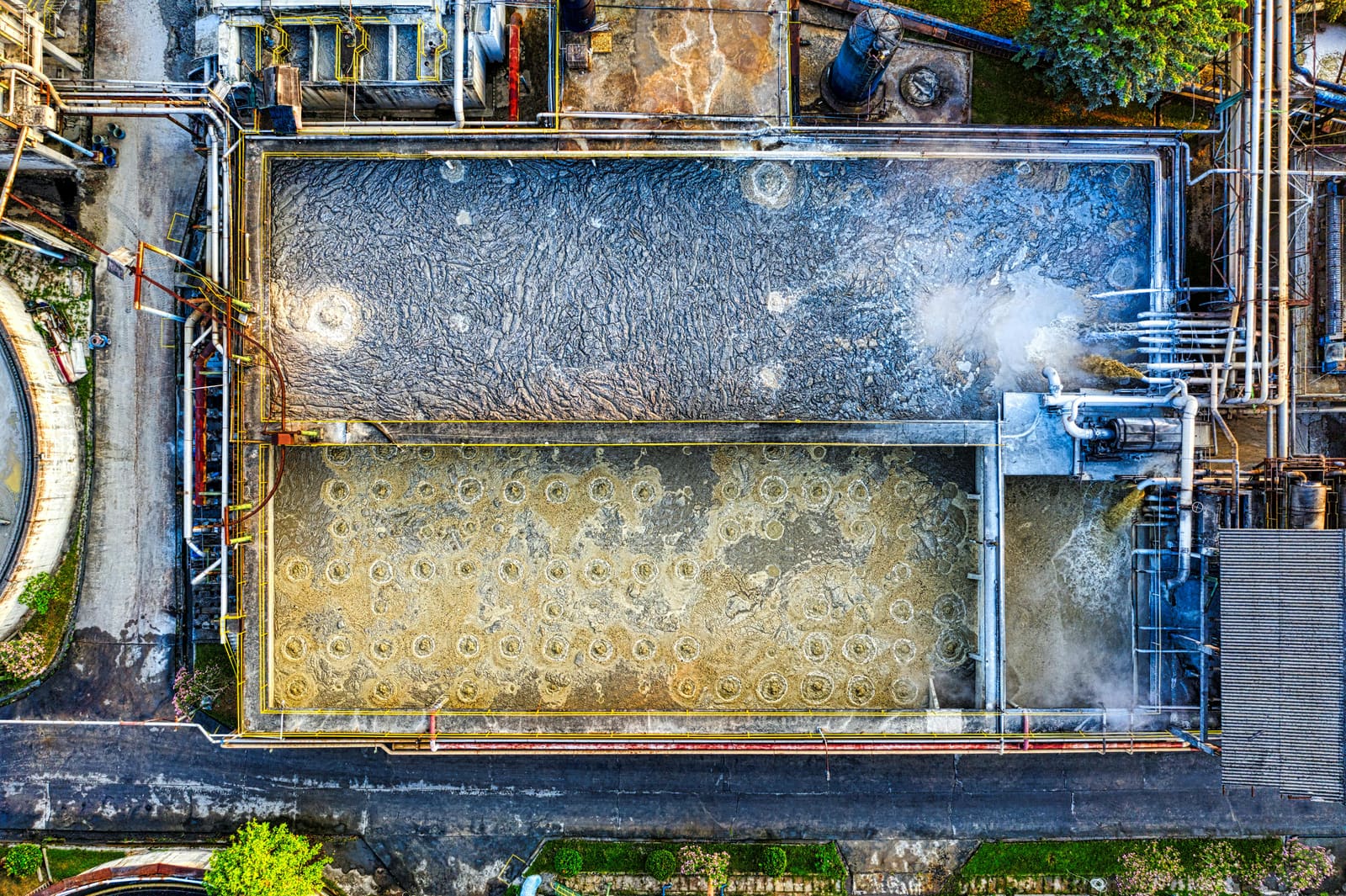
An industrial media filtration system passes water through a granular bed to retain particles or treat contaminants suited to that medium. Design must follow water analysis, the finished-water target, service and backwash flow, vessel size, underdrain, valves, and drain capacity. PT Watermart Perkasa supplies filter media and control components for these systems in Indonesia.
Updated 4 August 2026: backwash triggers and return-to-service evidence were clarified.
Recommended Watermart Products for Media Filtration
For industrial media filtration, select components as a treatment train: GreensandPlus for suitable iron or manganese conditions, a vessel and underdrain, pressure-drop instrumentation, and valves for backwash. The water filter media selection guide compares the function and limits of each medium before configuration.
When does a media filter need automatic backwash control?
Automatic control is needed when operating schedules, changing pressure drop, or the number of valves makes manual backwash inconsistent. AQ Matic valves, stagers, and controllers can sequence service, backwash, rinse, and return to service. Select the model and stage duration from vessel area, media characteristics, backwash flow, pressure, valve count, and drain capacity.
| Signal or condition | System response | Data to verify |
|---|---|---|
| Pressure drop rises | Start backwash at the operating limit | Inlet and outlet pressure, instrument accuracy, and bed condition |
| Operating time is reached | Run a scheduled sequence | Solids loading, service hours, and continuity requirement |
| Treated volume is reached | Start the cycle from totalized flow | Flow meter, design volume, and feed-quality variation |
| Several vessels alternate | Isolate one vessel and maintain service | Interlocks, valve count, safe position, and peak capacity |
| Backwash water or drain is unavailable | Hold the cycle and activate an alarm | Tank level, pump, pressure, drain valve, and discharge capacity |
When the filter protects an industrial reverse osmosis system, its backwash trigger must also consider RO feed quality. The filter should not return to service until rinse water meets the defined operating acceptance criteria.
What evidence allows a filter to return to service?
Return a filter to service only after the valve sequence finishes, rinse reaches the project endpoint, no media carry-over is observed, differential pressure returns to a reasonable baseline, and outlet quality meets the acceptance limit. Do not use one universal figure: backwash flow, bed expansion, duration, and outlet criteria depend on the medium, water temperature, vessel, underdrain, and system duty.
| Return-to-service gate | Evidence to record | Keep the filter out of service when |
|---|---|---|
| Valve sequence | Service/backwash/rinse positions, stage times, alarms, and interlocks | A valve is in the wrong position, a stage was skipped, or an alarm cause remains unresolved |
| Backwash hydraulics | Actual flow, pressure, drain condition, and bed expansion where it can be observed safely | Flow misses the design basis, the drain floods, or media carry-over is visible |
| Rinse | Duration, clarity/turbidity, colour, and medium-specific parameters | The project endpoint is not met or results worsen after return to service |
| Service baseline | Flow, inlet/outlet pressure, and clean differential pressure | Differential pressure does not return near baseline or flow remains unstable |
| Outlet quality | Target parameters such as turbidity, iron, manganese, oxidant residual, or chlorine for the duty | Results miss the acceptance limit or sampling is not representative |
The Inversand GreensandPlus technical data sheet shows how backwash rate and bed expansion vary with temperature and flow; those figures are specific to that medium. Valve capacity needs a separate model check, for example against the 2025 Pentair Fleck 5800 data sheet. Use the current documents for the actual medium and valve installed.
How Media Filtration Works
Media filtration works based on several physical and chemical mechanisms. As water passes through layers of filter media, suspended particles are retained through a process of mechanical filtration, adsorption, absorption, and in some cases, ion exchange or chemical reactions. The effectiveness of a media filtration system depends on the type of media used, the particle size of the media, the depth of the filter bed, the flow velocity, and the quality of the water to be treated.
Some of the main mechanisms in media filtration include:
- Mechanical filtration: Particles larger than the space between the filter media will be physically retained
- Sedimentation: Heavier particles will settle on the surface of the filter media
- Adsorption: Particles adhere to the surface of the filter media due to molecular forces of attraction
- Absorption: Particles are absorbed into the filter media structure
- Biological activity: In some types of filters, microorganisms growing on the media help decompose organic contaminants
Components of a Media Filtration System
- Filter tank: The container that holds the filter media, usually made of fiberglass reinforced plastic (FRP), stainless steel, or other corrosion-resistant material
- Filter media: Materials such as silica sand, anthracite, garnet, activated carbon, or other specialized media
- Distribution system: Includes inlet, outlet, and underdrain pipes to distribute water evenly
- Control valve: Regulates water flow during filtration and backwash operations
- Backwash system: Equipment to clean the filter media by reversing the water flow
- Instrumentation: Pressure gauges, flowmeters, and other sensors to monitor system performance
Types of Filter Media
Different types of filter media are used in media filtration systems, each with specific characteristics and uses:
Conventional Filter Media
- Silica Sand: A granular medium for retaining suspended particles when grain size, bed depth, and flow rate match the design.
- Anthracite: Has different size and density characteristics from sand and is often used as an upper layer in multimedia filters.
- Garnet: A high density media, typically used as a bottom layer in multi-media filters.
- Manganese greensand: Treats iron and manganese under suitable chemical and oxidation conditions; review the Inversand GreensandPlus data.
Specialty Filter Media
- Activated Carbon: Adsorbs selected compounds such as residual chlorine and taste- or odor-causing substances; carbon type and contact time must match the contaminant.
- Catalytic Filters: Such as Birm, Pyrolox, or Hydrogard, which accelerate the oxidation of iron and manganese.
- Zeolites: Natural or synthetic media whose ion-exchange and adsorption properties vary by product; check capacity and selectivity in the datasheet.
- Specialty Adsorbents: Media such as Novasorb must be matched to the target contaminant, test conditions, capacity, and operating limits.
Media Filtration Applications
Media filtration systems are used in a variety of industries and applications, including:
Industrial Applications
- Boiler Water Treatment: Removing suspended particles that can cause scaling and corrosion in boiler systems.
- Food and Beverage Industry: Provides clean water for production and as a pre-treatment before desalination or reverse osmosis processes.
- Pharmaceutical Industry: Produces high quality water for the production of pharmaceuticals and medical devices.
- Electronics Industry: Provides ultra-pure water for the production of semiconductors and electronic components.
- Wastewater Treatment: As a tertiary treatment stage to remove suspended particles before discharge or recycling.
- Electroplating Industry: Removing contaminants from process water and wastewater. Check out our Electroplating solutions.
Commercial Applications
- Hotels and Restaurants: Providing clean water for operational needs and guest consumption.
- Shopping Centers: Water treatment for cooling systems, restrooms, and other general needs.
- Hospitals: Providing high-quality water for various medical and sanitary applications.
- Office Buildings: Water treatment for general needs, cooling systems, and drinking water.
Municipal Applications
- Drinking Water Treatment: As part of a multi-stage treatment process to produce safe drinking water.
- Municipal Wastewater Treatment: Removing suspended particles prior to disinfection and discharge processes.
- Swimming Pool Water Treatment: Maintain clarity and cleanliness of pool water.
Media Filtration System Configuration
Media filtration systems can be configured in several ways, depending on the needs of the application:
Based on Number of Media
- Single Media Filter: Uses one type of media, such as silica sand, for simple applications.
- Dual Media Filter: Typically uses anthracite on top of sand, increasing filtration capacity and operating cycles.
- Multi Media Filter: Uses three or more layers of media (e.g. anthracite, sand, and garnet) for more efficient and in-depth filtration.
Based on Flow Direction
- Downflow: Water flows from top to bottom through the filter media, the most common configuration.
- Upflow: Water flows from bottom to top; configuration, bed expansion, and cleaning requirements must follow the medium and process target.
- Bi-flow: A combination of upward and downward flow to increase filtration efficiency.
Based on Operating Pressure
- Gravity Filter: Operates at atmospheric pressure, typically used for large capacity applications such as municipal water treatment.
- Pressurized Filter: Using pressurized tanks such as Pentair or Hydropro, more compact and efficient for industrial and commercial applications.
Advantages of Media Filtration
- Specific treatment target: Can address solids, turbidity, or selected contaminants when the medium and chemical conditions are suitable.
- Flexibility: Can be adapted to a wide range of water quality and treatment requirements by selecting the right media and configuration.
- Predictable operation: Pumping, backwash, chemical, and media-replacement needs can be calculated from the design and measured loading.
- Measurable media life: Pressure drop, outlet quality, media loss, and remaining capacity guide maintenance or replacement.
- Easy maintenance: An automated backwashing process using control valves such as Fleck, Autotrol, or Siata makes routine maintenance easy.
- Scalability: Systems can be designed for small to very large capacities.
- Defined pretreatment duty: Can protect reverse osmosis or ion exchange when the target contaminant and outlet acceptance criteria are explicit.
Media Filtration System Design and Operation
Optimal media filtration system design considers several important factors:
Key Design Parameters
- Filtration rate: Determine it from media characteristics, solids loading, outlet target, and supplier data or pilot testing.
- Media depth: Set it with the layer arrangement, grain size, retention target, and pressure-drop limit.
- Media particle size distribution: Affects filtration efficiency and ease of backwash.
- Freeboard: Provide space above the medium from calculated bed expansion at the design backwash flow and water temperature.
- Underdrain system: Distributes water evenly during filtration and backwash.
Operation Cycle
The operation of a media filtration system involves several stages:
- Filtration: Water flows through the filter media, removing target contaminants.
- Backwash: Water flow is reversed to clean the filter media of captured particles.
- Rinse: The filter media is rinsed after the backwash to remove any remaining particles and compact the media.
- Return to service: The system returns to normal filtration mode.
This cycle can be controlled automatically using control valves such as Aqmatic, Fleck, or Runxin that can be programmed by time, volume, or differential pressure.
Selection of the Right Filter Media
Proper filter media selection is critical for optimal system performance. Some key considerations include:
- Raw water characteristics: The type and concentration of contaminants determine the most suitable media.
- Treatment objectives: Is the primary focus on removing turbidity, iron/manganese, taste/odor, or other specific contaminants.
- Resulting water quality requirements: Standards that must be met for specific applications.
- Operational constraints: Including available space, operating pressure, and budget.
Leading filter media manufacturers such as Clack, Jacobi, Imerys, and Inversand offer a range of products to meet specific water treatment needs.
Media Filtration System Maintenance
Regular maintenance is essential to ensure optimal performance and longevity of the media filtration system:
- Routine backwashing: Performed on a schedule or when pressure drop reaches a certain value, using an instrument such as a pressure gauge from Create or Hydropro.
- Media inspection: Periodic checks to identify channeling, mud balling, or media damage.
- Media replacement: Base the decision on outlet quality, pressure drop, media loss or damage, remaining capacity, and operating history.
- Control valve maintenance: Inspect and maintain Pentair or other brand control valves to ensure reliable operation.
- Instrumentation calibration: Ensure the flowmeter, pressure gauge, and other sensors provide accurate readings.
Optimizing Media Filtration System Performance
Some strategies to optimize media filtration system performance include:
- Proper pre-treatment: Using coagulation/flocculation before media filtration to increase fine particle removal efficiency.
- Use of combination filter media: Utilizing the advantages of various media in a multi-media system.
- Optimization of filtration speed: Adjusting the flow rate for a balance between throughput and quality.
- Implementation of automatic backwash: Using Aqmatic or Fleck control valves with automatic backwash capability based on pressure differential.
- Water quality monitoring: Using instruments to monitor key parameters such as turbidity, pH, and conductivity.
Trends and Innovations in Media Filtration
Development options for media filtration systems include:
- Specialty filter media: Development of highly selective adsorbent media such as Novasorb for specific contaminants.
- Intelligent control systems: Integration of IoT and cloud-based controls for remote monitoring and operation.
- Biological filters: Utilizing microbial activity to remove organic contaminants and nutrients.
- Technology combinations: Integration of media filtration with other technologies such as ultrafiltration or advanced oxidation.
- Energy-efficient design: Development of systems with lower backwash and pressure drop requirements.
Media Filtration Solution from Water.co.id
At Water.co.id, we offer comprehensive media filtration solutions tailored to your specific needs. Our systems utilize high-quality components from leading manufacturers, including:
- FRP filter tanks: From Pentair and Hydropro, designed for durability and optimal performance.
- Premium filter media: Including products from Clack, Jacobi, Imerys, and Inversand.
- Advanced control valves: From Aqmatic, Fleck, Autotrol, and Pentair.
- Instrumentation and controls: Products from Create and Hydropro for accurate monitoring and control.
- System accessories: Including products from Pentair, Clack and Hydropro.
Our technical team provides professional design, installation and maintenance services to ensure optimal system performance and lifespan. We also offer water quality testing and monitoring services to validate system performance and compliance with regulatory requirements.
Contact our team today to discuss your media filtration needs and discover how our solutions can help you achieve your water quality goals.
Questions to answer before selecting media filtration
Can filter media be selected from water color?
No. Color is only one observation and does not identify a contaminant’s chemical form. Use water analysis to distinguish solids, dissolved iron or manganese, organic compounds, pH, and other parameters that affect process selection.
Which data matter most for vessel and valve sizing?
Provide service flow, the backwash flow actually available, pressure, water temperature, media characteristics and depth, bed-expansion space, pipe size, and drain capacity. A valve should not be selected from connection diameter alone.
Is automatic backwash always time-initiated?
No. A cycle may start from time, treated volume, pressure drop, a remote signal, or another process condition. Choose a measurable trigger suited to load variation and add interlocks so the system cannot wash when water or drain capacity is unavailable.
When may a media filter return to service after backwash?
After the valve sequence and rinse finish and flow, differential pressure, drain condition, media carry-over, and outlet quality meet the project acceptance limits. Record the result; a completed timer alone is not sufficient evidence.