
Accessories & Ancillaries
Seawater RO Desalination Systems Indonesia
Select a seawater RO desalination system in Indonesia from feed analysis, pretreatment, membranes, vessels, brine handling, and commissioning evidence.
How should a seawater RO desalination system be selected?
Select a seawater RO desalination system from representative feed analysis, product-quality and volume targets, peak flow, pretreatment, membrane projection, pressure vessels, energy, post-treatment, and reject-brine planning. Equipment selection alone does not prove capacity, permeate quality, or drinking-water readiness.
PT Watermart Perkasa, operating at water.co.id, supplies desalination-system components in Indonesia, including DuPont FilmTec SWRO membranes, Toray SWRO membranes, Codeline 80E vessels, cartridge filters, and dosing pumps. The final models must follow a current design projection and the applicable manufacturer documents.
Updated 3 August 2026.
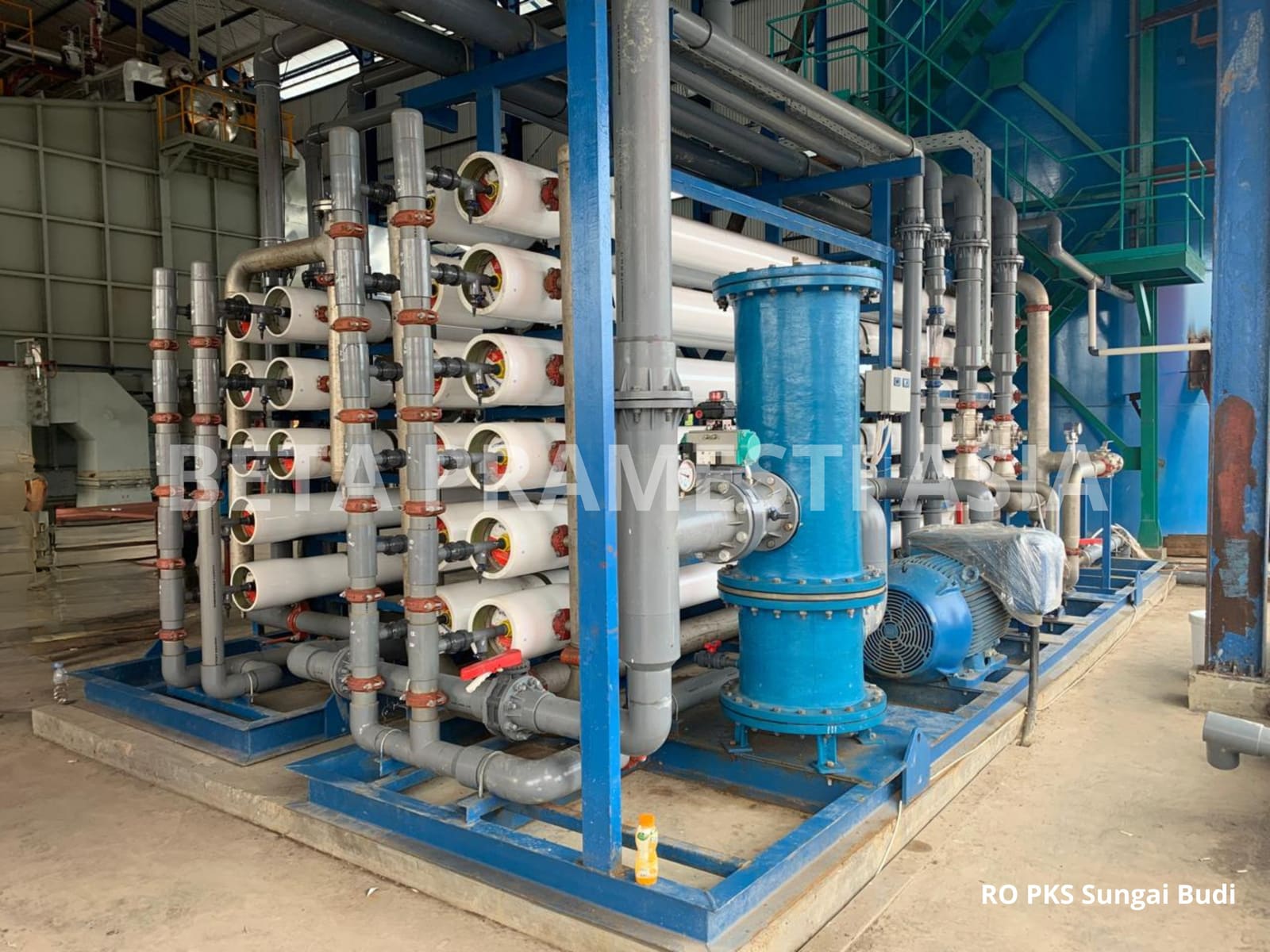
Minimum evidence before an SWRO system is selected
| Decision | Data to prepare | Acceptance evidence |
|---|---|---|
| Source and intake | Salinity/TDS, temperature, pH, turbidity, SDI15, organics, microbiology, boron where relevant, and seasonal variation | Representative samples, methods, dates, points, and design range |
| Capacity and quality | Minimum/normal/peak demand, operating hours, permeate target, end use, and possible second pass | Approved water balance and outlet criteria |
| Pretreatment | Intake screening, coagulation/filtration where required, cartridges, dechlorination, antiscalant, and membrane feed limits | Setpoints, alarms, differential pressure, residuals, and pre-RO results |
| Membranes and vessels | SWRO series, element count, staging, recovery, flux, pressure, vessel rating, ports, and spares | Current projection, datasheets, drawing, and compatible bill of materials |
| Reject brine and energy | Concentrate flow/quality, discharge approval, pump duty, ERD where used, and interlocks | Design basis, permits, and safe operating scenarios |
| Commissioning | Flushing, sanitation, flow/pressure/conductivity baseline, sampling, consumable log, and training | Stable results under representative conditions and written release decision |
Water intended for drinking must meet applicable Indonesian requirements, be commissioned and sanitized, run with consumable records, and be verified through representative laboratory samples. Selecting a membrane or seeing clear permeate does not prove that water is ready to drink. Antiscalant, dechlorination, CIP, and chemical-disposal planning can be reviewed with Beta Pramesti’s RO chemical team.
Desalination is a water treatment technology used to remove salts and other dissolved minerals from seawater or brackish water to produce fresh water that can be used for various purposes. This technology is becoming increasingly important around the world, especially in areas that experience freshwater scarcity but have access to seawater or brackish water. In Indonesia, as the world’s largest archipelago, desalination offers a strategic solution to meet the need for clean water in various coastal areas and remote islands.
How Desalination Works
Desalination works by removing dissolved salts and minerals from seawater or brackish water. There are several main methods used in the desalination process, but the two most commonly used technologies are Reverse Osmosis (RO) and thermal distillation.
Desalination with Reverse Osmosis (RO)
Reverse Osmosis is the most commonly used desalination method today. It uses semipermeable membranes and high pressure to separate salts and other contaminants from water. The working principle is as follows:
- Seawater or brackish water is pumped at high pressure into the RO system.
- This pressure forces the water molecules through a semipermeable membrane
- The membrane retains most of the salts, minerals, and other contaminants
- Clean water (permeate) that passes through the membrane is collected
- Water with a high salt concentration (reject brine) is discharged or treated further
RO systems for desalination typically use specialized membranes designed to retain salt with high efficiency, such as DuPont Filmtec, Toray, or CSM membranes.
Thermal Desalination
Thermal desalination methods work on the principle of evaporation and condensation. Some of the main types of thermal desalination include:
- Multi-Stage Flash Distillation (MSF): Seawater is heated and passed through a series of chambers of progressively lower pressure, causing the water to “flash” into steam which is then condensed into fresh water.
- Multiple-Effect Distillation (MED): Uses a series of evaporators (effects) where vapor from one effect is used to heat seawater in the next effect, increasing energy efficiency.
- Vapor Compression Distillation (VCD): Uses a compressor to increase the pressure and temperature of water vapor, which is then used as a heat source to evaporate more seawater.
Desalination System Components
Modern desalination systems consist of several key components that work together to produce high-quality freshwater:
- Pre-treatment system: Removes suspended particles, turbidity, and biological contaminants before the water enters the main system, typically using Clack or Imerys multimedia filters, and HydroPro or Pentair Pentek cartridge filters.
- RO membranes: The heart of the RO desalination system, typically using DuPont Filmtec or Toray membranes specifically designed for seawater (SWRO) or brackish water (BWRO).
- Pressure vessels: High-pressure containers that hold RO membranes, such as Codeline or HydroPro.
- High pressure pumps: Provides the pressure needed to overcome natural osmotic pressure, typically using FluidoTech pumps or other specialized pumps.
- Energy Recovery Device (ERD): Utilizes energy from the high-pressure concentrate stream to reduce overall energy consumption.
- Post-treatment system: Adjusts pH, remineralizes, and disinfects produced water according to desired standards, often using dosing pumps and UV systems.
- Control and instrumentation systems: Monitor and control system operations, including Create or HydroPro sensors to monitor water quality parameters.
Desalination Applications
Desalination technology is used in a variety of applications in Indonesia and around the world:
Industrial Applications
- Oil and gas industry: Providing process and potable water on offshore platforms and processing facilities in coastal areas.
- Power generation: Providing high-quality boiler feed water and cooling water for power plants in coastal areas.
- Mining industry: Providing process water at remote mining sites with limited access to fresh water.
- Petrochemical industry: Provides ultrapure water for various production processes.
- Food and beverage industry: Provides high quality water for beverage and processed food production.
- Pharmaceutical industry: Provides pure water that meets pharmacopoeial standards for the production of pharmaceuticals.
Commercial Applications
- Coastal resorts and hotels: Provide drinking water and utility water in areas with limited freshwater supply.
- Shopping centers and commercial buildings: Provide alternative water supply in coastal areas with limited water infrastructure.
- Hospitals and healthcare facilities: Ensure consistent supply of high quality water for medical needs.
- Integrated industrial estates: Provides a centralized water solution for various industries in one area.
Government and Utility Applications
- Municipal water supply: Supplying drinking water for coastal cities and islands with limited freshwater resources.
- Military facilities: Providing self-contained water at remote or strategic military installations.
- Emergency response: Providing clean water during natural disasters that disrupt normal water supplies.
- Small islands: Providing sustainable solutions to water needs on remote islands across the archipelago.
Specialty Applications
- Cruise ships and commercial vessels: Produce fresh water while sailing at sea.
- Offshore oil and gas exploration: Provide clean water on offshore platforms.
- Remote areas: Providing water in locations that are not connected to conventional water networks.
Advantages of Desalination Technology
Desalination offers various advantages as a water treatment solution, especially in coastal areas and islands:
- Water-source diversification: Uses seawater or brackish water where intake, source quality, permits, energy, and reject brine can be managed.
- Lower reliance on freshwater sources: Can add supply at coastal sites, although intake conditions and feed quality still require seasonal monitoring.
- Controlled product quality: Permeate targets can be maintained when feed stays within the design basis, pretreatment performs, and RO parameters are monitored.
- Reduced groundwater exploitation: Reduces dependence on groundwater, prevents seawater intrusion and groundwater level decline in coastal areas.
- Scalability: Can be designed in any size, from small systems for resorts or industries to large installations for municipal water supply.
- Integration with renewable energy: Can be integrated with renewable energy sources such as solar or wind power for more sustainable operation.
- National resilience: Improves national water security by diversifying water sources, especially in archipelagic countries like Indonesia.
Challenges and Solutions in Desalination
While it offers many advantages, desalination technology also faces several challenges:
Energy Consumption
Traditional desalination requires significant energy. Modern solutions include:
- Use of an Energy Recovery Device (ERD) after its duty, efficiency, operating range, and integration are calculated in the design
- Integration with renewable energy such as solar panels or wind turbines
- Use of new generation DuPont Filmtec or Xelect membranes that require lower operating pressure
Reject Brine Management
Waste salt concentrate (reject brine) can impact the marine environment if not managed properly. Solutions include:
- Diffusion and dilution systems for safe discharge to the ocean
- Zero Liquid Discharge (ZLD) technology to recover salt and minerals
- Brine utilization for production of salt or other valuable minerals
Membrane Fouling and Scaling
The buildup of biological and mineral impurities on membranes can reduce efficiency. Solutions include:
- Effective pre-treatment systems using multimedia Clack filters and cartridge filters
- Use of appropriate anti-scaling and anti-fouling chemicals
- Regular automated cleaning system (CIP - Clean In Place)
- Use of membranes with anti-fouling technology such as DuPont TapTec
Investment and Operational Costs
High initial costs are often a barrier to adoption. Solutions include:
- System modularization to allow for gradual expansion
- Use of high-quality components such as Codeline pressure vessels to extend system life
- Automation with instrumentation systems for more efficient operations
- Innovative business models such as BOO (Build-Own-Operate) or long-term water supply contracts
Recent Trends in Desalination Technology
The desalination industry continues to evolve with innovations that improve efficiency and sustainability:
- New generation membranes: DuPont Filmtec and Toray membranes with higher water flux and better salt rejection, reducing energy requirements.
- Forward Osmosis (FO): An alternative technology that uses natural concentration gradients rather than high pressure for desalination with lower energy consumption.
- Membrane Distillation (MD): Combines thermal and membrane principles for desalination with low-temperature heat sources, suitable for integration with industrial exhaust heat.
- Capacitive Deionization (CDI): Uses charged electrodes to attract salt ions from water, effective for brackish water with low salinity.
- Hybrid systems: Combines different desalination technologies to optimize efficiency and reduce costs.
- Renewable energy-powered desalination: Integrating desalination systems with solar, wind, or wave energy for sustainable operation.
- Digitalization and IoT: Implementation of intelligent monitoring and control systems using advanced sensors and instrumentation for real-time operation optimization.
Designing an Optimal Desalination System
Designing an effective desalination system requires consideration of various factors:
- Source water characteristics: A thorough analysis of the salinity, temperature, and contaminants in seawater or brackish water.
- Capacity requirements: Determination of the volume of water required, including seasonal fluctuations and projected growth.
- Desired water quality: Specification of required water quality based on end application (drinking water, industrial process water, etc.).
- Energy availability: Evaluation of available energy sources, including potential for renewable energy.
- Site constraints: Consideration of available space, environmental conditions, and supporting infrastructure.
- Environmental regulations: Understanding of permitting requirements and waste disposal restrictions.
- Economic considerations: Life cycle cost analysis, including initial investment, operational costs, and maintenance.
Desalination Solution from Water.co.id
PT Watermart Perkasa supplies desalination-system components and support in Indonesia to match feedwater, product targets, and project design. The scope includes:
- Seawater desalination system (SWRO): Configured from design salinity and temperature, intake, permeate target, recovery, pretreatment, and reject-brine plan.
- Brackish water desalination system (BWRO): Configured from brackish-source analysis, scaling risk, product target, and membrane projection.
- Modular and containerized system: Compact solutions that are easy to transport and install in remote locations.
- Renewable energy integrated desalination system: Combines desalination technology with renewable energy sources for sustainable operation.
- Pilot and demo systems: For testing and validation before full-scale implementation.
Our systems utilize high-quality components from leading manufacturers, including:
- DuPont Filmtec, Toray, and CSM RO membranes
- Codeline and HydroPro pressure vessels
- High pressure pumps FluidoTech and other leading manufacturers
- Clack, Imerys, and Jacobi filtration media
- Create and HydroPro instrumentation and control systems
- Pentair and Wedeco UV disinfection systems
Our technical team provides comprehensive services, including:
- Consultation and feasibility studies
- System design and engineering
- Procurement and construction
- Installation and commissioning
- Operator training
- Maintenance and technical support services
- Spare parts and consumables supply
Conclusion
Desalination can be an option for coastal and island sites where the source, demand, energy, pretreatment, and reject-brine plan support it. Each project’s technical and environmental feasibility still needs water data, projections, permits, commissioning evidence, and life-cycle cost review.
Contact our team today to discuss your desalination needs and discover how our solutions can help you achieve your water treatment goals efficiently and sustainably.
Related Products
- RO Membranes: DuPont Filmtec, Toray, CSM, Xelect, DuPont TapTec, Pentair
- Pressure Vessel: Codeline, HydroPro, other Pressure Vessels
- Filtration Media: Clack, Imerys, Jacobi, Novasorb, Inversand
- Filter Cartridges: HydroPro, Pentair Pentek, Osmonics, Aqualine
- Pumps: FluidoTech, ProCon, Flint & Walling
- Dosing Pumps: HydroPro, LMI, OBL
- Instrumentation: Create, HydroPro
- UV Disinfection: Pentair, Wedeco, HydroPro
- Accessories: Pentair, HydroPro, Clack, AQMatic
- FRP tanks: Pentair, HydroPro
- Chemicals: Chemical
Frequently asked questions about seawater RO systems
What data matter most before selecting an SWRO membrane?
Start with representative source-water analysis, design temperature and salinity, permeate target, capacity, recovery, pretreatment, and the manufacturer’s projection. Element size or a GPD value alone cannot establish the correct model or quantity.
Does one SWRO pass always produce water that is ready to drink?
No. A second pass, remineralization, disinfection, and other finishing steps depend on feed quality, projection results, the end-use target, and applicable requirements. Release requires commissioning, sanitation, representative sampling, and laboratory verification.
Which components must be matched as one system?
The intake, pretreatment, cartridges, chemical dosing, membranes, pressure vessels, pumps, energy-recovery device where used, instruments, post-treatment, and reject-brine handling need one design basis. For a component review, send water analysis, targets, flows, drawings, and nameplate photographs through the Watermart contact page.
Technical sources
- DuPont Water Solutions, FilmTec Reverse Osmosis/Nanofiltration Membranes Technical Manual, Rev. 19, February 2026.
- Toray Industries, RO Operation, Maintenance and Handling Manual, April 2026.