
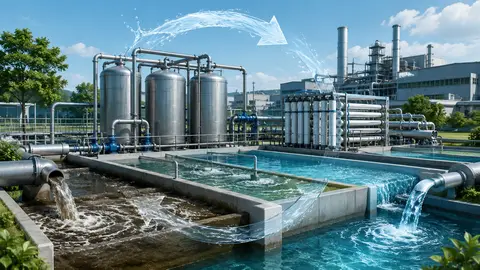
Water Recycling: Reusing Water for Industrial Efficiency
Water recycling is the process of treating wastewater or previously used water so it can be reused for specific purposes. In industrial operations, this approach is becoming increasingly important because water demand continues to rise while raw water cost, wastewater discharge cost, and efficiency targets also become more demanding.
For factories, industrial estates, hotels, commercial buildings, hospitals, food and beverage plants, textile mills, pharmaceutical facilities, and manufacturing sites, water recycling is not only about saving water. It also helps reduce the load on wastewater treatment systems, lower operating costs, and support environmental sustainability goals.
With the right system design, treated effluent from a wastewater treatment plant can be reused for cooling towers, toilet flushing, landscape irrigation, washing areas, selected boiler feed applications after advanced treatment, or other non-potable process needs.
What Is Water Recycling?
Water recycling is a water reuse method that improves the quality of used water so it can meet the required standard for a new application. The water source may come from domestic wastewater, industrial wastewater, process water, rinse water, reject water, or other streams that are still technically feasible to treat.
A water recycling system usually includes several treatment stages such as screening, equalization, biological treatment, sedimentation, filtration, disinfection, and advanced treatment when required. For industrial applications, the system is often combined with media filtration, membrane treatment, chemical dosing, ultrafiltration, reverse osmosis, and UV sterilization.
If your facility needs a complete water and wastewater treatment setup, the system can be tailored through Water & Wastewater Treatment.
Why Water Recycling Matters for Industry
Industrial facilities usually consume large volumes of water. Water is used for production, washing, cooling, boilers, sanitation, and building utilities. When all of these needs depend only on new raw water, operating costs can increase significantly.
Water recycling helps companies use water that would otherwise be discharged. This reduces fresh water intake and allows wastewater to be managed more effectively before final discharge.
Key reasons why water recycling is increasingly important include:
- Reducing raw water consumption
- Lowering operating costs
- Supporting environmental compliance
- Improving utility system efficiency
- Supporting sustainability targets
- Reducing dependence on municipal water, groundwater, or surface water
How a Water Recycling System Works
A water recycling system must be designed based on incoming water quality, wastewater characteristics, target reuse quality, and the final application. Not all wastewater can be reused directly without proper treatment, so an initial analysis is essential before selecting the technology.
In general, water recycling includes the following stages.
1. Pretreatment
Pretreatment is the first stage used to remove coarse solids, oil, sand, sludge, and large particles from wastewater. This stage protects downstream equipment from clogging, fouling, and premature damage.
Depending on the wastewater characteristics, pretreatment may use screens, grease traps, equalization tanks, sedimentation tanks, or chemical treatment.
2. Biological Treatment
If the wastewater contains a high organic load, biological treatment is usually required. This process uses microorganisms to break down organic pollutants in the water.
Common technologies include activated sludge, moving bed biofilm reactors, membrane bioreactors, sequencing batch reactors, anaerobic systems, or a combination of several methods depending on the facility needs.
For more specific wastewater applications, you can review Wastewater Treatment as part of a broader water reuse strategy.
3. Filtration
After biological treatment or sedimentation, the water may still contain suspended solids, color, odor, or fine particles. Filtration plays an important role in improving water clarity and preparing the water for the next stage.
Media filtration can reduce turbidity, suspended particles, and selected contaminants. The system may use silica sand, activated carbon, multimedia filter media, manganese greensand, anthracite, or other specialty media based on the water condition.
For industrial filtration needs, Media Filtration can be used as an important part of the water recycling process.
4. Advanced Treatment
When higher water quality is required, advanced treatment may be added after conventional treatment. Common options include ultrafiltration, reverse osmosis, activated carbon, ion exchange, advanced oxidation, UV sterilization, and chemical polishing.
Advanced treatment is usually needed when recycled water will be used for cooling towers, process water, high-quality washing, or boiler-related applications.
5. Disinfection
Disinfection helps control microbiological risk before recycled water is stored or reused. Depending on the application, disinfection can use chlorine, UV, ozone, or a combination of methods.
For non-potable reuse, disinfection is still important because bacteria and biofilm can grow inside tanks, pipes, cooling systems, and distribution lines.
6. Storage and Distribution
After treatment, recycled water is collected in a storage tank and distributed to the point of use. This stage needs proper piping design, tank hygiene, level control, pump selection, and monitoring to keep water quality stable.
Separate piping and clear labeling are important so recycled water is not mixed with potable water systems.
Common Applications of Water Recycling
Water recycling can be used in many industrial and commercial facilities. The most common applications include:
- Cooling tower makeup water
- Toilet flushing
- Landscape irrigation
- Washing areas
- Process water for selected industries
- Utility water
- Boiler feed pretreatment after advanced polishing
- Wastewater treatment plant effluent reuse
- Industrial estate water reuse systems
Each application has different water quality requirements. For example, cooling tower reuse needs attention to hardness, silica, microbiology, corrosion risk, scaling risk, and concentration cycles. Washing applications may require low turbidity and low odor. Boiler-related reuse may need much stricter treatment.
Benefits of Water Recycling
The main benefit of water recycling is lower raw water consumption, but the value is usually broader than that.
1. Lower Water Cost
By reusing treated water, companies can reduce the volume of municipal water, groundwater, or surface water needed for daily operations. This can have a direct effect on monthly operating costs.
2. Lower Wastewater Discharge Volume
Water recycling reduces the amount of water discharged from the facility. This can help reduce wastewater handling cost and support compliance with discharge requirements.
3. Better Operational Resilience
Facilities that depend fully on external water sources can face operational risk when supply is limited. Water recycling creates an additional internal water source that supports production continuity.
4. Support for Sustainability Programs
Many companies now have environmental, social, and governance targets related to water efficiency and resource conservation. Water recycling provides a measurable way to reduce water footprint.
5. Improved Wastewater Treatment Value
Instead of treating wastewater only for discharge, companies can turn treated water into a reusable utility stream. This changes wastewater treatment from a cost center into a resource recovery system.
Important Design Considerations
Before implementing water recycling, companies should evaluate several technical factors:
- Raw wastewater characteristics
- Target reuse application
- Required water quality
- Daily and peak flow rate
- Existing wastewater treatment performance
- Space availability
- Chemical and energy consumption
- Sludge generation
- Monitoring and automation needs
- Operator capability and maintenance plan
Water recycling should not be designed based only on tank size or equipment price. A good system must match the actual wastewater profile and the required reuse quality.
Water Quality Parameters to Check
Before deciding the treatment process, a laboratory test is recommended. Important parameters may include:
- pH
- TSS and turbidity
- COD and BOD
- Oil and grease
- Ammonia
- Hardness
- TDS and conductivity
- Silica
- Iron and manganese
- Chloride
- Microbiology
- Color and odor
The final parameter list depends on the wastewater source and reuse objective.
Conclusion
Water recycling helps industries reduce water consumption, lower discharge volume, improve operating efficiency, and support sustainability targets. The system can range from simple filtration and disinfection to advanced membrane treatment, depending on the source water and final use.
For reliable results, water recycling must be designed based on water analysis, reuse goals, treatment performance, and long-term maintenance requirements. With the right approach, wastewater can become a valuable resource for industrial and commercial operations.