
Hydrogard Anthracite: High-Quality Water Filter Media
Improve Water Filtration with Hydrogard Anthracite
Hydrogard Anthracite is an anthracite-based filter medium that helps remove suspended solids, fine debris, and turbidity from water. It is suitable for residential water filters, commercial buildings, hotels, public facilities, and industrial water treatment plants.
In a multimedia filter, anthracite is generally placed in the upper layer. It captures larger particles first, allowing the media below to work more effectively. A correctly designed system provides more even solids distribution, longer filtration runs, and more efficient backwashing.
Consult About Hydrogard Anthracite
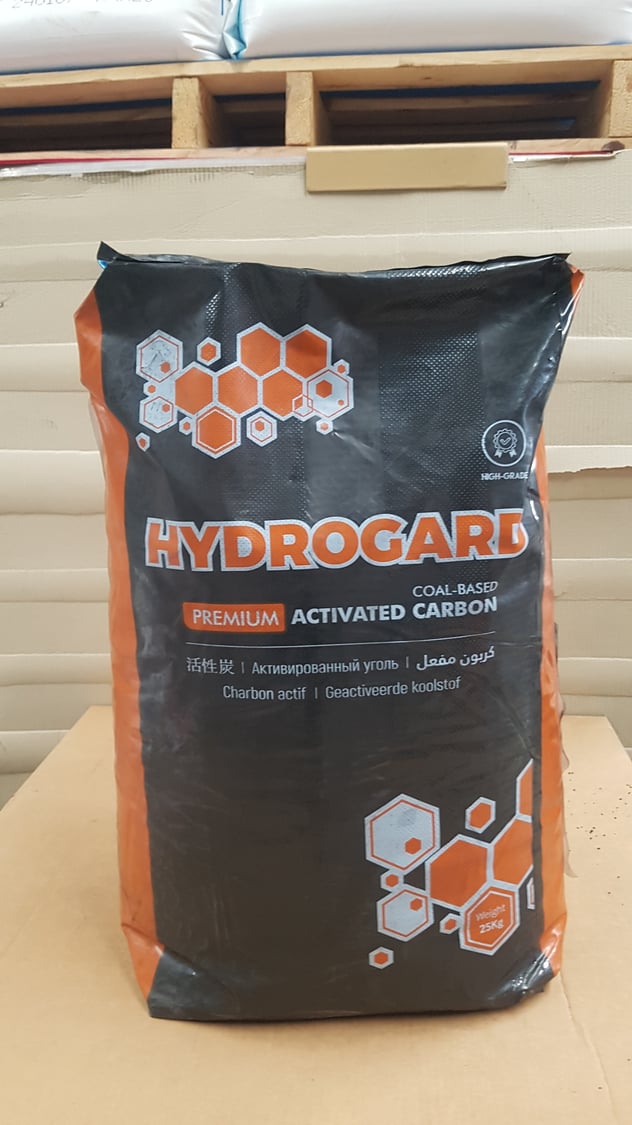
What Is Hydrogard Anthracite?
Hydrogard Anthracite is a granular medium for physical filtration. It helps reduce suspended particles and turbidity before water enters downstream processes such as activated carbon, softening, ultrafiltration, reverse osmosis, or disinfection.
It can be used alone or as part of a multimedia bed with silica sand and support media. The correct configuration depends on raw-water quality, flow rate, vessel diameter, bed depth, filtration velocity, and backwash requirements.
Hydrogard Anthracite improves physical filtration, but does not automatically make water safe to drink. Potability depends on a complete treatment system and water-quality testing.
Benefits of Hydrogard Anthracite
- Depth filtration: distributes captured solids through multiple media layers.
- Improved clarity: helps reduce suspended solids and turbidity.
- Higher solids-holding capacity: a suitable multimedia arrangement can extend the period between backwash cycles.
- Operational efficiency: stable filtration runs are possible when media size, flow, and backwash are correctly designed.
- Flexible applications: suitable for pressure filters, gravity filters, pretreatment, and multimedia systems.
- Reusable filter medium: proper backwashing restores the bed for continued operation.
How Anthracite Works in a Multimedia Filter
Multimedia beds are arranged according to particle size and density. Hydrogard Anthracite normally forms the upper layer, with denser media below it. This arrangement captures particles progressively from the coarser upper layer to the finer lower layers and helps prevent premature surface clogging.
When differential pressure rises or outlet-water quality declines, the system must be backwashed to release retained solids and restore the media bed.
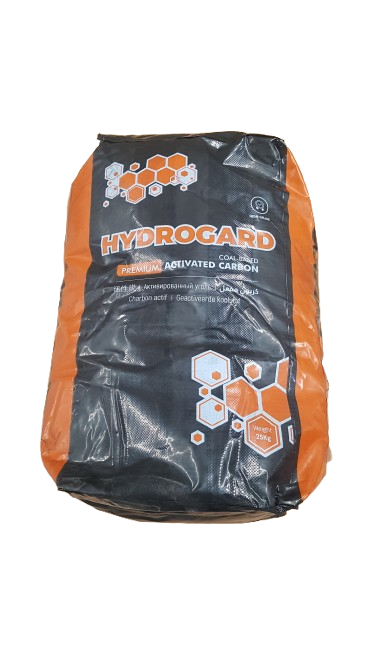
Hydrogard Anthracite Applications
- Raw-water pretreatment before reverse osmosis or ultrafiltration.
- Multimedia filters for buildings, hotels, hospitals, apartments, and commercial facilities.
- Process-water treatment in food, beverage, textile, chemical, and manufacturing plants.
- Well-water filtration for turbidity and suspended solids.
- Clean-water treatment and water-reuse systems.
- Pools, public facilities, and other utilities requiring physical solids removal.
Performance varies by application. Raw-water analysis and operating data are needed to determine whether anthracite should be combined with silica sand, activated carbon, manganese media, resin, membranes, or other treatment stages.
Important Selection Factors
Raw-Water Quality
Check turbidity, total suspended solids, color, iron, manganese, organic matter, and other relevant parameters. Dissolved contaminants may require additional treatment.
Flow and Filtration Rate
Flow determines filter diameter and media surface area. An undersized system may develop excessive pressure drop, inadequate contact time, and frequent backwashing.
Media Arrangement and Bed Depth
Each layer must suit the vessel and filtration objective. Incorrect arrangement can cause media mixing, media loss, or uneven flow distribution.
Underdrain and Nozzles
Nozzles, strainers, distributors, and gravel support must be compatible with the media size to prevent media carryover and uneven backwashing.
Backwash Requirements
The pump and valve must supply enough backwash flow to expand the bed without washing media out of the vessel. Backwash water also needs a suitable drain.
Operation and Maintenance
Monitor inlet and outlet pressure, filtered-water clarity, service flow, and backwash performance. Backwash when differential pressure rises or water quality declines, verify even backwash distribution, check for media loss, and reassess raw-water conditions if backwashing becomes much more frequent.
Why Choose Watermart Perkasa?
PT Watermart Perkasa helps customers select filter media using technical data, including source-water quality, system capacity, vessel size, media arrangement, valves, nozzles, underdrains, integration with other processes, and project delivery requirements throughout Indonesia.
Learn more about Watermart media filtration solutions.
Frequently Asked Questions
What is the main function of Hydrogard Anthracite?
It helps remove suspended solids and reduce turbidity as part of a physical filtration process.
Is anthracite the same as activated carbon?
No. Anthracite primarily filters particles, while activated carbon helps reduce chlorine, odor, taste, color, and certain organic compounds.
Can it be used as a single medium?
Yes, depending on the system design, although it is frequently combined with silica sand and support media.
Does anthracite make water immediately drinkable?
Not necessarily. Drinking-water safety depends on the entire treatment train and laboratory test results.
How much media is required?
The amount depends on vessel diameter, bed depth, backwash freeboard, and the other media layers. Watermart can assist with an initial calculation.
Get the Right Water Filtration Solution
Discuss Hydrogard Anthracite, multimedia filter configuration, system capacity, and project requirements with the Watermart Perkasa team.
Contact Watermart via WhatsApp