
CEI Anthracite Filter Media for Water Filtration | Watermart Perkasa
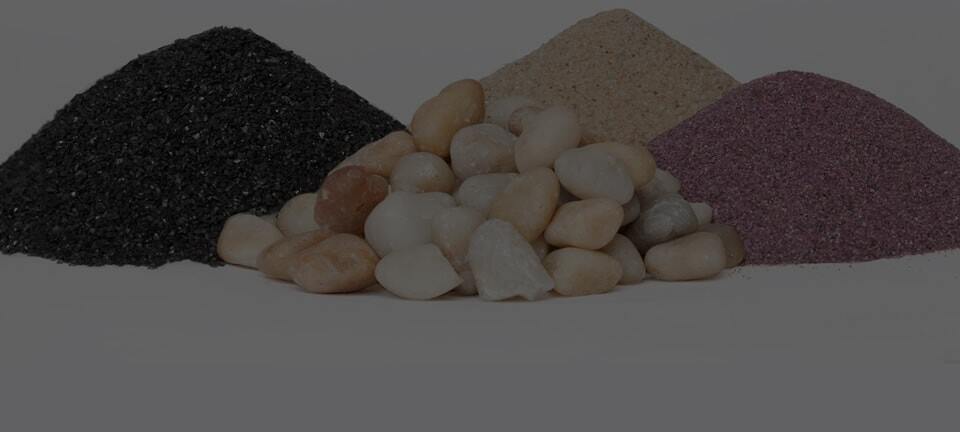
Welcome to PT Watermart Perkasa
PT Watermart Perkasa supplies CEI Anthracite, a high-quality filter media designed to support water filtration processes for industrial facilities, commercial buildings, utilities, and water treatment plants.
With its high carbon content, strong granular structure, and characteristics suitable for granular filtration, CEI Anthracite can be used as a filter layer to help retain turbidity-causing particles and suspended solids from water.
The media can be applied as a single filtration layer or as part of a dual-media filter or multimedia filter, depending on the raw water quality, system capacity, treatment target, and filtration unit design.
Trusted for a Wide Range of Industrial Applications
CEI Anthracite can be incorporated into water filtration systems for industries that require clearer and more stable water quality. Media size, bed depth, filtration velocity, and backwash requirements must be adjusted to the operating conditions of each system.
The Watermart Perkasa team can help evaluate media requirements based on water quality data, treatment capacity, filter vessel dimensions, and the desired treated-water quality.
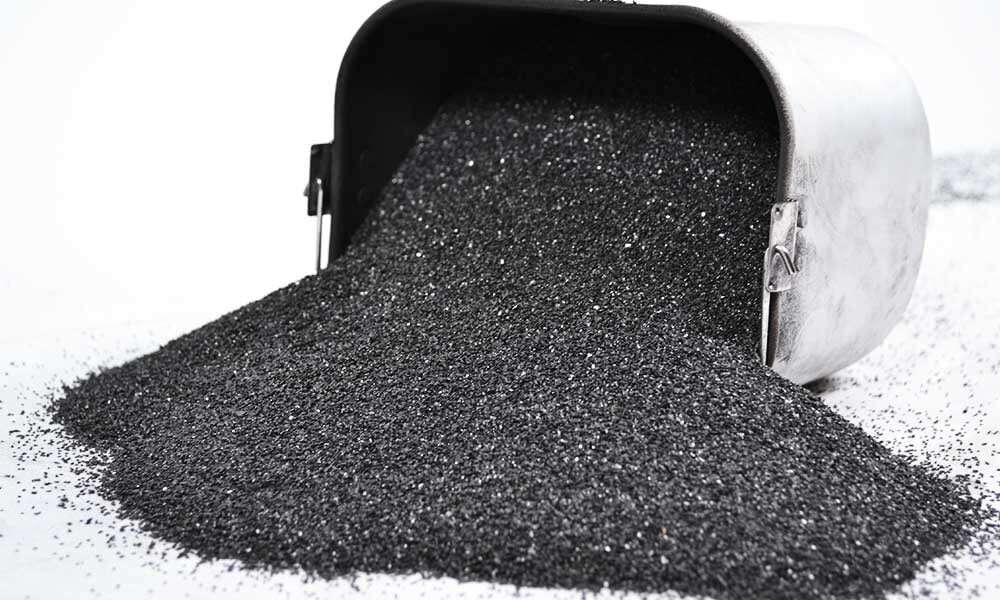
What Is CEI Anthracite Filter Media?
CEI Anthracite is a granular anthracite filter medium used to help separate solid particles from water. During filtration, water flows through the media bed while sediment, suspended matter, and other particles are retained within the spaces between the granules.
Anthracite is commonly installed as the upper layer of a dual-media or multimedia filter because it has a lower specific gravity than silica sand. When the system is properly designed and operated, the differences in particle size and specific gravity allow the media layers to remain stratified after backwashing.
CEI Anthracite is not activated carbon. Its primary function is physical filtration for particle removal, while activated carbon is more commonly used to adsorb odor, color, chlorine, and certain organic compounds.
Key Benefits of CEI Anthracite
High Carbon Content
Anthracite’s high carbon content supports media stability and its use in water filtration systems. Actual product quality should always be confirmed through the relevant datasheet, certificate of analysis, and available batch specifications.
Helps Reduce Turbidity
The media bed helps retain particles that cause turbidity as water passes through the filter. Performance is influenced by particle size, bed depth, flow rate, raw water quality, and the condition of the filtration unit.
Good Solids-Holding Capacity
Using anthracite as the upper layer can help distribute particle retention deeper into the filter bed, rather than allowing most solids to accumulate only at the surface.
Supports More Efficient Filtration Cycles
With the correct configuration, dual-media and multimedia filters can provide longer operating cycles before backwashing than systems that rely only on a single fine-media layer.
Durable for Repeated Operation
Filter media must have sufficient physical strength to withstand transportation, loading, filtration, and repeated backwashing. Regular inspection remains important for maintaining system performance.
Easy to Combine with Other Media
CEI Anthracite can be combined with silica sand, garnet, and graded support gravel to create a multimedia filtration bed suited to the process requirements.
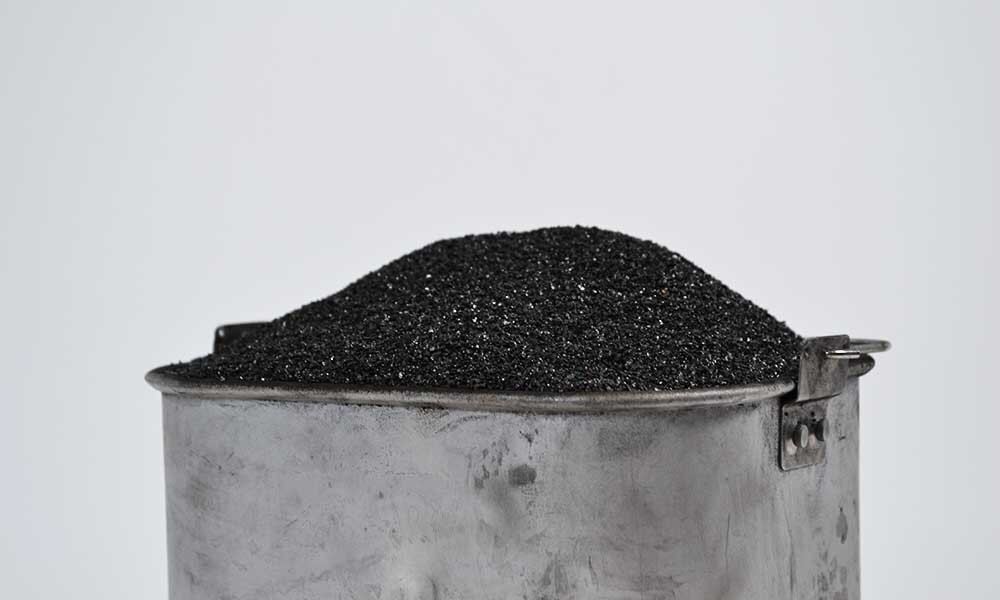
How CEI Anthracite Works in a Multimedia Filter
In a multimedia filtration system, each layer performs a different function. A typical arrangement may place anthracite at the top, silica sand in the middle, denser media below, and graded gravel as the support layer.
The filtration process generally follows these stages:
- Raw water enters the filter vessel.
- Water passes through the CEI Anthracite layer, which helps retain larger particles and suspended matter.
- Water moves through the sand or finer-media layer for further filtration.
- Filtered water leaves the vessel and flows to the next process or point of use.
- When pressure drop increases or treated-water quality declines, the system is backwashed to remove trapped solids.
Filtration effectiveness depends on distributor and underdrain design, media depth, particle size, filtration velocity, bed expansion during backwash, and the available backwash flow rate.
Comparison of Filter Media Functions
| Filter media | Typical position | Main function | Notes |
|---|---|---|---|
| CEI Anthracite | Upper layer | Retains turbidity and suspended solids | Lower specific gravity than sand |
| Silica sand | Middle layer | Filters finer particles | Particle size must follow the system design |
| Garnet or dense media | Lower layer | Supports staged filtration | Used in selected multimedia configurations |
| Support gravel | Base layer | Supports the media and protects the underdrain | Requires properly graded sizes |
The arrangement above is a general example. The actual configuration should be determined from raw water analysis and filter design calculations.
Supporting Cleaner and More Efficient Operation
CEI Anthracite is used as filtration media, not as a fuel in a water treatment system. Its environmental and operational benefits relate to supporting solids separation, improving process efficiency, and helping protect downstream treatment units.
A properly designed filtration system can help:
- Reduce turbidity and suspended solids.
- Lower the solids load on cartridge filters and membranes.
- Improve the stability of Reverse Osmosis pretreatment.
- Reduce operational disturbances caused by sediment.
- Help extend the service life of downstream equipment.
- Optimize backwash water consumption through proper operating controls.
CEI Anthracite Applications
CEI Anthracite can be used as part of filtration systems for:
- Water treatment plants.
- Industrial water and process-water treatment.
- Reverse Osmosis pretreatment.
- Water systems for buildings, hotels, hospitals, and commercial facilities.
- Surface water and groundwater treatment.
- Swimming pool and recreational-water filtration.
- Food and beverage pretreatment systems.
- Power plants, manufacturing facilities, mining operations, and industrial utilities.
- Filtration upstream of cartridge filters, ultrafiltration systems, and other membrane processes.
For drinking-water applications or processes with specific quality standards, the treated water must be tested and may require additional treatment such as coagulation, oxidation, disinfection, activated carbon, softening, ultrafiltration, or Reverse Osmosis.
What to Consider Before Selecting Anthracite
Particle Size and Size Distribution
Media size influences particle retention, pressure loss, filtration velocity, and backwash requirements. Product specifications should match the vessel design and filtration target.
Effective Size and Uniformity Coefficient
These parameters describe the particle-size characteristics of the media. The required values should follow engineering calculations, technical recommendations, and project specifications.
Specific Gravity
Differences in specific gravity between anthracite, sand, and supporting media influence the stability of the media layers after backwashing.
Media Strength and Cleanliness
The media should be evaluated for physical strength, fines content, cleanliness, and suitability for water treatment applications.
Raw Water Quality
Turbidity, total suspended solids, iron, manganese, organic matter, pH, flow rate, and other relevant parameters should be analyzed before the filtration configuration is selected.
Backwash Requirements
The pump, valves, distributor, and backwash-water source must provide sufficient flow to expand the media bed and release trapped solids without washing the media out of the vessel.
Operation and Maintenance Guidelines
To help CEI Anthracite perform effectively:
- Clean or rinse the media before use according to the technical instructions.
- Confirm that the layer arrangement and media depth match the design.
- Operate the filter at the specified flow rate.
- Monitor inlet and outlet pressure to track pressure drop.
- Backwash the filter when pressure increases or treated-water quality declines.
- Inspect for media loss after backwashing.
- Test turbidity and other relevant water-quality parameters regularly.
- Add or replace media if the bed volume decreases, granules become damaged, or performance cannot be restored through backwashing.
Why Choose PT Watermart Perkasa?
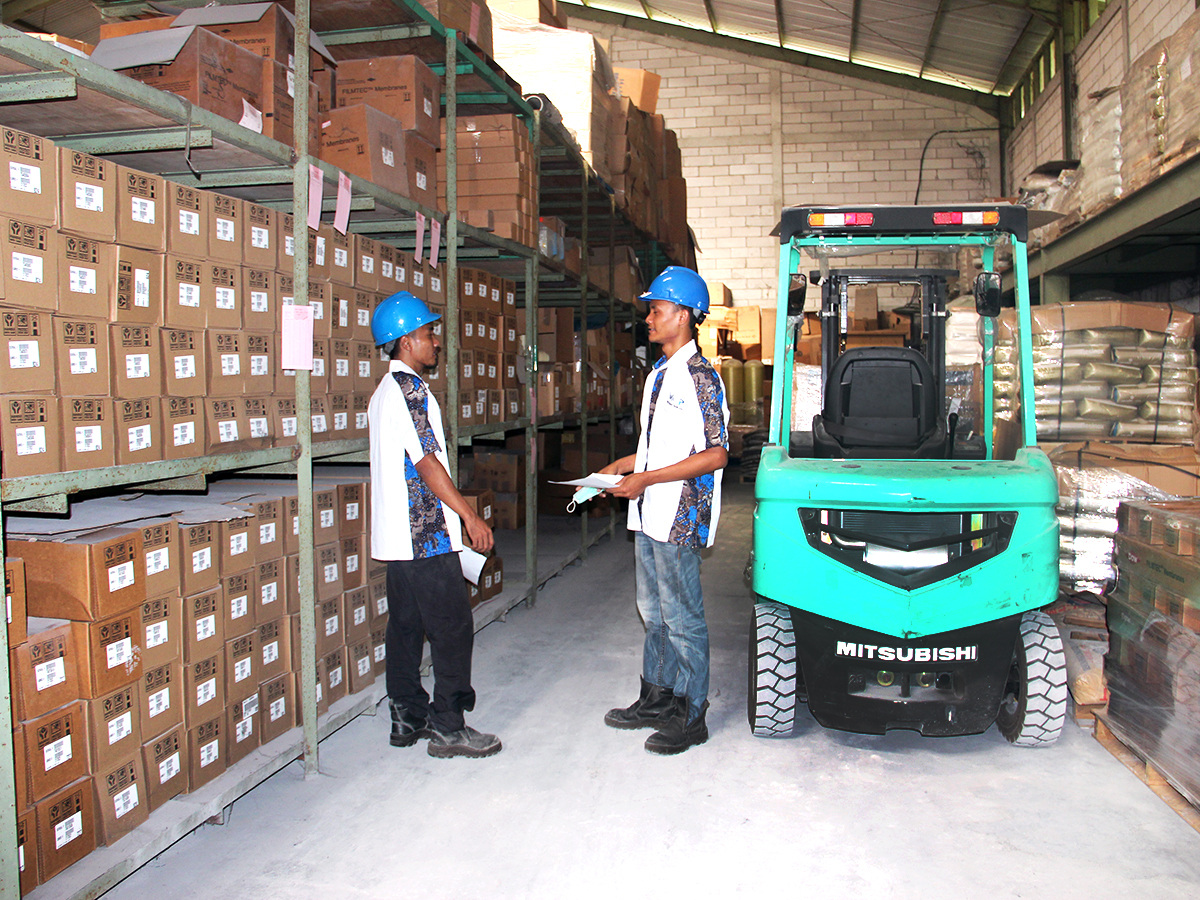
PT Watermart Perkasa supplies water treatment products for industrial users, commercial facilities, contractors, distributors, and facility owners throughout Indonesia.
Customers can receive support for:
- Filter media selection.
- Media-volume evaluation.
- Dual-media and multimedia filter configuration recommendations.
- Project requirements and media replacement.
- Product availability and delivery information.
- Supporting products for complete water treatment systems.
Every water source has different characteristics. CEI Anthracite should therefore be selected based on water analysis and filtration design requirements, not only on price or vessel size.
Ready to Improve Your Filtration System?
Improve your water filtration process with CEI Anthracite from PT Watermart Perkasa. Share your system capacity, vessel size, raw water quality, and treatment target so our team can provide a more appropriate recommendation.
Request a Consultation and Quotation
Frequently Asked Questions
What is the function of CEI Anthracite in a water filter?
CEI Anthracite is a granular filtration medium that helps retain turbidity, sediment, and suspended solids as water passes through the filter bed.
Is CEI Anthracite the same as activated carbon?
No. Anthracite is primarily used for physical particle filtration, while activated carbon is used to adsorb odor, color, chlorine, and certain organic compounds.
Can CEI Anthracite be used with silica sand?
Yes. Anthracite is commonly installed as the upper layer of a dual-media or multimedia filter together with silica sand, garnet, and support gravel.
Can the media be loaded directly into the filter vessel?
The media should be inspected, cleaned or rinsed, and then loaded according to the specified sequence, volume, and layer depth in the filtration design.
When should CEI Anthracite be backwashed?
Backwashing should be performed when pressure drop increases, flow decreases, treated-water quality deteriorates, or according to the operating schedule established from the solids loading.
How much CEI Anthracite is required?
The required quantity depends on vessel diameter and area, media-bed depth, freeboard, the arrangement of other media, and the bed-expansion requirement during backwashing. The quantity should be calculated from the filtration design.
Is the filtered water immediately safe to drink?
Not always. The filtered water must be tested and may require additional processes such as disinfection, activated carbon, ultrafiltration, or Reverse Osmosis before it is suitable for drinking.