Industrial water filtration is not a one-size-fits-all decision. A system that works for a hotel may be too small for a factory, while a system designed for boiler feed water may not be suitable for cooling towers or product water. The right choice depends on water quality, flow rate, target contaminants, and the application itself.
This guide explains the main factors to consider when selecting an industrial water filtration system and how to avoid choosing equipment that is either undersized or unnecessary for your process.
Why Industrial Filtration Must Be Selected Carefully
Industrial systems handle much higher flow rates and more demanding operating conditions than household systems. If the filtration stage is too weak, sediment, color, odor, iron, manganese, or organics can damage downstream equipment and reduce process efficiency.
If the system is oversized, the investment cost may become harder to justify. That is why filtration should be matched to real operating conditions, not just to a product brochure.
Start with Raw Water Analysis
The first step is always water analysis. Before choosing equipment, you need to know what is actually in the water:
- Suspended solids
- Turbidity
- Iron and manganese
- Hardness
- Chlorine or chloramine
- Organic color and odor
- Microbial contamination
- TDS and conductivity
The analysis determines whether the system needs sediment filtration, carbon filtration, softening, iron removal, membrane treatment, or disinfection.
Match the System to the Application
Different industries have different priorities:
- Factories may need consistent process water
- Hotels may need clean water for guest use and laundry
- Boilers need low-scale feed water
- Cooling towers need stable water chemistry
- RO systems need strong pretreatment
- Production lines may need stable quality and low downtime
The more critical the process, the more important it is to combine several treatment stages instead of relying on a single filter.
Common Industrial Filtration Stages
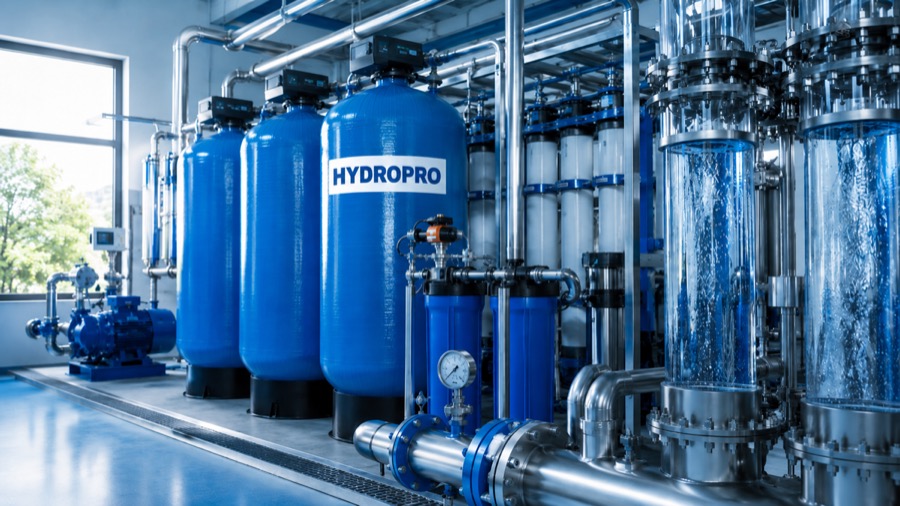
A practical industrial system often includes:
- Sediment filtration to remove sand and large particles
- Carbon filtration to reduce chlorine, odor, and organics
- Iron or manganese removal if needed
- Water softening for hardness control
- Cartridge filtration for fine polishing
- UV or other disinfection when microbiological control is required
- RO or other membrane treatment for high-purity water
Each stage protects the next one and helps the system run more efficiently.
Flow Rate and Pressure Matter
Industrial filtration must be sized for peak demand, not just average daily use. A filter that works well at low flow may fail when production increases.
Pressure drop is also important. If the filter creates too much resistance, pumps must work harder and energy costs rise. The best system balances capacity, pressure loss, and service life.
Maintenance and Media Replacement
Industrial water filters should be easy to service. Before choosing a system, check:
- How often media must be replaced or backwashed
- Whether spare parts are available locally
- Whether the system can be monitored easily
- Whether the operator can clean or replace elements without long downtime
In industrial environments, maintainability is as important as filtration performance.
How to Choose the Right System
Use this short checklist:
- Analyze the raw water.
- Define the required outlet quality.
- Identify the peak flow rate.
- Choose the treatment stages required for the application.
- Check operating pressure and energy impact.
- Confirm maintenance frequency and spare-part availability.
Conclusion
The right industrial water filter is the one that matches your water quality, process needs, and operating conditions. Start with analysis, define the application clearly, and choose a treatment train that protects downstream equipment while keeping operating costs under control.
If you are planning a factory, hotel, boiler, cooling tower, or process water system, the safest approach is to design filtration around the actual water data instead of guessing.

.png)