
Short answer: a water strainer is a mechanical screen that traps solid particles before flow reaches a pump, valve, flow meter, or downstream filter. A strainer does not soften water or replace a cartridge filter; it protects equipment from debris larger than the selected screen or mesh opening.
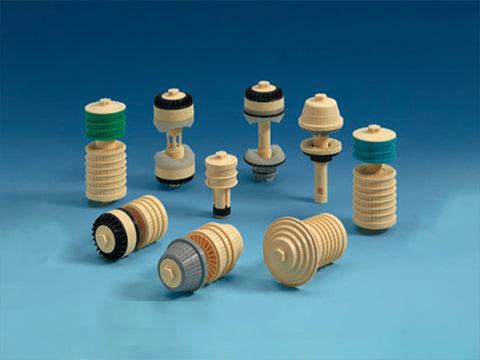
Select a strainer from the particle size to be retained, normal and peak flow, working pressure, allowable pressure drop, pipe and fluid materials, and cleaning method. A Y-strainer suits a relatively low solids load and periodic shutdown; a basket strainer provides more screen area; a duplex unit keeps flow online while one basket is cleaned. An unnecessarily fine screen blocks quickly, while an overly coarse screen fails to protect downstream equipment.
PT Watermart Perkasa supplies water-treatment components in Indonesia. For a useful review, provide a water analysis, solids type and estimated load, pipe size, flow, pressure, temperature, permitted materials, and whether the process may stop for cleaning. These data are more useful than selecting a strainer from connection diameter alone.
Updated 1 August 2026: this guide adds an open-area worksheet, differential-pressure tapping plan, and strainer commissioning record.
Strainer Open-Area and Pressure-Drop Worksheet
Direct answer: connection size and mesh count are not enough to establish strainer capacity. Check internal pipe diameter, effective screen area, percent open area, clean and dirty flow, the pressure-drop curve, and the solids volume that can be retained before cleaning.
Use these preliminary relationships to compare candidate models on a consistent basis:
Pipe flow area (m²) = π × internal diameter² ÷ 4Screen-area ratio = effective open screen area ÷ pipe flow areaDifferential pressure = upstream pressure − downstream pressure, at the defined tapping points
Geometry example, not a universal requirement: a 100 mm internal pipe diameter has an area of π × 0.10² ÷ 4 = 0.00785 m². If a model datasheet states an effective open screen area of 0.0314 m², the ratio is 0.0314 ÷ 0.00785 = 4.0. This comparison is valid only when the manufacturer explains whether the stated area already accounts for the screen’s percent open area; total basket surface is not automatically effective flow area.
| Worksheet input | Evidence source | Design check |
|---|---|---|
| Internal diameter and pipe schedule | Isometric, line list, or actual pipe data | Calculate flow area from internal diameter, not nominal pipe size |
| Minimum, normal, and maximum flow | Design basis and operating data | Check pressure drop and stability across the full range |
| Screen opening and wire/perforation dimensions | Offered screen datasheet | Match damaging particle size, open area, strength, and blockage risk |
| Effective screen area | Model drawing/datasheet | Compare area ratio under the same manufacturer definition |
| Clean and dirty pressure-drop curve | Manufacturer curve for the fluid, screen, and size | Set pump margin and project alarm/cleaning limits |
| Solids mass/volume and arrival frequency | Samples, drain log, or field trial | Select Y, basket, duplex, or self-cleaning design from actual load |
| Cover-opening and basket-removal space | Layout and lifting access | Confirm maintenance without dismantling the pipework |
Provide upstream and downstream pressure points that can be read at the same time. Record elevation, gauge/transmitter range, valve condition, and instrument accuracy; a changed valve position or a gauge that does not return to zero can resemble a blocked screen. Alarm and cleaning limits must come from flow demand, the model curve, pump margin, and screen capability—not a single number copied from another installation.
Strainer Commissioning and Acceptance Record
Direct answer: accept a strainer only after checking flow direction, rating, screen, gasket, isolation, pressure readings, service access, and leakage under actual conditions. A clean-screen baseline is essential if operators are to recognize blockage or damage later.
| Check | Evidence recorded | Acceptance criterion |
|---|---|---|
| Identity and rating | Tag, manufacturer, model, size, class/rating, body/screen/seal material, and temperature | Matches the line list, fluid, pressure, temperature, and approved datasheet |
| Installation | Flow arrow, basket orientation, pipe support, drain/vent, cover clearance, and lifting access | Screen can be removed safely; nozzles carry no unintended piping load |
| Isolation and depressurization | Upstream/downstream valves, vent, drain, LOTO, and zero-pressure verification | Cover cannot be opened before energy and pressure are released under site procedure |
| Hydraulic baseline | Flow, upstream/downstream pressure, differential pressure, temperature, and valve position with a clean screen | Consistent with the model curve and downstream flow requirement |
| Leakage test | Test/operating pressure, duration, cover, drain, connections, and inspection result | No leakage or deformation; gasket remains acceptable under the model procedure |
| Retention evidence | Screen condition after initial operation and downstream debris check | Screen is seated, seam is intact, and target debris does not bypass |
| Handover | Alarm/cleaning limit, spare gasket/screen, manual, torque, and inspection log | Operator can isolate, clean, reassemble, and restore flow |
For a duplex strainer, repeat the test on each side and perform a changeover at operating flow. Verify that the opened side is positively isolated while the active side carries design flow without exceeding the approved pressure drop. For a self-cleaning unit, record the trigger, duration, backwash flow, minimum pressure, drain capacity, and safe state after loss of electrical power or control pressure; use the solenoid and pneumatic valve test guide to prove those interlocks.
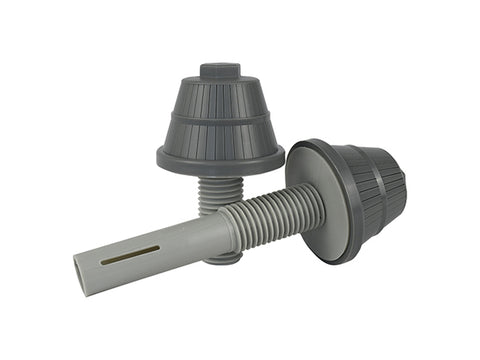
Strainers protect pumps, valves, and instruments
A strainer retains particles larger than its screen opening while allowing flow to continue. Its protective value depends on matching the opening, screen area, flow, and pressure-drop limit to downstream equipment.
- Equipment Protection: Strainers protect equipment such as pumps, meters, and other system components from large particles that can cause damage or blockage.
- Process Efficiency: By filtering out dirty particles, strainers help maintain industrial process efficiency and reduce downtime due to equipment maintenance.
- Downstream Protection: A strainer reduces the coarse-particle load reaching cartridges, nozzles, or the next filtration unit.
In wastewater treatment, a strainer may retain foreign objects before a pump or later process. It removes only solids captured by its opening; final-effluent performance still depends on the complete treatment train.

Types of Strainers
There are several types of strainers used depending on the need and type of particles that need to be filtered:
- Y-Strainer: Resembling the letter Y in shape, effective for applications where relatively few particles need to be filtered.
- Basket Strainer: Has a basket-shaped strainer, suitable for systems with larger amounts of dirt.
- Duplex Strainer: Two strainers that can operate interchangeably, very useful for non-stop operations.
- Simplex Strainer: This type of strainer is easy to maintain and suitable for applications that do not require continuous filter cleaning.
In addition, there is the Automatic Strainer which automatically cleans itself through a backwashing mechanism, very effective for operations that require minimal maintenance and high efficiency. This type of strainer is ideal for applications with micron-sized and high-volume impurities, such as in large municipal or industrial water treatment systems. Each of these strainer types is designed to meet specific specifications within the piping system, ensuring that they can handle the unique challenges of each application with maximum effectiveness.
How to select a strainer for the solids load and operating pattern
The right strainer type depends on solids load and whether flow may stop during cleaning. Use this table to screen the options before checking the manufacturer’s pressure-drop curve and model datasheet.
| Installation condition | Type to evaluate | Data to verify |
|---|---|---|
| Low solids load, smaller pipe, brief shutdown permitted | Y-strainer | Screen opening, installation orientation, drain/blow-off, and screen-removal clearance |
| Higher solids load or more screen area required | Basket/simplex strainer | Open area, basket capacity, clean and dirty pressure drop, and lifting weight |
| Process must remain online while a basket is cleaned | Duplex strainer | Changeover mechanism, sealing, isolation, and full design flow through one side |
| Manual cleaning is too frequent | Automatic/self-cleaning strainer | Backwash flow, minimum pressure, drain capacity, control logic, and cleaning interval |
Mesh count must be matched to the screen opening
Mesh count is not a standalone particle size. The actual opening also depends on wire diameter and screen construction, so two screens with the same mesh designation may not have the same open area, flow capacity, or pressure drop.
| Screen data | Why it matters |
|---|---|
| Opening in microns or millimetres | Indicates the particle size that can nominally be retained |
| Wire diameter and open area | Affect screen strength, flow, and pressure drop |
| Screen and body materials | Must suit fluid chemistry, temperature, and corrosion risk |
| Clean and dirty pressure-drop curves | Establish hydraulic suitability and the cleaning point |
For a quotation, provide the particle size to retain and the smallest particle that downstream equipment can safely tolerate. Do not convert mesh directly to microns without the table or datasheet for the selected screen manufacturer.
As a concrete catalog reference, Eaton’s 2026 manual pipeline strainer technical guide lists 28–63% open area across its screens and baskets and solids-removal options from 1/2 inch down to 40 microns, depending on construction and model. Those figures describe Eaton’s catalog range, not a universal specification; final design still follows the selected model’s datasheet and hydraulic curve.
When does a strainer system need automatic backwash control?
Automatic control is useful when a media filter or self-cleaning strainer must move through service, backwash, and rinse without relying on an operator. For a multi-valve train, AQ Matic valves, stagers, and controllers can be assessed from the sequence diagram, service and backwash flow, pilot pressure, valve count, stage duration, and safe position after loss of power or control pressure.
AQ Matic does not determine mesh size and is not a substitute for the strainer. Its role is flow sequencing. Buyers therefore need two data sets: filtration requirements for the screen and hydraulic plus sequence data for the valves and controller.
Pressure drop and screen condition determine the cleaning point
Clean a strainer when differential pressure reaches the operating limit set by the design or when flow falls below process demand. A calendar interval alone is inadequate because solids loading changes with the water source and operating condition.
| Symptom | First checks | Action to evaluate |
|---|---|---|
| Pressure drop rises quickly | Screen opening, solids load, valve position, and pressure gauges | Clean the screen; check whether the mesh is too fine or screen area too small |
| Debris appears downstream | Torn screen, open seam, poorly seated basket, or damaged seal | Isolate and inspect; replace a component that no longer retains particles |
| Cleaning is too frequent | Solids-load variation, basket capacity, and operating pattern | Evaluate a larger basket, duplex unit, or self-cleaning strainer |
| Cover leaks | Gasket, bolt torque, seating surface, and pressure | Follow the model manual’s assembly procedure and gasket rating |
| Corrosion or erosion appears | Body/screen material, fluid chemistry, velocity, and temperature | Confirm material compatibility and velocity limits with the manufacturer |
Use this basic safe-work sequence together with the manufacturer’s manual:
- Stop or divert flow and isolate both sides of the strainer.
- Release pressure and confirm that the fluid is safe to handle.
- Record pressure drop, valve position, and condition before opening the cover.
- Clean without enlarging openings or damaging a seam; inspect for deformation, holes, and corrosion.
- Inspect the gasket and seating surface, then reassemble with the specified procedure and torque.
- Restore flow gradually, check for leaks, and record clean pressure drop as the next baseline.
For chemicals, hot water, or hazardous fluids, isolation, personal protection, and residue disposal must follow the facility’s safety assessment.
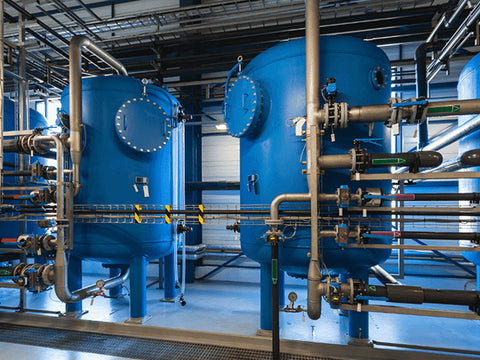
Strainers protect water-treatment equipment from debris
In water treatment, a strainer primarily protects the hydraulic path and equipment. Checkable benefits include:
- Reduction of Damage Risk: Removing particles that can damage components in the system.
- Increased Efficiency: Keeps water flowing smoothly and efficiently by reducing potential blockages.
- Downstream Filter Protection: Retaining large debris before it reaches finer filtration.
Track differential pressure, or pressure before and after the strainer, to set cleaning from actual condition. Pressure trends, basket condition, and the solids removed provide evidence that the screen opening and service interval are appropriate.
Ensuring that the strainer matches the application improves process reliability and protects downstream equipment. For a pressurized media filter, also compare Pentair nozzle strainers for water distribution and media retention with the underdrain design; these are different from Y-strainers or basket strainers installed in a pipeline.
Frequently asked questions about water strainers
Is a finer mesh always better?
No. A finer opening retains smaller particles but usually increases pressure drop and cleaning frequency. Select the opening from the particle size that threatens downstream equipment, then check open area, flow, and the model’s pressure-drop limit.
When should a buyer choose a duplex strainer?
Choose a duplex unit when process flow must continue while one basket is cleaned. Confirm that either side can carry the full design flow and that the changeover mechanism isolates the opened side.
What data are needed for a quotation?
Provide pipe size, normal and maximum flow, pressure, temperature, fluid, solids load and particle size, permitted materials, allowable pressure drop, operating pattern, service clearance, and any automatic-backwash requirement.
Send those data through the PT Watermart Perkasa contact page for consultation and water-strainer component selection.