Quick answer: water hardness is the concentration of mainly calcium and magnesium, reported as mg/L CaCO3. Test total hardness before selecting a softener; the USGS classifies water above 180 mg/L as very hard. Resin quantity depends on daily hardness load, the resin’s working capacity at the selected salt dose, and the interval between regenerations—not pipe diameter alone.
Updated 21 July 2026: this guide summarizes the hardness definition, test units, and buyer data needed before selecting a softener.
What is Water Hardness?
Water hardness is a term used to describe the content of dissolved minerals in water, primarily calcium and magnesium. Water that contains high concentrations of these minerals is referred to as “hard water”. In contrast, water with a low mineral content is called “soft water.”
Water hardness is usually expressed in milligrams per liter (mg/L) or parts per million (ppm) as calcium carbonate (CaCO3). Use the same basis when comparing laboratory results, controller settings, and resin-capacity data.
| Total hardness as CaCO3 | USGS classification | Operating meaning |
|---|---|---|
| 0–60 mg/L | Soft | Softening is usually unnecessary for scale control |
| 61–120 mg/L | Moderately hard | Watch scale on heaters, showers, and hot-water appliances |
| 121–180 mg/L | Hard | Evaluate softening where scale disrupts operation or maintenance |
| >180 mg/L | Very hard | High scale load; size treatment from test data and actual consumption |
This USGS classification is an operating guide, not a drinking-water health limit.1 For potable use in Indonesia, results must still be assessed against the physical, microbiological, chemical, and radioactive parameters in Ministry of Health Regulation No. 2 of 2023; hardness alone does not prove that water is safe.2
Water Hardness Unit Conversions
| Reported unit | Conversion to mg/L as CaCO3 |
|---|---|
| 1 ppm as CaCO3 | ≈ 1 mg/L as CaCO3 in dilute water |
| 1 grain per US gallon (gpg) | 17.1 mg/L as CaCO3 |
| 1 French degree (°fH) | 10.0 mg/L as CaCO3 |
| 1 German degree (°dH) | 17.848 mg/L as CaCO3 |
| 1 mmol/L CaCO3 equivalent | 100.09 mg/L as CaCO3 |
Do not read a test strip reported in gpg directly as ppm. For example, 12 gpg is approximately 12 × 17.1 = 205 mg/L as CaCO3, which is very hard under the USGS table.
Size Softener Resin from the Hardness Load
Preliminary sizing starts with the mass of hardness to be captured. Use actual daily volume, inlet hardness, outlet target, and the manufacturer’s working-capacity curve at the intended salt dose.
Daily load (g CaCO3) = water volume (m3/day) × (inlet hardness − target hardness) (mg/L)
Resin volume (L) = load per cycle (g CaCO3) ÷ resin working capacity (g CaCO3/L resin)
Design example, not a product rating: a home uses 1.5 m3/day, inlet hardness is 250 mg/L, target hardness is 60 mg/L, and regeneration is planned every three days. The cycle load is 1.5 × (250 − 60) × 3 = 855 g CaCO3. If the supplier curve confirms a working capacity of 45 g CaCO3/L at the selected salt dose, theoretical volume is 19 L; a 20% allowance gives about 23 L. The engineer must still check peak flow, freeboard, service/backwash velocity, injector size, and regeneration-water supply.
| Required input | Why it changes the size |
|---|---|
| Inlet total hardness and outlet target | Defines the exchange load |
| Daily consumption and peak flow | Sets cycle load plus valve and vessel size |
| Iron, manganese, turbidity, and free chlorine | May foul or damage resin and require pretreatment |
| Working capacity at the selected salt dose | Laboratory total capacity is not operating capacity |
| Days or volume between regenerations | Determines reserve capacity and salt use |
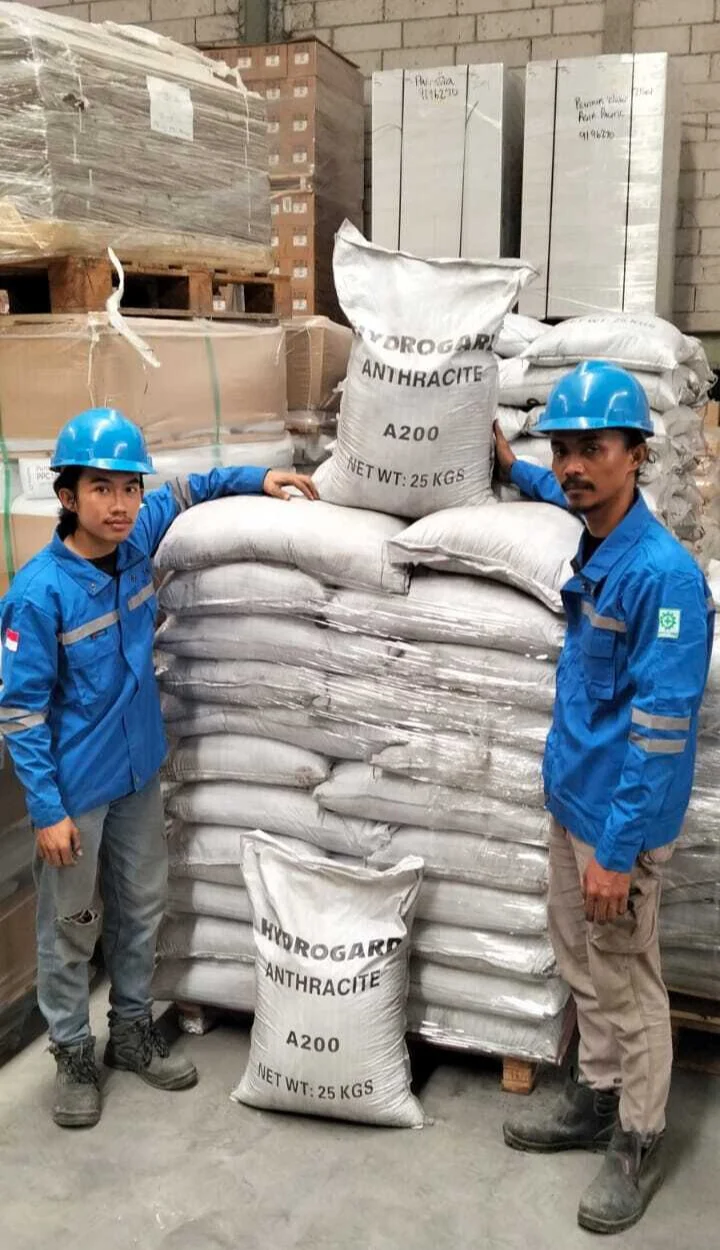
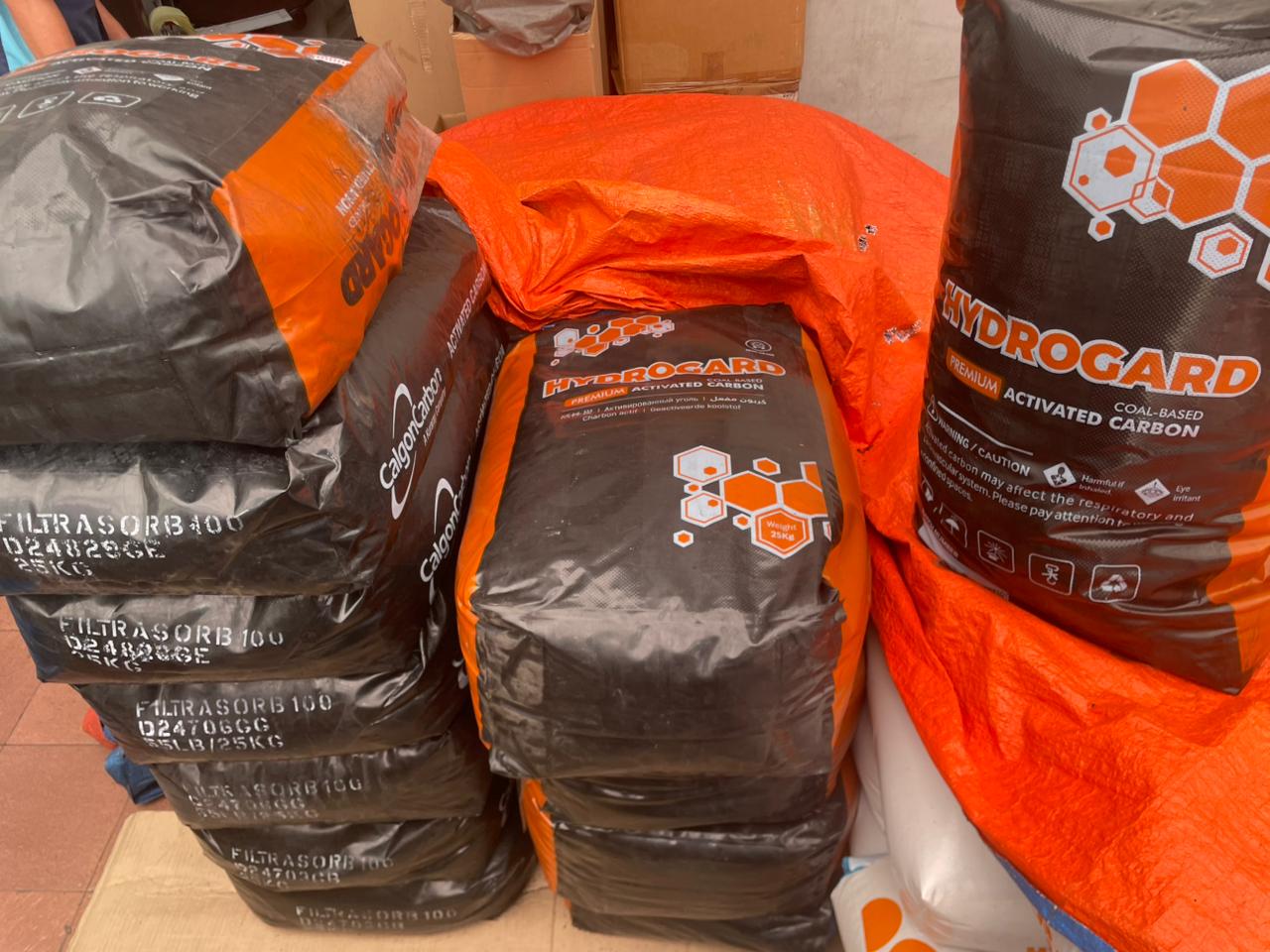
Bring these data when selecting ion-exchange resin, FRP softener vessels, and automatic control valves. If the raw-water profile is incomplete, water-quality testing by A3 Laboratories can precede component selection by PT Watermart Perkasa.
Regeneration and Softener Performance Checklist
- Test inlet and outlet hardness just after regeneration, midway through the cycle, and near exhaustion; record total volume per cycle.
- Match salt dose, brine draw, slow rinse, fast rinse, and refill time to the resin and controller manuals.
- Confirm that salt dissolves, no salt bridge has formed, the injector/venturi is clear, and brine level returns to its setpoint.
- Track pressure drop at service and backwash flow; a gradual increase can indicate fouling or poor flow distribution.
- If hardness leakage appears early, check raw-water changes, channeling, excessive service rate, insufficient brine, and iron/manganese fouling before adding resin.
- At commissioning, retain test results, controller settings, resin volume, resin type and batch, salt consumption, and inspection dates as the maintenance baseline.
.jpeg)
Causes of Water Hardness
Water hardness is mainly caused by the presence of positively charged metal ions (cations) in water. The main ions that cause hardness are:
- Calcium (Ca2+)
- Magnesium (Mg2+)
In addition, several other ions can also contribute to water hardness, albeit in smaller amounts:
- Iron (Fe2+ or Fe3+)
- Manganese (Mn2+)
- Strontium (Sr2+)
- Barium (Ba2+)
These ions usually come from rocks and minerals that are eroded by water as it flows through soils and rocks. This process occurs naturally and can vary depending on the geology of the area. For example, areas with a lot of limestone or dolomite tend to have harder water than areas with granite rocks.
The Impact of Water Hardness on Your Home
Water hardness can have various impacts on our homes and daily lives. Some of the main impacts include:
1. Scale Formation
One of the main problems caused by hard water is scale formation. Scale is a mineral deposit that forms when hard water is heated or vaporized. Scale can form on various surfaces and equipment, including:
- Water pipes
- Water boiler
- Washing machine
- Coffee maker
- Shower head
- Water tap
Scale formation can reduce equipment efficiency, shorten service life, and even cause damage if left untreated. For example, scale in water pipes can reduce water flow and increase pressure, which can eventually lead to leaks or pipe breakage.
2. Reduced Effectiveness of Soaps and Detergents
Hard water can reduce the effectiveness of soaps and detergents. This happens because calcium and magnesium ions in hard water react with soap, forming an insoluble precipitate known as “scum” or soap suds. As a result:
- It takes more soap or detergent to achieve the same cleaning results
- Clothes may feel stiff or rough after washing
- Tableware and glassware may have stains or films after washing
- Hair and skin may feel dry or itchy after bathing
3. Stains on Utensils and Surfaces
Hard water can leave stains or films on a variety of surfaces, including:
- Tableware and glassware
- Sinks and bathtubs
- Ceramic and tiles
- Cars after washing
These stains are often difficult to remove and can affect the appearance and cleanliness of your home.
4. Increased Energy Costs
Scale formation on water heating equipment, such as boilers or water heaters, can reduce energy efficiency. The scale layer acts as an insulator, reducing heat transfer and forcing the equipment to work harder to reach the desired temperature. This can lead to:
- Increased energy consumption
- Higher electricity or gas bills
- Shorter equipment life span
5. Plumbing Problems
Water hardness can cause a variety of plumbing problems, including:
- Pipe blockage due to scale accumulation
- Reduction in water flow
- Increased water pressure which can lead to leaks
- Damage to valves and fittings
These problems can cause costly damage and require repair or replacement of plumbing components.
Water hardness measurement method
To determine the level of water hardness in your home, there are several measurement methods that can be used:
1. EDTA titration
This method is the laboratory standard for measuring total water hardness. EDTA (Ethylenediaminetetraacetic acid) is used as a titrant to bind calcium and magnesium ions in the water sample. The color change of the indicator indicates the end point of the titration, which is then used to calculate the hardness of the water.
2. Hardness Test Kit
A commercially available hardness test kit uses a similar principle to the EDTA titration, but in a simpler form that is easy to use at home. Typically, these kits consist of an indicator solution and a titrant solution that is dripped into a water sample until a color change occurs.
3. Test Strips
The test strip is the simplest and quickest method to measure water hardness. These strips are dipped into a water sample, and the color change on the strip is compared to the color scale provided to determine the level of hardness.
4. Conductivity Measurement
While not directly measuring hardness, conductivity measurements of water can give a rough indication of the dissolved mineral content. Water with high conductivity tends to have higher hardness.
5. Laboratory Analysis
For the most accurate results, water samples can be sent to an accredited laboratory for comprehensive analysis. This analysis will not only provide a total hardness value, but also details on the concentration of specific ions such as calcium and magnesium.
Solutions to Address Water Hardness
There are several methods that can be used to solve the water hardness problem in your home:
1. Water Softening
Water softening is the most common method used to treat water hardness. This ion-exchange process replaces calcium and magnesium ions with sodium ions. A water softening system typically consists of a resin vessel, control valve, and salt-regeneration system.
The advantages of this method are:
- Effective at removing water hardness
- Prevents scale formation
- Increases the effectiveness of soaps and detergents
However, there are some considerations:
- Requires regular maintenance and salt addition
- Can increase sodium levels in drinking water
- May not be suitable for people on a low-sodium diet
2. Reverse Osmosis (RO)
Reverse-osmosis systems use semipermeable membranes to separate dissolved minerals, including hardness ions. Performance and recovery must be set from feed-water quality, pressure, temperature, and pretreatment design.
Advantages:
- Produces high quality water
- Removes various contaminants other than hardness
Considerations:
- Requires sufficient water pressure
- Can waste large amounts of water during the filtration process
- Requires periodic membrane replacement
3. Use of Scale Inhibitors
Scale inhibitors are chemicals added to water to prevent scale formation without removing hardness-causing minerals. This method is often used in large-scale water systems.
Advantages:
- Does not remove beneficial minerals from the water
- Effectively prevents scale formation
Considerations:
- Requires continuous chemical addition
- May not be suitable for drinking water
4. Use of Activated Carbon Filters
Activated carbon filters do not remove hardness, but can address compatible taste, odour, chlorine, or organic compounds according to carbon type and contact time.
Advantages:
- Improves water taste and odor
- Relatively inexpensive and easy to install
Considerations:
- Does not remove hardness
- Requires periodic filter replacement
5. Distillation
Distillation is a process in which water is heated to vaporize and then condensed back into water. This process removes almost all contaminants, including hardness-causing minerals.
Advantages:
- Produces very pure water
- Effectively removes a wide range of contaminants
Considerations:
- Requires considerable energy
- Relatively slow process
- Can remove beneficial minerals from water
Choosing the Right Solution
Choosing the right solution to address water hardness in your home depends on several factors:
- Water hardness level: Water with very high levels of hardness may require a more aggressive method such as water softening or reverse osmosis.
- Water requirements: If you need soft water for the whole house, a water softening system may be a good option. However, if you only need soft water for drinking and cooking, a point-of-use RO system may be more appropriate.
- Budget: Some solutions, such as RO systems or water softening, require a larger initial investment but can be cost-effective in the long run.
- Maintenance: Consider the service requirements for each solution. Some systems require periodic filter replacement or resin regeneration.
- Environmental impact: Some methods, such as RO, can waste large amounts of water during the filtration process. Consider the environmental impact of the solution you choose.
- Desired water quality: If you want high quality drinking water, methods such as RO or distillation may be more suitable.
Before selecting a solution, it is recommended to conduct a comprehensive water quality test to find out not only the level of hardness, but also other water quality parameters. This will help you choose the most effective and suitable solution according to your specific needs.
Conclusion
Water hardness is a common problem that can affect the quality of life and efficiency of appliances in your home. A good understanding of the causes, impacts, and solutions for water hardness can help you make informed decisions in managing the water quality in your home.
While water hardness can cause a variety of problems, there are many solutions available to address it. Ranging from household-scale water softening systems to point-of-use filters, each method has its own advantages and disadvantages. Choosing the right solution depends on the level of water hardness, the specific needs of the household, and other considerations such as budget and maintenance.
It is important to remember that while hard water can cause problems, it is not harmful to health and can even be a source of important minerals such as calcium and magnesium. Therefore, the decision to treat hard water should be based on a balance between the benefits and the potential problems it may cause.
Finally, it is always advisable to consult a water treatment professional before implementing any solution. They can help you conduct a comprehensive water analysis and recommend a solution that best suits your specific needs. With the right approach, you can overcome water hardness issues and enjoy the benefits of high-quality water in your home.
Questions and Answers
1. Is hard water dangerous to drink?
Hard water is generally not harmful to drink. On the contrary, it can be a source of important minerals such as calcium and magnesium. However, some people may not like the taste of hard water, and in the long run, hard water can cause problems with household appliances.
2. How can I tell if the water in my home is hard?
There are several ways to determine the level of water hardness in your home: - Use a water hardness test kit available at household supply stores. - Look for signs such as scale on appliances, a white film on glasses after washing, or difficulty in lathering when using soap. - Ask your local water company to provide information on water hardness in your area. - Send water samples to a laboratory for more accurate analysis.
3. Do water softening systems require a lot of maintenance?
Water softeners require salt replenishment based on consumption, brine-tank inspection, injector and venturi checks, and hardness-leakage testing. Do not replace resin by calendar age alone; use capacity loss, fouling, bead damage, pressure drop, and the manufacturer’s guidance to make that decision.
4. Is water hardness the same as TDS?
No. Hardness mainly describes calcium and magnesium, while TDS is the total of dissolved substances and can include other salts. A conductivity or TDS meter cannot replace a hardness test when sizing a softener; use titration or laboratory results to set resin quantity and regeneration.
References
-
Spellman, F. R. (2008). Handbook of water and wastewater treatment plant operations. CRC Press.
-
Hendricks, D. W. (2006). Fundamentals of water treatment unit processes: physical, chemical, and biological. CRC Press.
-
Binnie, C., & Kimber, M. (2013). Basic water treatment (5th ed.). ICE Publishing.
-
Byrne, W. (2002). Reverse osmosis: A practical guide for industrial users. Tall Oaks Publishing.
-
World Health Organization. (2011). Guidelines for drinking-water quality (4th ed.).
Footnotes
-
U.S. Geological Survey, Hardness of Water, classification at 0–60, 61–120, 121–180, and >180 mg/L as CaCO3. ↩
-
Audit Board of the Republic of Indonesia, Ministry of Health Regulation No. 2 of 2023, Indonesia’s implementing regulation on environmental health standards, effective 12 January 2023. ↩