
Pipe hydraulics · Darcy–Weisbach
Pipe velocity & pressure-loss calculator
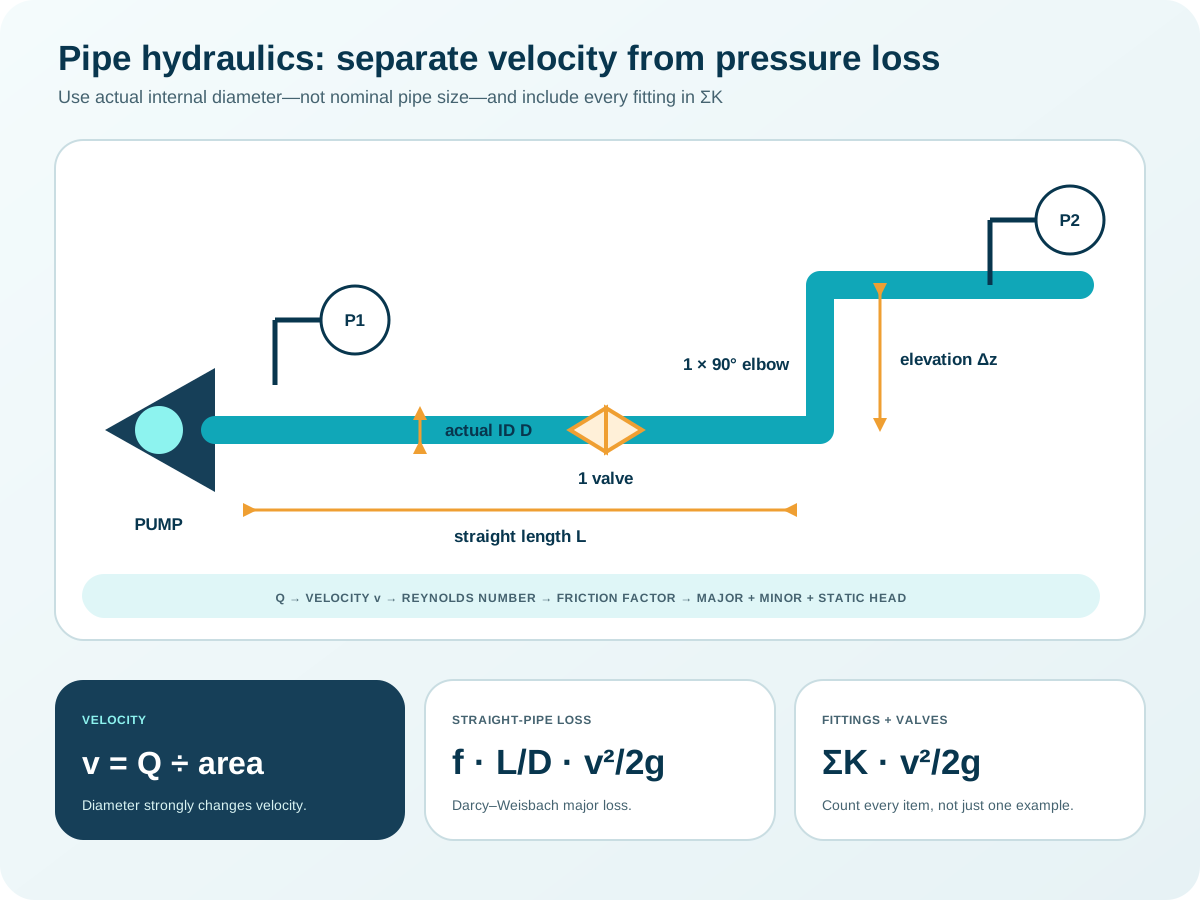
Use the actual internal diameter—not nominal pipe size—to see velocity, Reynolds number, friction factor and the pressure the pump must spend on pipe and fittings.
Pipe duty
Turbulent flow
Interpretation:
Why internal diameter matters
A small bore change has a large energy consequence.
Velocity rises with inverse area, and friction rises roughly with velocity squared. Pipe schedule, liner and scale can therefore matter more than the nominal size printed on the pipe. Turbulent friction uses the Haaland approximation.
Pump-curve handoff
This is one part of total dynamic head.
- Add equipment losses at their actual flows.
- Add required terminal pressure and elevation.
- Plot the system curve against the pump curve.
- Check minimum/maximum flow, NPSH and valve states.
Check the assumptions
Method and primary references
The equations are shown so the result can be checked. Product data and site conditions still govern final selection.
- GF Piping Systems Engineering GuidePipe hydraulic-design and material context.
- Grundfos Pump HandbookSystem head, friction and pump duty fundamentals.
- TLV Engineering CalculatorIndependent velocity/unit cross-check.
From answer to equipment
Bring the duty point, not just a product name.
Watermart can check the calculation against the actual water analysis, pressure, valve, pump and installation constraints.
Discuss this calculation →Educational preliminary calculation—not a stamped design, quotation, or treatment-performance guarantee.