Silica sand is one of the most widely used filter media in water treatment systems. It removes physical impurities such as mud, soil, fine sand, sediment, and suspended particles that make water appear cloudy.
In water treatment systems, silica sand is typically used as an initial filtration stage before the water enters downstream processes such as activated carbon, ion exchange resin, ultraviolet disinfection, cartridge filtration, or reverse osmosis. Because of this important role, silica sand is widely used in homes, buildings, hotels, drinking water refill stations, factories, and large industrial facilities.
For a more detailed explanation of how silica sand supports water purification, read Understanding the Role of Silica Sand in Water Filtration and Purification.
What Is Silica Sand?
Silica sand is a filter medium derived from silica, or silicon dioxide. Its grains are available in specific sizes that trap impurities as water passes through the filter bed.
In water treatment applications, silica sand is usually loaded into a filter vessel or pressure filter. As water flows through the media, contaminant particles are retained in the spaces between the silica sand grains. The filtered water becomes clearer and is better prepared for subsequent treatment stages.
Silica sand does not remove every type of contaminant. Its main purpose is physical filtration. If the water contains odor, color, iron, manganese, high hardness, or high total dissolved solids, additional media or treatment technologies are required.
Functions of Silica Sand in Water Filters
The primary function of silica sand is physical filtration. It helps reduce the solid particles carried by raw water.
Its main functions in water treatment systems include:
-
Removing mud and sediment
Silica sand can retain mud, soil, fine sand, and other physical impurities that make water appear cloudy.
-
Improving water clarity
Water containing suspended particles may look yellow, brown, or turbid. Silica sand filtration can significantly improve its clarity.
-
Protecting downstream filter media
Silica sand is often used as a pre-filter to prevent activated carbon, resin, cartridge filters, and RO membranes from clogging prematurely.
-
Reducing the load on downstream treatment
Removing larger particles at the beginning of the process allows subsequent equipment to operate more consistently and efficiently.
-
Helping extend equipment life
Unfiltered sediment can clog pipes, nozzles, valves, pumps, cartridges, and membranes. Silica sand helps reduce this risk.
Why Is Silica Sand Widely Used?
Silica sand is widely used because it is versatile, readily available in different grain sizes, and relatively easy to apply in many types of water filtration systems.
Its key advantages include:
- Suitable for residential, commercial, and industrial water filters.
- Effective at removing physical particles and sediment.
- Can serve as the primary medium in a sand filter.
- Can be combined with other media in a multimedia filter.
- Relatively easy to maintain through backwashing.
- Helps maintain the performance of downstream treatment systems.
Because of this flexibility, silica sand is often an important component in water filtration systems for a wide range of treatment requirements.
Applications of Silica Sand in Water Treatment
Silica sand is used in many types of water treatment systems. The following are some of its most common applications.
1. Residential Water Filters
In homes, silica sand is used to filter well water, groundwater, or municipal water that still contains fine particles. It helps produce clearer water before it is used for bathing, washing, and other daily needs.
2. Drinking Water Refill Stations
At drinking water refill stations, silica sand is generally used as the first treatment stage before activated carbon, cartridge filters, ultraviolet disinfection, or reverse osmosis. Its purpose is to reduce turbidity so that the downstream processes can work more effectively.
3. Hotels, Buildings, and Apartments
Commercial buildings require large volumes of clean water. Silica sand can be used in pressure filters to help maintain the quality of water supplied to bathrooms, kitchens, laundries, and public facilities.
4. Manufacturing Industries
In industrial facilities, silica sand is often part of the pretreatment system. Raw water containing sediment should be filtered before it is used in production, boilers, cooling towers, or advanced treatment systems such as reverse osmosis.
5. Wastewater Treatment
Silica sand can also be used during wastewater filtration to reduce suspended solids before the water enters a downstream process or is discharged in accordance with applicable standards.
Silica Sand in Multimedia Filters
Silica sand is frequently used in multimedia filters alongside anthracite, activated carbon, gravel, manganese greensand, or other specialized media. Each material performs a different function, allowing the combination to improve overall filtration performance.
Examples of media used in a water filter include:
- Anthracite helps remove larger particles in the upper layer.
- Silica sand helps remove fine particles and sediment.
- Gravel supports the filter media and underdrain system.
- Activated carbon helps reduce odor, color, and certain organic compounds.
- Ion exchange resin helps remove specific ions, including those responsible for hardness.
When ion removal is required, silica sand filtration can be followed by an ion exchange system.
Silica Sand Sizes for Water Filters
Silica sand is available in various mesh sizes. Selecting the correct size is important because it affects both filtration performance and water flow.
Finer silica sand can capture smaller particles, but it may cause the filter to clog more quickly when the raw water is highly turbid. Coarser media allows higher flow rates but is less effective at retaining fine particles.
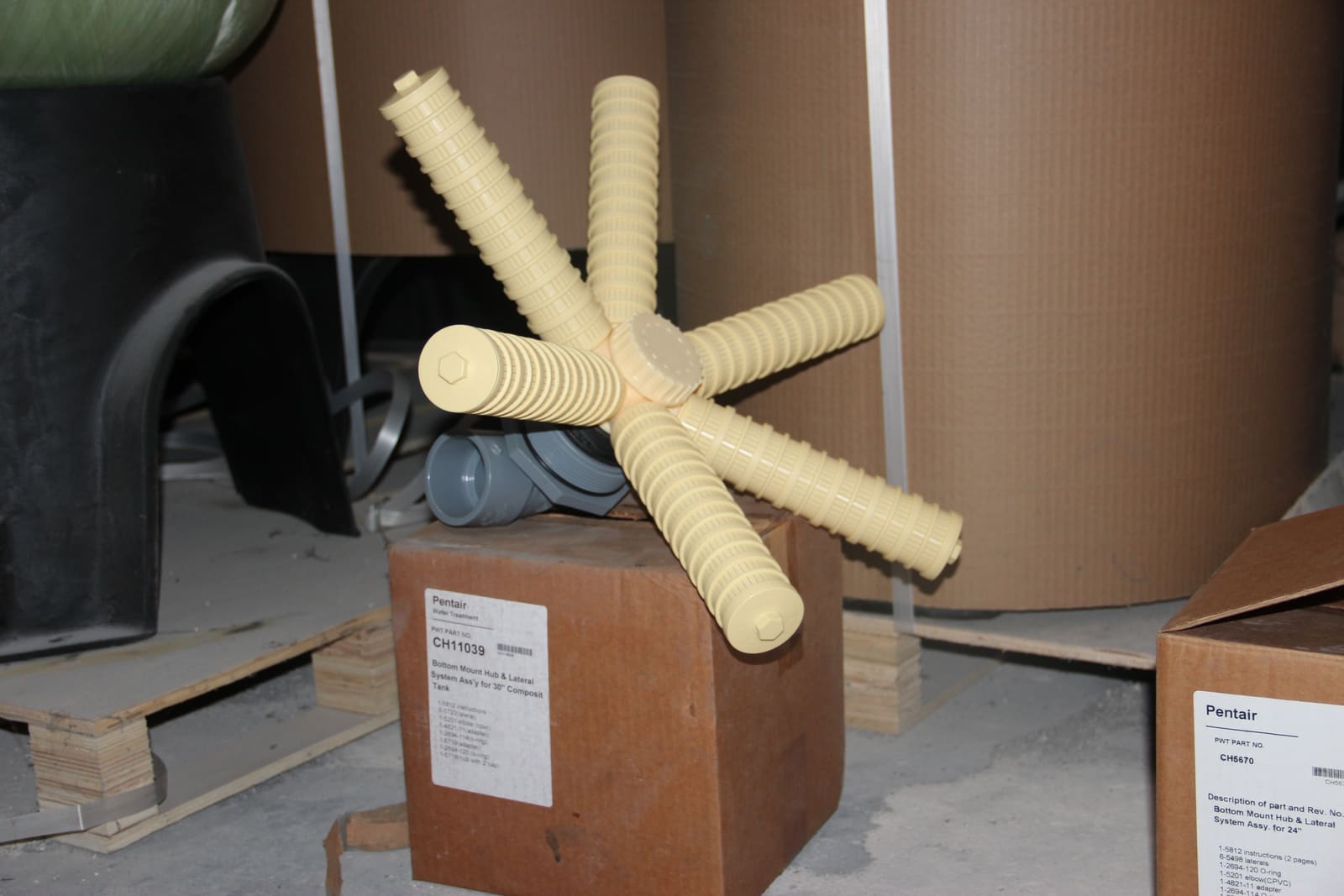
In water filters, silica sand is often arranged above gravel or support stones. This configuration improves water distribution and helps the backwash process operate effectively.
How Silica Sand Works in a Water Filter
The operating principle is straightforward. Water enters the filter vessel and passes through the silica sand bed. Impurity particles are trapped in the spaces between the grains, while clearer water exits through the filter outlet.
Over time, contaminants accumulate in the media. The filter must therefore be cleaned through backwashing, which reverses the water flow to lift and discharge the retained particles. This process restores the media so that it can continue filtering effectively.
Without regular backwashing, several problems may occur:
- Water flow decreases.
- Filter pressure increases.
- The filtered water becomes cloudy again.
- The filter media clumps together.
- Downstream treatment systems clog more quickly.
When Should Silica Sand Be Replaced?
Silica sand does not need frequent replacement, but it still has a finite service life. Media life depends on raw-water quality, operating intensity, filter design, and backwash frequency.
The silica sand should be inspected or replaced when:
- The filtered water remains cloudy after backwashing.
- The media appears clumped or hardened.
- Filter pressure becomes excessively high.
- Water flow decreases significantly.
- The media is heavily contaminated with mud or other substances.
- The filtration system has operated for a long time without a media change.
For industrial applications, filter media should be inspected regularly to keep system performance stable.
Tips for Choosing Silica Sand for Water Filters
For optimal results, silica sand must be selected according to the system’s operating requirements.
1. Consider Raw-Water Quality
Highly turbid water requires a different filtration design from low-turbidity water. Raw-water analysis is therefore essential before selecting the media type and size.
2. Select the Correct Media Size
The silica sand size should match the target particle removal and design flow rate. Media that is too fine may clog quickly, while media that is too coarse may not retain smaller particles effectively.
3. Use a Suitable Filter Vessel
Good filter media still requires an appropriate vessel, valve, distributor, and backwash system. System design has a major effect on filtration performance.
4. Combine It with Other Media When Necessary
Silica sand alone is not sufficient when the water contains odor, color, iron, manganese, or high hardness. The system must include additional media or technologies selected according to the identified water-quality problem.
5. Perform Routine Maintenance
Regular backwashing, pressure checks, and scheduled media replacement are essential for maintaining filter performance.
Silica Sand Compared with Other Filter Media
Silica sand primarily provides physical filtration. It is effective at reducing particulate impurities, but it is not a complete solution for every water-quality problem.
For example:
- Activated carbon is generally used for odor and color.
- Specialized media such as manganese greensand or DMI-65 can be used for iron and manganese.
- Softener resin can be used for hardness.
- Reverse osmosis is generally required for high TDS.
- Ultraviolet or another disinfection system can be used for bacteria.
Silica sand should therefore be understood as an important part of a complete water treatment train, rather than a single solution for every contaminant.
Silica Sand for Industrial Applications
In industry, silica sand plays an important role during initial water treatment. Industrial water may be used in boilers, cooling towers, production processes, washing systems, and utilities. If the raw water still contains mud and sediment, downstream systems may become damaged or operate inefficiently.
Using silica sand in industrial systems can help:
- Reduce the load on downstream filters.
- Maintain consistent process-water quality.
- Reduce the risk of clogged pipes and nozzles.
- Extend the service life of membranes, cartridge filters, and other media.
- Improve the operating efficiency of the water treatment system.
For more complete treatment requirements, see Watermart’s water filtration solutions.
Conclusion
Silica sand is an important water filter medium for removing mud, fine sand, sediment, and suspended particles that cause turbidity.
In water treatment systems, silica sand is often used as an initial stage before activated carbon, ion exchange, ultraviolet disinfection, cartridge filtration, or reverse osmosis. With the correct media size, suitable filter design, and routine maintenance, silica sand helps keep water clear and allows the overall treatment system to operate more efficiently.
If you need silica sand, filter media, or a water treatment system for a home, building, commercial facility, or industrial operation, consult the Watermart team.
Water Treatment Consultation
Need a silica sand recommendation or a water filter system suited to your application?
Contact Watermart via WhatsApp:
Click here for a water treatment consultation
Silica Sand FAQ
What is the function of silica sand in a water filter?
Silica sand removes physical impurities such as mud, fine sand, soil, sediment, and suspended particles to make water clearer.
Can silica sand remove odors from water?
Silica sand is not the primary medium for odor removal. Activated carbon is generally added when odor reduction is required.
Can silica sand be used for well water?
Yes. Silica sand is frequently used to filter cloudy well water or water containing sediment. Additional media is required if the well water also contains iron, manganese, or odor.
How often should silica sand be replaced?
Its service life depends on raw-water quality and operating intensity. The media should be inspected or replaced if the water remains cloudy after backwashing or if the sand has clumped together.
Is silica sand suitable for industrial applications?
Yes. Silica sand is suitable as a pre-filter medium in industrial water treatment systems, particularly for reducing sediment before downstream treatment.
Silica-sand specification and acceptance checklist
Filter silica sand should not be purchased on a generic size description alone. The purchase record needs effective size or size range, uniformity, bed depth, support-layer arrangement, and the backwash requirement of the filter design. After loading, backwash until the discharge is clear under the project procedure and record treated-water turbidity; do not judge media solely by colour or origin.
| Data to check | Why it matters | Acceptance record |
|---|---|---|
| Size range and uniformity | Sets solids capture and pressure loss | Match the vessel and underdrain design |
| Bed depth and support layer | Prevents media carryover or mixing | Record bed height before and after initial backwash |
| Backwash flow | Expands the bed and removes solids | Verify actual flow and drain route |
For a complete filter train, connect this specification to FRP tanks, control valves, and media requirements through Watermart.
Media-lot and vessel-loading acceptance
Acceptance does not end with the supplier certificate. Match bag labels and lot numbers to the purchase record, inspect dry media for contamination or visibly inconsistent grading, and record the quantity actually loaded. Confirm that the underdrain is covered by the specified support layers before the main sand bed is added.
- Measure initial bed height and freeboard; do not fill the vessel without space for expansion during backwash.
- Start the initial backwash gradually under the design procedure so fines are rinsed without sending the main bed to drain.
- After settling, record bed height again, clean differential pressure, service flow, and treated-water turbidity.
- Retain a lot sample or label photograph when the project procedure requires it, and use these results as the maintenance baseline.
Accept the media when lot identity, bed arrangement, carryover check, and treated-water result meet the project criteria at design flow. If any item fails, correct the loading or hydraulic condition before adding another treatment stage.

.png)