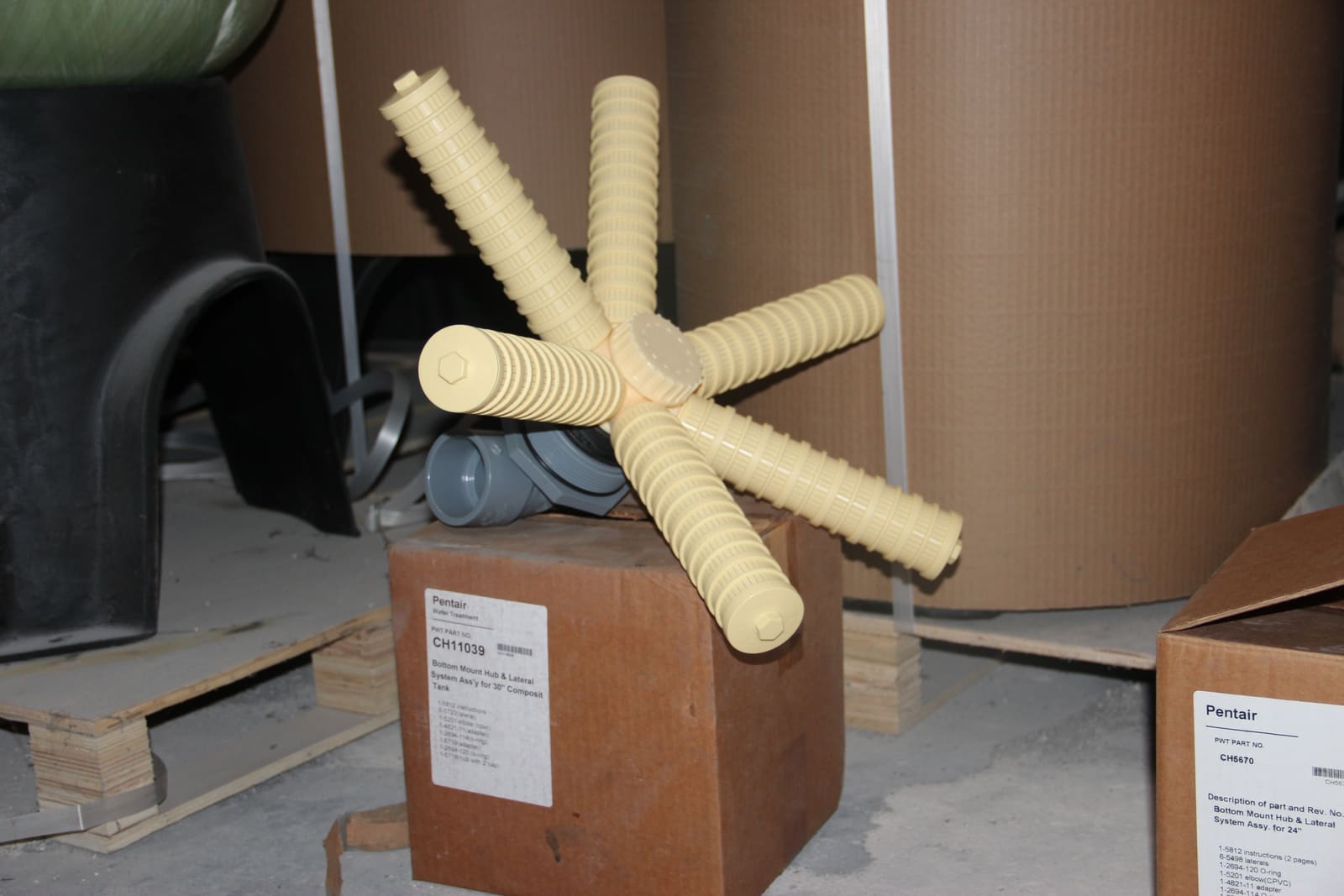
Short answer: a sediment filter captures sand, silt, rust, and suspended solids before they reach RO membranes, UV, carbon, valves, or other equipment. Select a nominal or absolute rating from downstream risk, flow, and manufacturer data; replace cartridges from differential pressure, falling flow, or particle breakthrough—not colour or the calendar alone.
Clean water is a basic need that is very important for human life.

However, as the population grows and industrial activities increase, the quality of water available for domestic consumption is deteriorating. Therefore, household water treatment is becoming increasingly important to ensure the availability of safe and healthy water for families. One of the key components in a domestic water treatment system is the sediment filter, which plays an important role in protecting downstream equipment and improving the overall efficiency of the system.
In this article, we will take an in-depth look at the role of sediment filters in domestic water treatment systems, as well as various other important aspects related to water treatment for domestic use. We will explore the different types of water sources commonly used, the challenges faced in water treatment, and the solutions available to ensure optimal water quality in your home.
Water Sources for Households
Before we discuss more about sediment filters and their role in water treatment systems, it is important to understand the different sources of water that are commonly used for domestic purposes. There are two main sources of water that are commonly used:
Water from PDAM (Regional Drinking Water Company)

This is the most common source of water in urban areas. PDAM water usually goes through a basic treatment process before being distributed to homes. However, the quality of PDAM water may vary depending on the location and condition of the distribution infrastructure.
Well Water

In areas not covered by PDAM services or for those who choose to use alternative water sources, wells are a popular choice. Well water can contain a variety of minerals and natural contaminants that require further treatment.
Some households even use a combination of these two sources to fulfill their water needs. Regardless of the source, the water coming into your home may contain a variety of contaminants that need to be removed to ensure its safety and quality.
Challenges in Household Water Treatment

Household water treatment faces several key challenges, primarily related to the types of contaminants that may be present in the water. Some common issues faced include:
- Turbidity and Sediment: Water, especially from well sources, can contain particles that cause turbidity and load downstream equipment.
- Chemical Contaminants: Iron, manganese, and other dissolved constituents require tests and processes beyond sediment filtration. PDAM water may also carry a disinfectant residual.
- Microorganisms: Bacteria, viruses, and parasites can enter a source or building system; clarity does not measure microbial risk.
- Water Hardness: Calcium and magnesium can form scale, but a sediment cartridge does not soften water.
- Odour and Taste: Organic, inorganic, or disinfectant-related causes need diagnosis rather than selection from smell alone.
Facing these challenges requires a comprehensive approach in domestic water treatment, and this is where the role of sediment filters becomes very important.
The Crucial Role of Sediment Filters
The sediment filter is a very important initial component in a domestic water treatment system. Its main function is to remove solid particles suspended in water, such as sand, mud, and other impurities. The role of the sediment filter is crucial because:
- **Protection of Downstream Equipment:**By removing coarse particles, sediment filters protect other water treatment system components such as reverse osmosis membranes, activated carbon filters, and other equipment from damage or clogging.
- **Increased System Efficiency:**Water that has gone through the sediment filter will have lower turbidity levels, allowing subsequent treatment processes to run more efficiently.
- **Extended Equipment Life:**By reducing the workload on other system components, sediment filters help to extend the life of water treatment equipment.
- **End Water Quality Improvement:**While not the final step in the treatment process, sediment filters contribute significantly to overall water quality improvement.
Sediment filters typically consist of multiple layers of filtration media with varying pore sizes. The top layer usually has a larger pore size to capture coarse particles, while the bottom layer has a smaller pore size to capture fine particles.
Types of Sediment Filters
There are several types of sediment filters commonly used in domestic water treatment systems:
- Cartridge Filters: Replaceable cartridges are available in different materials, geometries, and nominal or absolute ratings.
- Multimedia Filters: Layered media can handle recurring solids loads when the service and backwash hydraulics are correctly designed.
- Sand Filters: Sand provides physical filtration within a suitable vessel, underdrain, and backwash system.
- Bag Filters: Replaceable bags capture solids according to their material, rating, flow, and housing seal.
The choice of the right type of sediment filter depends on the quality of the source water, the specific needs of the household, and the other water treatment system components being used.
Comprehensive Household Water Treatment System
While the sediment filter plays an important role, it is just one part of a comprehensive household water treatment system. A complete system usually consists of several treatment stages, including:
- Pre-filtration: Sediment filtration protects later stages; carbon is added only when its specific chlorine, taste, or odour duty is defined.
- Water Softening: Cation resin treats measured hardness and needs calculated capacity and regeneration.
- Reverse Osmosis (RO): RO can reduce many dissolved ions when pretreatment, pressure, recovery, sanitation, and permeate monitoring meet the design.
- Disinfection: UV or chlorination can be a microbial barrier when dose, contact time or flow, and feed-water condition are validated.
- Post-filtration: A final stage is selected from the treated-water target, not added by default.
Each stage in this system has a specific role, and the overall effectiveness of the system depends on the performance of each component.
The Importance of Chlorine in Water Treatment

While many people have concerns about the use of chlorine in drinking water, it is important to understand its crucial role in keeping water safe. Chlorine has been used extensively in water treatment for more than a century and has been proven effective in removing a variety of harmful pathogens.
Chlorine odour can indicate that a disinfectant residual is present, but smell does not measure concentration or prove that water is safe. Measure the residual against the process target, and verify drinking water by representative sampling and laboratory testing.
However, it is important to note that while chlorine is effective in killing bacteria and viruses, it can also react with organic matter in water to form potentially harmful byproducts. Therefore, many modern household water treatment systems utilize activated carbon filters as a final stage to remove residual chlorine and its byproducts, while still maintaining the disinfection benefits.
Solutions for Different Types of Water
Depending on the source and quality of water available, different water treatment solutions may be required:
- Water with High TDS or Selected Ions: Measure ionic composition, pressure, product-water requirement, and scaling risk before considering RO. A sediment filter does not reduce TDS.
- Well Water with High Iron: Measure iron form and concentration, manganese, pH, and oxidation demand before selecting media. A cartridge alone does not treat dissolved iron.
- Water at Risk of Bacterial Contamination: For water at risk of bacterial contamination, a combination of chlorination and UV disinfection can be a good option.
- Water with High Hardness: Water softeners are the ultimate solution to address water hardness issues, which can lead to scale formation in pipes and appliances.
In many cases, a combination of several treatment methods may be required to achieve the desired water quality.
Whole House vs Point-of-Use Water Treatment System
When considering a water treatment system for the home, there are two main approaches that can be taken:
- **Whole House System:**This system treats all the water that enters the home, ensuring that the water coming out of each tap has been treated. It is ideal for homes that use well water or in areas with poor quality PDAM water.
- **Point-of-Use (POU) systems:**These systems are installed at specific points in the home, usually in the kitchen for drinking and cooking water. An under-sink RO system is a popular example of a POU system.
For luxury homes or those with high quality water requirements, a combination of whole house and POU systems may be the best option. For example, using a whole house system for basic treatment and then adding an RO unit in the kitchen for drinking water.
Essential Components in a Water Treatment System

In addition to the sediment filter and main treatment unit, there are several other important components in a household water treatment system that need to be considered:
- Pressure Tank: A pressure tank provides pressurised drawdown and controls pump cycling; it is not an atmospheric reserve tank. See Pentair WellMate pressure tanks.
- Pumps: Select a pump from its curve, design flow, head, and operating point. Flint & Walling pumps are one component family to compare.
- Automatic Valves: A filter valve must pass service and backwash flow while matching the vessel and control sequence.
- Chemical Injection: Dosing equipment needs chemical compatibility, calibrated output, interlocks, and a defined monitoring target.
- Pressure Vessels: Select a membrane housing from element size and count, design pressure and temperature, connections, and product rating. See Codeline pressure vessels.
Choosing the right, high-quality components is critical to ensuring the long-term performance and reliability of your water treatment system.
Water Treatment System Care and Maintenance

To ensure your household water treatment system is functioning optimally, regular care and maintenance is essential. Some important aspects of system maintenance include:
- **Sediment Filter Replacement:**Sediment filters need to be replaced periodically, depending on the source water turbidity level and usage load. Visual inspection and a drop in water pressure can be indicators that the filter needs to be replaced.
- Backwashing Multimedia Filters: For multimedia filters, the backwashing process needs to be done regularly to clean the filtration media and maintain its effectiveness.
- Water Softener Regeneration: If you are using a water softener, regular regeneration of the resin with salt is important.
- RO Membrane Inspection and Cleaning: RO membranes need to be inspected and cleaned as per manufacturer’s recommendations to ensure optimum performance.
- UV Lamp Replacement: If your system utilizes UV disinfection, the UV lamp needs to be replaced periodically, typically annually.
- **Water Quality Checks:**Performing periodic water quality tests can help ensure that your system is functioning as intended and identify potential problems early.
With proper maintenance, your household water treatment system can provide years of high-quality water.
Conclusion
Household water treatment is an important investment in your family’s health and comfort. Sediment filters, as the first line of defense in a water treatment system, play a crucial role in protecting downstream components and improving the overall efficiency of the system. However, it is important to remember that sediment filters are only one part of a comprehensive water treatment system.
The right water treatment system depends on source, test results, peak flow, intended use, and maintenance capacity. Maintained equipment supports the treatment target, but drinking water should be accepted only after commissioning, sanitation, representative sampling, and laboratory verification.
With a good understanding of the different aspects of household water treatment, from the role of sediment filters to the importance of disinfection and system maintenance, you can make the right decision for your household water needs. Remember that investing in a quality water treatment system is not just about improving water taste and quality, but also about protecting your family’s long-term health and keeping your household appliances in optimal condition.
Questions and Answers
1. Why is a sediment filter important in a household water treatment system?
The sediment filter is essential because it serves as the first line of defense in a household water treatment system. It removes solid particles such as sand, silt, and other impurities from the water. This not only improves the overall water quality, but also protects other water treatment system components such as the reverse osmosis membrane and activated carbon filter from damage or clogging. By reducing the workload on other components, sediment filters help extend the life of the equipment and improve the overall efficiency of the water treatment system.
2. Is chlorinated water safe to drink?
Safety cannot be determined from chlorine odour or presence alone. Measure residual, pH, and contact time against the process target, then verify the applicable drinking-water parameters. If carbon removes chlorine, sanitation and downstream microbial-growth risk also need control.
3. How do I choose the right water treatment system for my home?
Choosing the right water treatment system depends on several factors: 1. Your water source (PDAM or well) 2. Source water quality (mineral content, contaminants, etc.) 3. Specific needs of your household 4. Available budget 5. Available space for system installation The first step is to conduct a water quality test to find out the specific contaminants that need to be addressed. Based on these results, you can decide whether a whole-house water treatment system is required or a point-of-use solution is sufficient. A consultation with a water treatment professional can help you make the right decision based on your specific needs.
References
-
Byrne, W. (2002). Reverse osmosis: A practical guide for industrial users. Tall Oaks Publishing. p. 190.
-
Binnie, C., & Kimber, M. (2013). Basic Water Treatment (5th Edition). ICE Publishing. p. 11.
-
Spellman, F. R. (2013). Handbook of water and wastewater treatment plant operations. CRC Press. p. 652.
-
Ammerer, H. (1989). TOC contamination in high-purity water polishing systems. Ultrapure Water, 6(4), 24-29.
-
Australian Drinking Water Guidelines. (2004). National Health and Medical Research Council.
-
World Health Organization. (2006). Guidelines for Drinking-water Quality: First Addendum to Third Edition, Volume 1, Recommendations.
Selecting sediment-filter rating and replacement timing
Select a sediment filter from solids loading, service flow, and downstream-process protection—not merely the smallest micron number. A nominal rating describes non-absolute retention, while an absolute rating generally specifies tighter retention under the manufacturer’s test method; request the data sheet before comparing them. Record clean pressure at commissioning and set a differential-pressure or declining-flow trigger for replacement.
| Need | Commonly tested choice | Operating note |
|---|---|---|
| Sand/silt surges and high flow | Backwashing filter before polishing | Confirm backwash flow and drain availability |
| Polishing after media filtration | Cartridge rating suited to downstream risk | Compare clean and dirty pressure loss |
| RO or UV protection | Staged pretreatment and appropriate final cartridge | Do not exceed rated flow or wait for flow to stop |
Plan housing and cartridge consumption with Watermart cartridge filters, then verify compatibility with RO membranes or UV systems through Watermart.
Differential-pressure log and replacement decision
Use pressure points before and after the housing. Record the clean-cartridge baseline at a consistent service flow; differential pressure is inlet pressure minus outlet pressure. The trend is more useful than one reading because a change in flow also changes pressure loss.
| Record | Operator decision | Downstream check |
|---|---|---|
| Differential pressure rises at similar flow | Replace at the manufacturer or system-design limit | Confirm RO/UV flow has not fallen below its requirement |
| Flow falls without a credible pressure change | Check gauges, valves, pump, bypass, and other restrictions | Do not blame the cartridge without diagnosis |
| Particles pass while pressure remains low | Check seals, installation, rating, and cartridge damage | Inspect membrane fouling or the UV sleeve |
| Repeated rapid loading | Measure solids load and consider upstream settling/backwash filtration | Calculate cartridge use and downtime |
After replacement, record the date, model, rating, lot number when available, flow, and new clean pressure. Housing sanitation and cartridge disposal should follow the product instructions and the risk presented by the water.

.png)