
Short answer: wet and dry RO membrane primarily describe element conditioning and shipping condition, not proof that one is always better. Select the model from water duty, datasheet, production/expiry date, package condition, storage requirements, startup procedure, and the performance evidence required after installation.
Updated 30 July 2026: wet/dry claim limits, receipt inspection, storage, startup, preservative handling, and performance baselines were clarified.
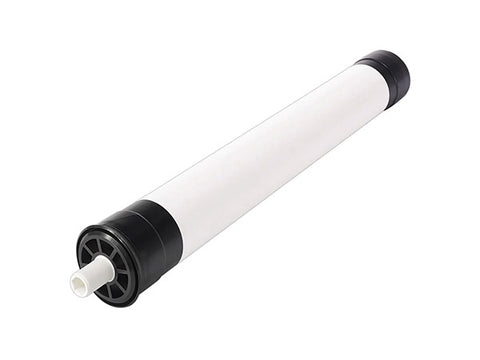
A wet membrane is commonly shipped hydrated with a manufacturer-specified preservative. A dry membrane is shipped without liquid preservative and requires model-specific conditioning or rinsing. These labels do not replace BWRO/SWRO duty, TFC/CTA chemistry, 4040/8040 size, pressure rating, or salt rejection.
| Buyer decision | Wet membrane | Dry membrane | Evidence requested |
|---|---|---|---|
| Shipping condition | Hydrated and may contain preservative | Packaged dry under the manufacturer process | Datasheet, label, package seal, production/expiry date |
| Receipt | Check leaks, abnormal liquid, odor, damage, and label | Check puncture, moisture ingress, vacuum/seal, deformation, and label | Photographs before opening and receiving report |
| Storage | Follow model temperature, position, shelf life, and heat/freezing limits | Follow model temperature, humidity, position, shelf life, and packaging limits | Warehouse log and first-expire-first-out |
| Startup | Handle preservative, rinsing, and disposal under the manual and SDS | Wet/condition, rinse, and start under the manual | Startup checklist and water-quality endpoint |
| Performance | Normalize at operating conditions | Normalize at operating conditions | Flow, pressure, temperature, recovery, conductivity |
What is a Wet RO Membrane?
A wet RO membrane is shipped in a hydrated or manufacturer-preserved condition. Hydraulic readiness does not mean the element may immediately produce service water. Preservative must be routed and rinsed under the manual until the specified endpoint; initial water should not enter service without verification.
Read the SDS and manufacturer instructions before opening. Provide PPE, ventilation, compatible drainage, and containment. Never mix, neutralize, or discharge preservative by guesswork. If the program needs membrane preservation, cleaning, or chemical-disposal planning, coordinate with Beta Pramesti’s RO chemical team.
What is Dry RO Membrane?
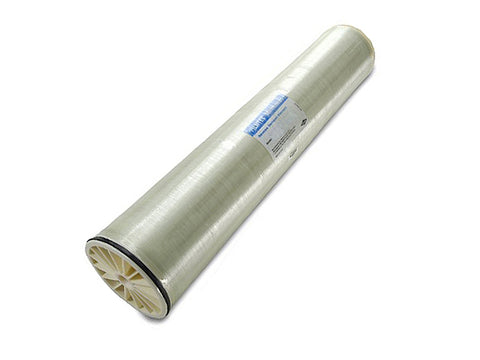
A dry RO membrane is shipped without liquid preservative. “Dry” does not mean unlimited storage, tolerance of every temperature, or usability after package damage. Shelf life, temperature, humidity, orientation, and seal condition remain controlled by the label and model manual.
At startup, the element may require wetting, low-pressure flushing, conditioning, or a stabilization period stated by the manufacturer. Do not create one hydration time for every brand and model. Record contact time, flow, pressure, temperature, permeate disposal, and endpoint before taking the baseline.
Comparison of Advantages and Disadvantages
A useful comparison focuses on logistics and startup risk rather than claiming that wet is always more efficient or dry is always longer-lived.
Wet Membrane
Advantages of Wet Membrane
- Hydrated condition can reduce the initial wetting step where the model manual says so.
- Factory conditioning may support a planned replacement startup.
- Preservative and package sealing provide extra indicators when a package leaks or appears abnormal.
Disadvantages of Wet Membrane
- Requires control of shelf life, temperature, seal, and preservative under the product document.
- A leaking package or incorrect storage may require rejection or manufacturer assessment.
- Preservative adds PPE, rinse, disposal, and wrong-routing controls before product storage.
Dry Membrane
Advantages of Dry Membrane:
- Does not carry the same volume of liquid preservative as a wet element.
- Can simplify some logistics where packaging and warehouse conditions meet model limits.
- May suit a spare-stock strategy where shelf life and startup requirements fit the outage plan.
Dry Membrane Disadvantages:
- Requires model-specific conditioning and rinsing before acceptance baselines are taken.
- Package damage or moisture ingress may be difficult to assess without a receiving record.
- Does not automatically have a longer shelf life; manufacturer dates and storage limits still control.
Warehouse or Site Receipt Checklist
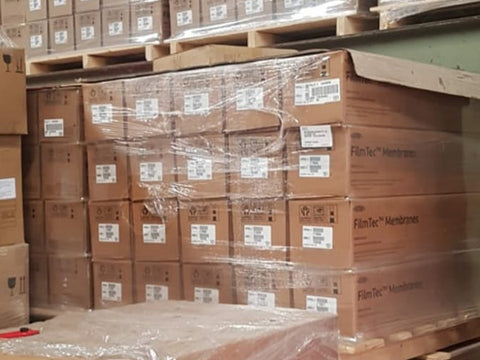
- Match purchase order, model, diameter/length, quantity, batch/serial, and label.
- Photograph all package sides, label, seal, punctures, dents, leaks, and shipping indicators where present.
- Record arrival time, carrier, known temperature event, and receiver.
- Do not open packaging for curiosity when the element will not be installed.
- Quarantine leaking, damaged, mislabelled, or expired packs for supplier/manufacturer disposition.
- Store within the model temperature, humidity, position, light, and stacking requirements.
- Apply first-expire-first-out and inspect packaging periodically.
For replacement work, send photographs of old and new labels, the Codeline pressure-vessel nameplate, adapters, interconnectors, and seals. A matching diameter does not prove element or spare-part interchangeability.
Startup and Acceptance Baseline
Read the DuPont FilmTec manual and Toray operating manual together with the model datasheet. This general sequence does not replace those documents:
| Stage | Record | Stop when |
|---|---|---|
| Pre-start inspection | Vessels, element order, adapters, seals, valves, instruments, pretreatment | Wrong model, incomplete closure, or dirty system |
| Low-pressure flush/conditioning | Water medium, flow, pressure, temperature, time, discharge point | Pressure surge, leakage, abnormal colour/odor, unstable flow |
| Permeate disposal | Time/volume discarded and model conductivity/preservative endpoint | Initial water is routed to product storage |
| Pressure ramp | Pressure steps, valve position, feed/concentrate flow | Water hammer, vibration, leakage, or excessive recovery |
| Stable baseline | Feed/permeate/concentrate flow, pressure, temperature, conductivity, recovery | Instruments are unstable or pretreatment is outside limits |
| Product verification | TDS/ion target, pH, microbiology, and final-use parameters | Results do not meet specification and applicable requirements |
Normalize permeate flow and salt passage by the manufacturer method. Raw data at different temperature, pressure, salinity, or recovery are insufficient for comparing a new element with the old one.
Procurement Decision: Wet or Dry
| Question | Decision impact |
|---|---|
| Is the required model offered wet, dry, or only in one condition? | Prevents specifying a shipping condition that is unavailable or irrelevant |
| How long from receipt to installation? | Sets shelf-life margin, warehousing, and first-expire-first-out |
| Can the site control temperature and package condition? | Assesses storage risk for wet and dry stock |
| Does the operator have preservative, rinse, and disposal procedures? | Determines readiness for wet-element startup |
| Does the outage allow conditioning time? | Determines readiness for dry-element startup |
| How is acceptance proved? | Requires normalized baseline and product-water testing |
PT Watermart Perkasa supplies 4040 and 8040 RO membranes, including DuPont FilmTec and Toray options for suitable duties. Wet/dry condition, model, batch, availability, shelf life, and documents are confirmed at quotation.
Conclusion
Wet-versus-dry RO selection is a model, logistics, storage, and startup decision. Do not use shipping condition as a substitute for feedwater analysis, BWRO/SWRO selection, pressure-vessel compatibility, pretreatment, or permeate-quality targets.
Send water analysis, permeate target, existing model, label photographs, vessel, element count, installation schedule, warehouse condition, and document requirements through the Watermart contact page. Product water may enter use only after commissioning, sanitation, consumable records, representative sampling, and laboratory verification for its intended use.