
Membranes
TRILITE Resin Indonesia: KC‑08 & KH‑80
TRILITE resin in Indonesia for softening, demineralization, and mixed beds. Compare KC-08, KH-80, MA-12, SM-210, ionic form, documents, and regeneration.
TRILITE resin in Indonesia for softening and demineralization
Select TRILITE resin in Indonesia by model and duty: KC-08 or KH-80 for cation exchange, MA-12 for the anion stage, and SM-210 for a mixed bed. PT Watermart Perkasa matches ionic form, water-test results, bed volume, regeneration, documents, packing, and water-quality target before preparing a quotation.
Updated 4 August 2026: TRILITE model selection, ionic form, documents, and quotation inputs were moved to the opening section.
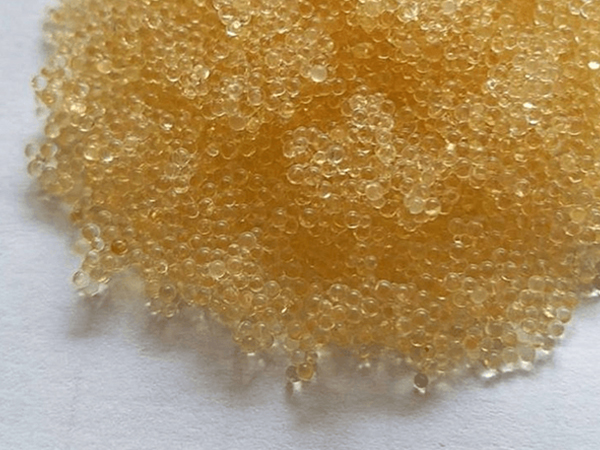
Select a TRILITE model from the target ion and process stage
Choose TRILITE by the function of each treatment stage, not by brand or bead colour alone. KC-08 and KH-80 are strong-acid cation resins for duties such as softening or the cation stage of demineralization; MA-12 is a Type I strong-base anion resin; SM-210 is a mixed-bed path that must match feed quality and the conductivity target. Supplied ionic form, design working capacity, bed volume, regenerant, and rinse procedure still have to be established for the actual system.
| Process requirement | Starting model | Difference to confirm |
|---|---|---|
| Softening or cation stage | TRILITE KC-08 or KH-80 | Ionic form, hardness or cation load, bed volume, regenerant dose, and treated-water target |
| Anion stage of demineralization | TRILITE MA-12 | Cl⁻ or OH⁻ form, anion load, silica where relevant, and caustic regeneration |
| Mixed-bed polishing | TRILITE SM-210 or separately loaded resins as designed | Feed quality, component ratio or volume, conductivity target, loading, and commissioning |
Use the TRILITE product page to compare KC-08 and KH-80 and the Watermart TRILITE guide for MA-12. Send the water analysis, flow, treated-water target, resin volume, vessel drawing, control valve, quantity, packing, and location through the Watermart contact form; confirm the document revision and certificates that apply to the offered code and lot.
How should food-grade softener resin be verified?
Verification starts with the correct resin code for the hardness load, then extends to model-specific documents and hygienic controls on site. “Food grade” on a purchase request does not establish ionic form, working capacity, document coverage, package condition, or the quality of water after the system starts.
| Evidence to review | What must be stated or measured | Buyer decision |
|---|---|---|
| Softening duty | Feed and target hardness, peak flow, bed volume, resin type, supplied ionic form, salt dose, and regeneration frequency | Confirms that model and quantity fit the duty rather than only an application label |
| Product documents | Complete code and grade, data-sheet revision, lot number, packing, CoA when included, and project-required Halal or food-contact documents | Confirms that documents apply to the offered product; a Halal certificate does not automatically replace food-contact evidence |
| Receipt and loading | Package seals, storage condition, clean tools, vessel and distributor inspection, lot records, loading, initial regeneration, and flushing | Prevents a correct resin from being contaminated or loaded into a faulty vessel |
| Treated-water acceptance | Outlet hardness, other process parameters, commissioning, sanitation, consumables logs, representative sampling, and laboratory testing against applicable Indonesian standards | Separates component suitability from proof that the treated water meets its intended use |
The DIONIX C80 brochure is one model document available on this site; the DIONIX ion exchange resin page summarizes models and related certificates. Require the quotation to identify the documents supplied for the delivered code and lot, then match the resin to the water-softening application and automatic control valves.
What information is needed for an ion exchange resin price?
Prices become comparable only after the duty, product code, quantity, and supply boundary are aligned. A request that says only “cation resin,” “anion resin,” or price per bag may compare different ionic forms, grades, package contents, working capacities, documents, and field services.
| Quotation basis | Information to provide | Why it affects price |
|---|---|---|
| Duty and water quality | Softening, demineralization, mixed bed, ion analysis, flow, and treated-water target | Establishes resin type, ionic form, bed volume, and regeneration pattern |
| Product identity | Brand, model code, grade, data-sheet revision, and project documents | Prevents comparison of similarly named products with different duties or documentation |
| Quantity and logistics | Litres per vessel, vessel count, package contents, location, and required date | Establishes package count, delivery, storage, and supply schedule |
| Work boundary | Resin only or removal, vessel cleaning, loading, initial regeneration, commissioning, sampling, and old-media handling | Separates material price from field work and verification cost |
Compare DIONIX ion exchange resins, Purolite, and TRILITE after defining the duty. Send the same basis through the Watermart contact form so the written quotation states assumptions, exclusions, availability, and service scope.
Which DIONIX C80 specifications should a buyer verify?
The DIONIX C80 brochure available on Watermart’s site lists golden-to-brownish spherical particles, 48.67% water retention, 4.58 meq/g total exchange capacity, 2.09 meq/ml volume exchange capacity, 0.85 g/ml bulk density, 0.56 mm effective size, and a 1.14 homogeneity coefficient. These values identify product characteristics in the document; they are not project working capacity, bed volume, or a treated-water guarantee.
| Buyer duty | How to assess DIONIX C80 | Minimum quotation data |
|---|---|---|
| Softening | Check hardness load, treated-hardness target, bed volume, and salt regeneration | Hardness, alkalinity, TDS, normal/peak flow, operating hours, vessel, valve, and cycle target |
| Cation stage of demineralization | Match ionic form, cation load, paired anion resin, and regeneration | Cation-anion analysis, conductivity target, vessel sequence, regenerant, rinse, and bed volume |
| Existing-resin replacement | Do not select from colour or bead size alone | Label photo, old code, installed volume, operating age, feed/product data, regeneration pattern, and replacement reason |
For model detail and documents, review the DIONIX ion exchange resin page. Match the resin to FRP vessels, automatic control valves, and the loading or commissioning scope before sending the data through the Watermart contact form.
Can DIONIX C80 be replaced directly with CX-08?
DIONIX C80 and CX-08 should not be treated as interchangeable merely because both belong to a cation-resin range. Product documents on this site list C80 for softening and demineralization, while the DIONIX page also places CX-08 in demineralization, metal recovery, and other applications. The old code, ionic form, grade, process stage, and regeneration conditions must still match.
| Scenario | Check before choosing C80 or CX-08 |
|---|---|
| Replacing an existing C80 bed | Keep C80 as the request basis; send the label photo, installed volume, feed/product hardness, flow, valve, and regeneration records |
| Reviewing an equivalent offer | Align matrix, functional group, ionic form, grade, capacity on the same basis, bead-size distribution, documents, and packing |
| New softening system | Define hardness load, treated-water target, design working capacity, bed volume, salt dose, and regeneration frequency |
| Cation stage of demineralization | Define the ion analysis, required H⁺ or other form, paired anion stage, conductivity target, and regeneration system |
Total or volume exchange capacity in a brochure is an initial identity check, not evidence that two models have the same working capacity, pressure drop, rinse demand, or service life in the installed system. Require the quotation to state the complete code, data-sheet revision, supplied ionic form, volume, package count, and commissioning procedure.
What should be checked before replacing DIONIX C80 resin?
Find the cause of declining performance before emptying the vessel; new resin will not correct an incorrectly sequenced valve, damaged distributor, incomplete regeneration, or inadequate pretreatment. Compare feed and product hardness or ions, water volume per cycle, regenerant consumption, step times, pressure drop, and the physical condition of the old resin.
| Finding before replacement | Decision required |
|---|---|
| Hardness breaks through earlier, but bed volume and bead condition are unknown | Sample the resin and assess working capacity, fouling, fragmentation, and flow distribution before setting replacement volume |
| Brine draw, slow rinse, or fast rinse does not match the program | Check the injector or ejector, valve, pressure, regenerant concentration, and control sequence before attributing the fault to resin |
| Pressure drop has increased | Check solids, support bed, distributors, compaction, and service and backwash flows |
| The old resin model or ionic form is undocumented | Do not mix products of uncertain identity; define the duty, water analysis, target, and start-up procedure first |
| The vessel will be opened for a full change-out | Define isolation, removal, cleaning, internal inspection, loading, initial regeneration, sampling, and old-resin handling |
Require the quotation to separate the DIONIX C80 resin price from field work and to state volume per vessel, package count, ionic form, documents, and post-commissioning acceptance criteria. For an automated sequence, match the AQ Matic valves and stagers to the process diagram and installed control valves.
How should an ion exchange resin supplier in Indonesia be selected?
Choose a supplier that states the brand and model code, supplied ionic form, application grade, packing, documents, and work boundary in the quotation. The supplier should also request the water analysis, flow, quality target, resin volume, vessel, control valve, regeneration pattern, and operating records; “cation resin” or “anion resin” alone is not enough to define a replacement.
PT Watermart Perkasa matches DIONIX, Purolite, or TRILITE paths to these duties, then confirms availability and document revision at quotation:
| Buyer duty | Initial path | Data that determines selection |
|---|---|---|
| Softening | DIONIX cation resin or TRILITE KC-08/KH-80 | Hardness, alkalinity, flow, treated-hardness target, vessel volume, and salt regeneration |
| Demineralization | Cation and anion resin pair matched to the design | Ion analysis, conductivity target, regenerants, vessel sequence, and feed quality |
| Mixed-bed polishing | DIONIX MB210 or TRILITE SM-210 | Feed quality after RO/demineralization, resistivity or conductivity target, and resin volume |
| Document-controlled application | Model and grade with applicable documents | Industry, water contact, Halal, food-grade, or other project requirements by product code |
Require the quotation to separate resin supply from unloading, vessel cleaning, distributor inspection, loading, initial regeneration, commissioning, sampling, and old-resin handling. Send this basis through the Watermart contact form so bids from different suppliers can be compared on the same scope.
What determines water softener resin price?
A price per litre or bag is comparable only when the strong- or weak-acid cation type, supplied Na⁺ or H⁺ form, resin volume, packing, and procurement scope match. For softening duty, provide feed hardness, alkalinity, TDS, normal and peak flow, operating hours, treated-water hardness target, resin volume per vessel, control valve, and the existing salt use and regeneration frequency.
A replacement quotation should also separate resin supply from old-media removal, vessel cleaning, distributor inspection, loading, initial regeneration, commissioning, sampling, and spent-resin handling. This written technical basis is more useful than comparing bag prices that may conceal different ionic forms, working capacities, documents, or service boundaries.
| Quotation factor | Information to provide |
|---|---|
| Resin type | Strong- or weak-acid cation and the supplied Na⁺ or H⁺ form |
| Process duty | Softening, demineralization, dealkalization, metal removal, or mixed-bed polishing |
| Water load | Hardness, alkalinity, TDS, other target ions, flow, operating hours, and treated-water target |
| Regeneration system | Salt or acid used, concentration, dose, contact time, rinse, and waste handling |
| Procurement | Brand/model, grade, documents, packing, quantity, destination, and required date |
Send these data through the Watermart contact form; to compare specific products, review DIONIX ion exchange resin and TRILITE resin.
What determines mixed bed resin price?
A price per litre or bag is meaningful only when the model, supplied form, volume, packing, and project scope match. TRILITE SM-210 and DIONIX MB210 are both H⁺/OH⁻ mixed-resin paths documented in Watermart content, but the product code, documents, operating data, and availability must be confirmed at quotation.
| Quotation factor | Information to provide |
|---|---|
| Resin identity | Brand, SM-210 or MB210 model code, ionic form, grade, data-sheet revision, and required documents |
| Feedwater quality | Feed source, TDS, conductivity, silica where relevant, and the RO or demineralization stages ahead of the mixed bed |
| Target and capacity | Product-water conductivity or resistivity, normal/peak flow, operating hours, and water volume per cycle |
| Installed volume | Resin volume per vessel, unit count, internal dimensions, distributor arrangement, and old loading records |
| Work scope | Resin only or unloading, vessel cleaning, loading, rinsing, commissioning, sampling, and old-media handling |
| Procurement | Packing, quantity, project location, required date, and handover documents |
For post-RO polishing, require the quotation to state sampling points, acceptance parameters, and commissioning responsibility. Review the mixed bed system guide for process configuration, then compare DIONIX MB210 and TRILITE resin documents before choosing a product code.
How can installed cation-resin volume be verified?
Use the loading or commissioning record for each vessel as the primary source of installed resin volume. Do not calculate it from the vessel’s full nominal volume because space above the bed is needed for backwash expansion, while internals and support material also occupy space. Record litres per vessel rather than only the system total.
If old documents are unavailable, send the drawing, internal dimensions, unit count, bed arrangement, and nameplate photographs to the technical team. Physical inspection must follow site isolation, depressurization, draining, and safety procedures. Require the result to distinguish existing resin volume, recommended design volume, and the pack quantity offered.
How should cation resin quotations be compared?
Compare cation-resin quotations only after the technical and commercial basis is the same. The description “cation resin” does not establish strong- or weak-acid type, ionic form, application grade, packing, documents, or replacement work. For a replacement, do not select an equivalent from bead size or colour alone.
| Buying scenario | Main comparison data | Scope to state in writing |
|---|---|---|
| New system | Hardness, alkalinity, TDS, target ions, flow, treated-water target, and regeneration scheme | Resin, packing, quantity, vessel/valve if included, commissioning, and documents |
| Resin replacement | Old brand/model, ionic form, installed volume, operating age, replacement reason, and test results | Old-media removal, vessel cleaning, loading, initial regeneration, sampling, and disposal |
| Equivalent bid | Resin family, matrix, functional group, grade, supplied form, and capacity on the same data basis | Total volume or bags, lead time, certificates, delivery, and warranty boundary |
| Mixed bed or polishing | Component models, design ratio or volume, feed quality, and conductivity/resistivity target | Separate or premixed resin, loading procedure, commissioning, and testing |
Require each supplier to state the complete product code and sizing assumptions. This prevents a price per litre from hiding differences in resin type, supplied form, working capacity, or field services.
How should cation-resin operating cost be compared?
The cation resin with the lowest price per litre does not necessarily have the lowest operating cost. Compare media, regenerant, rinse water, operator time, downtime, regeneration-waste treatment, and replacement criteria on the same working-capacity and water-quality basis.
| Cost component | Data to compare |
|---|---|
| Initial supply | Resin code, ionic form, volume, packing, delivery, loading, and initial regeneration |
| Regeneration | Regenerant, concentration, dose per cycle, backwash/rinse water, and cycle frequency |
| Operation | Time for each sequence, operator requirement, standby availability, and production loss during service |
| Performance verification | Feed and product hardness or target parameter, water volume per cycle, and regenerant-consumption records |
| Replacement | Performance limit that triggers replacement, unloading, vessel cleaning, loading, and old-resin handling |
Require the calculation assumptions in writing. A cost-per-volume estimate is useful only when hardness or ionic load, flow, product target, working capacity, and regeneration pattern use the same project basis.
Dionix, Purolite, and Trilite ion exchange resin choices
PT Watermart Perkasa supplies ion exchange resin in Indonesia from the Dionix, Purolite, and Trilite ranges. Final selection should follow the process duty, product data, required documents, and regeneration conditions for industrial, food and beverage, pharmaceutical, or ultrapure-water service.
Availability, lead time, and documents for each model are confirmed at quotation. The Watermart team can review the application, capacity, vessel, valve, and treatment stages before or after ion exchange.
List of Featured Ion Exchange Resin Products
Anion and cation resin models to compare
| Range | Models listed on this page | Initial selection basis |
|---|---|---|
| Dionix | C80 and CX-08 | Softening or demineralization; confirm ionic form, grade, and model documents |
| Purolite | C150S, C150SH, PFC100, PFC100E, and PFC100H | Match Na⁺ or H⁺ form, process duty, and treated-water target |
| Trilite | MA-12, KC-08, and KH-80 | Separate the MA-12 anion stage from the KC-08/KH-80 cation stage; match volume, regeneration, and water data |
Dionix ion exchange resin range
Dionix includes anion, cation, and mixed-bed models for demineralization, softening, metal recovery, specialty-solution purification, and ultrapure water. Halal or food-grade documentation should be checked for the model and application offered rather than assumed across the complete range.
Dionix resin characteristics listed in the documents
- High exchange capacity for efficient ion absorption
- High heat resistance and chemical stability
- Halal documentation: download the Dionix Halal Certificate
- Bead size homogeneity for consistent hydraulic performance
- Compatible with industrial and food water treatment systems
Dionix Product Variants
- Dionix AM014 - Download Brochure_Dionix AM014 Halal Resin.pdf
Spherical bead anion exchange resin, highly efficient for demineralization, SiO₂ treatment, and high temperature applications. Suitable for food, beverage, and chemical industries. - Dionix AS010 - Download Brochure_Dionix AS010 Halal Resin.pdf
Anion exchange resin with high heat resistance and superior ion exchange capacity. Ideal for industrial water demineralization and sugar processing. - Dionix C80 - Download Brochure_Dionix C80 Halal Resin.pdf
Cation exchange resin with high total exchange capacity, suitable for softening, demineralization, and food water treatment applications. - Dionix AX12 - Download Brochure_Dionix AX12 Halal Resin.pdf
Anion exchange resin with high chemical stability and performance for demineralization, metal recovery, and sugar solution treatment. - Dionix CX-08 - Download Brochure_Dionix CX-08 Halal Resin.pdf
Cation exchange resin with high mechanical & chemical stability, halal certified, and suitable for drinking water, food, and pharmaceutical applications. - Dionix MB210 - Download Brochure_Dionix MB21o Halal Resin.pdf
Mixed bed resin (H⁺ & OH- form) for ultrapure water demineralization, SiO₂ treatment, and food industry applications.
Dionix AM014 Technical Specification (Sample)
| Property | Specification |
|---|---|
| Form | Spherical bead |
| Color | White |
| Density (g/ml) | 1.04-1.10 |
| Apparent Density (g/ml) | 0.65-0.73 |
| Solubility in Water | Insolubility |
| Water Retention (%) | 65-72 |
| Volume Exchange Capacity | 0.85 meq/ml |
| Bulk Density (g/ml) | 0.65-0.73 |
| Effect Size (mm) | 0.50-0.90 |
| Homogeneous Coefficient | 1.6 |
| Maximum Swelling (%) | 40 |
| Ionic Form Supplied | Cl- |
Download Dionix Certificate & Brochure
- Download Brochure_Dionix AM014 Halal Resin.pdf
- Download Brochure_Dionix AS010 Halal Resin.pdf
- Download Brochure_Dionix C80 Halal Resin.pdf
- Download Brochure_Dionix AX12 Halal Resin.pdf
- Download Brochure_Dionix CX-08 Halal Resin.pdf
- Download Brochure_Dionix MB21o Halal Resin.pdf
- Download Dionix Halal Certificate.pdf
Purolite ion exchange resin for demineralization and softening
PT Watermart Perkasa provides Purolite resin types for industrial-water demineralization, softening, sugar decolorization, and ultrapure water treatment. Halal, Kosher, NSF/ANSI 61, or other document requirements must be confirmed for the correct product code and grade at quotation.
Featured Purolite Product Variants
- Purolite A502PS - Download A502PS.pdf
Type I strong base anion resin for sugar decolorization and food grade applications. - Purolite A860S - Download A860S.pdf
Macroporous polyacrylic anion resin for organic scavenging and sugar decolorization. - Purolite C150S - Download C150S.pdf
Strong acid cation resin (Na⁺ form) for demineralization of industrial water and sugar. - Purolite C150SH - Download C150SH.pdf
Strong acid cation resin (H⁺ form) for demineralization of sugar, citric acid, gelatin, and collagen. - PFA133S - Download PFA133S.pdf
Weak base anion resin for sugar demineralization and decolorization. - PFA400, PFA400MB, PFA400MBOH, PFA400OH - Download PFA400.pdf, Download PFA400MB.pdf, Download PFA400MBOH.pdf, Download PFA400OH.pdf Strong base anion resin for industrial water demineralization, mixed bed, and ultrapure applications.
- PFC100, PFC100E, PFC100H - Download PFC100.pdf, Download PFC100E.pdf, Download PFC100H.pdf Strong acid cation resin for softening and demineralization of industrial and drinking water.
Purolite A502PS Technical Specifications (Sample)
| Property | Value |
|---|---|
| Polymer Structure | Macroporous polystyrene crosslinked with divinylbenzene |
| Functional Group | Type I Quaternary Ammonium |
| Ionic Form | Cl- form |
| Total Capacity (min.) | 0.8 eq/L (17.5 Kgr/ft³) |
| Moisture Retention | 66 - 72 % |
| Particle Size Range | 425 - 1200 μm |
| Uniformity Coefficient | 1.6 |
| Temperature Limit (Cl- form) | 100°C (212°F) |
Download Purolite Brochure & Data Sheet
- Download A502PS.pdf
- Download A860S.pdf
- Download C150S.pdf
- Download C150SH.pdf
- Download PFA133S.pdf
- Download PFA400.pdf
- Download PFA400MB.pdf
- Download PFA400MBOH.pdf
- Download PFA400OH.pdf
- Download PFC100.pdf
- Download PFC100E.pdf
- Download PFC100H.pdf
TRILITE® KC-08 and KH-80 strong-acid cation resins
TRILITE® KC-08 and TRILITE® KH-80 are strong-acid cation exchange resins for softening, demineralization, and dissolved-metal-ion removal in industrial, commercial, or utility systems. PT Watermart Perkasa supplies both models in Indonesia; ionic form, grade, documents, packing, quantity, and availability are confirmed at quotation.
TRILITE® Strong Cation Exchange Resin Advantages
- High ion exchange capacity for hardness and dissolved metal removal
- Excellent chemical stability over a wide range of operating conditions
- Non-flammable and non-hazardous, safe for handling and storage
- Thermal robustness: remains stable at high operating temperatures
- Granular solid, easy to handle and minimal dust formation
Technical Specifications of TRILITE® KC-08
| Parameter | TRILITE® KC-08 |
|---|---|
| Chemical Type | Strong acid cation exchange resin |
| Physical State | Solid (granular) at 20°C |
| Main Ingredient | Diethenylbenzene polymer (sulfonated sodium salt) |
| CAS Number | 69011-22-9 |
| Water Content | 53 ± 5% |
| Polymer Content | 47 ± 5% |
| pH Range (at 20°C, in H₂O 1:5) | 6.8 - 7.8 |
| Melting Point | > 80°C |
| Water Solubility | Insoluble at 20°C |
| Density (20°C) | 1.3 |
| Flash Point | No flash below 93°C |
| Autoinitiation Temperature | None below 200°C |
| NFPA Health/Fire/Reactivity/Water | 0/1/0/0 |
| Toxicity/Environmental Effects | Not classified as toxic or hazardous |
For full details, download the TRILITE KC-08 safety data sheet.
Technical Specifications TRILITE® KH-80
| Property | Value / Description |
|---|---|
| Product Type | Strong Acid Cation Exchange Resin |
| Physical State | Solid (Granular) at 20°C |
| pH (1:5 H₂O) | 6.8 ~ 7.8 at 20°C |
| Melting/Freezing Point | > 80°C |
| Density | 1.3 at 20°C |
| Water Solubility | Insoluble at 20°C |
| Flash Point | No flash occurred under 93°C |
| Autoinition Temperature | No spontaneous combustion under 200°C |
| Major Composition | Diethenylbenzene Polymer with Ethylbenzene, Sulfonated, Sodium Salts (46±5%), Water (54±5%) |
Download Official Documents & Additional Information
Applications of Ion Exchange Resin for Industry
- Demineralization of boiler water, process water, and drinking water
- Softening of industrial and domestic water
- Decolorization and purification of sugar solutions, citric acid, gelatin, collagen
- Recovery of metals from industrial wastewater
- Refining of specialty solutions in the food & beverage industry
- Ultrapure water treatment for pharmaceutical, electronics, laboratories
PT Watermart Perkasa procurement support
- Model, ionic-form, grade, packing, quantity, and availability checks at quotation
- Resin matching against the water analysis, process duty, vessel volume, valve, and regeneration pattern
- Halal, Kosher, food-grade, or other document checks for the specific model offered
- Written scope for delivery, loading, initial regeneration, commissioning, and sampling
Installation & Usage Requirements of Ion Exchange Resin
- Store the resin in a cool and dry place, avoid direct sunlight exposure
- Ensure packaging remains tightly closed before use to prevent contamination
- Follow installation and backwash instructions according to water treatment system standards
- Use personal protective equipment (gloves, goggles) when handling resin
- Do not mix resin with incompatible chemicals
Download All Brochures & Product Certificates
- Download Brochure_Dionix AM014 Halal Resin.pdf
- Download Brochure_Dionix AS010 Halal Resin.pdf
- Download Brochure_Dionix C80 Halal Resin.pdf
- Download Brochure_Dionix AX12 Halal Resin.pdf
- Download Brochure_Dionix CX-08 Halal Resin.pdf
- Download Brochure_Dionix MB21o Halal Resin.pdf
- Download Dionix Halal Certificate.pdf
- Download A502PS.pdf
- Download A860S.pdf
- Download C150S.pdf
- Download C150SH.pdf
- Download PFA133S.pdf
- Download PFA400.pdf
- Download PFA400MB.pdf
- Download PFA400MBOH.pdf
- Download PFA400OH.pdf
- Download PFC100.pdf
- Download PFC100E.pdf
- Download PFC100H.pdf
- Download EN_MSDS_TRILITE KC-08
- Download EN_MSDS_TRILITE KH-80
Buyer questions about TRILITE and other resins
Who supplies TRILITE resin for projects in Indonesia?
PT Watermart Perkasa supplies TRILITE resin through water.co.id for softening, demineralization, and mixed-bed polishing. A quotation should state model code, ionic form, grade, packing, quantity, documents, location, and service boundary; technical selection still follows the water analysis, flow, bed volume, regeneration, and treated-water target.
Is a Halal certificate the same as food-grade softener resin evidence?
No. Halal certification and evidence of suitability for food contact address different requirements. Request documents that apply to the offered code, grade, lot, and use, then verify hygienic loading, sanitation, commissioning, representative sampling, and treated-water quality against applicable Indonesian standards.
Can DIONIX C80 be selected from vessel volume alone?
No. Vessel volume does not establish installed resin volume, backwash expansion space, hardness or ionic load, flow, treated-water target, or regeneration pattern. Use the loading record for each vessel; if it is unavailable, review drawings, internal dimensions, distributors, support bed, and operating data before calculating resin demand.
What information is needed for a DIONIX C80 resin price?
Send hardness and water analysis, normal and peak flow, quality target, resin volume per vessel, vessel-nameplate and control-valve photos, regeneration pattern, salt or acid use, packing, quantity, location, timing, required documents, and whether the quotation includes unloading, loading, commissioning, sampling, or old-resin handling.
How should DIONIX C80 be stored before loading?
The DIONIX C80 brochure instructs users to keep the resin in a cool, dry place and the container tightly closed so it does not dry out or become contaminated. Use eye and skin protection when handling it, and follow the Safety Data Sheet and site procedures before opening the package or loading a vessel.
Can TRILITE MA-12 replace KC-08 or KH-80?
No. MA-12 is a strong-base anion resin, while KC-08 and KH-80 are strong-acid cation resins. A demineralization train may use both at different stages, but replacement must follow the process sequence, ionic form, water analysis, bed volume, and separate regeneration requirements.
What documents should be requested for TRILITE MA-12?
Request the complete code and grade, current data-sheet revision, ionic form, packing, lot number, certificate of analysis when included in scope, and any project-required certificate. Match each document to the delivered lot and do not assume that every TRILITE grade carries the same certification.
Can cation resins be compared by price per litre?
Not without a common basis. Match resin type, ionic form, application grade, package volume or weight, documents, delivery destination, and included services. A lower price is not equivalent when working capacity or supply scope differs.
What data is needed to replace an existing cation resin?
Send the old label and model, installed resin volume, vessel dimensions, control valve, feed and product hardness, regeneration pattern, salt or acid use, operating hours, and the problem that prompted replacement. These details help distinguish exhausted resin from valve, flow-distribution, or regeneration faults.
Request a cation resin quotation
For a Dionix, Purolite, or Trilite quotation, send the water analysis, required resin type or existing model, resin volume, flow, quality target, regeneration system, packing, quantity, location, and required date through the Watermart contact form.
Availability, lead time, certificates, and grade suitability for food, beverage, pharmaceutical, or drinking-water applications are confirmed for the specific model and product documents at quotation.