
Accessories & Ancillaries
Hotel & Apartment RO Drinking Water Systems
Hotel and apartment drinking-water systems using point-of-entry treatment, UF, carbon filtration, or under-sink RO to reduce single-use plastic bottles.

Short Answer
Hotels and apartments can combine point-of-entry (POE) treatment for the building with point-of-use (POU) treatment in kitchens, pantries, or guest rooms. Select UF, carbon filtration, per-outlet RO, or central RO from water results, peak flow, maintenance responsibility, sanitation, and total cost of ownership.
When TDS, salts, or dissolved contaminants need reduction, an under-sink RO unit such as the Pentair ES60-S can provide a compact solution. When inlet water is already chlorinated and TDS is acceptable, EU-25 UF or Everpure PBS-400 can be simpler.
PT Watermart Perkasa, operating at water.co.id, supplies water-treatment components in Indonesia for POE, POU, UF, carbon-filtration, and RO systems serving hotels, apartments, homes, and commercial facilities. Equipment selection starts with water-test results and the property’s operating requirements, not with one model assumed to suit every site.
This approach can reduce dependence on single-use plastic bottles, storage space, room delivery, and waste handling. A new system should only be described as ready to drink after treated-water quality, hygiene, sanitation, and maintenance have been verified.
Why Reduce Single-Use Plastic Bottles?
The central issue is not simply the material; it is the single-use model. The UN Environment Programme concludes that reusable products are generally the more sustainable option when assessed through a life-cycle approach. For hotels and apartments, reducing single-use bottles can also reduce:
- recurring bottle purchases per room or unit;
- cartons, storage, trolleys, and distribution labour;
- delivery vehicles and transport energy;
- waste volume, collection, and sorting;
- the risk of running out during high occupancy.
Health claims about microplastics should not be exaggerated. The World Health Organization says evidence about human-health risk from microplastics in drinking water remains limited and requires more research. The strongest current reasons to reduce single-use bottles are preventing plastic pollution and lowering life-cycle burdens while continuing to prioritize the control of known pathogens and chemical contaminants.
A User-Friendly Treatment Architecture
| Location | Stage to consider | Function |
|---|---|---|
| Building inlet | Pentair C500 40-micron prefilter | Captures sand, rust, and coarse sediment. |
| Utility room | HydraSmart carbon filter | Helps manage fine sediment, colour, taste, odour, and residual chlorine based on testing. |
| Utility room | HydraSmart softener | Reduces hardness where scale is a problem. |
| Kitchen, pantry, or guest room | EU-25 UF / Everpure PBS-400 | Compact POU filtration for inlet water within product conditions. |
| Kitchen, pantry, or guest room | ES60-S RO | Reduces TDS, salts, and dissolved contaminants requiring RO. |
| After treatment | Dedicated or full-flow faucet, reusable glass bottles, and sanitation | Maintains user experience and prevents recontamination. |
Hotels: RO or Filtration in Every Room?
Room-by-room systems are easy to phase and shorten the path from filter to faucet. Their tradeoff is a larger number of cartridges and maintenance points. A central system can simplify treatment, but it requires hygienic distribution, residual control, recirculation where appropriate, and disciplined sampling.
Compare both options with:
- room count, occupancy, and litres per guest per day;
- pantry, restaurant, meeting-room, and back-of-house consumption;
- bottle purchase price and internal handling cost;
- inlet water, power, RO reject, cartridges, membranes, sanitation, and laboratory testing;
- technician time for inspection and consumable replacement;
- under-sink space, drain, power, pressure, and service access.
RO can be economical and easy to operate at the right volume, but it is not automatically the best choice for every water source. UF or carbon filtration can use less energy and avoid a reject stream when TDS is already acceptable. Use test data to select the smallest technology that meets the required quality.
Apartments: Central Treatment or Per Unit?
For apartments, central POE treatment can address sediment, chlorine, or hardness before distribution. Residents then use POU UF or RO in the kitchen. This separates responsibilities: the building system protects pipework and equipment, while the POU unit prepares drinking water close to consumption.
Management must define who replaces cartridges, sanitizes equipment, keeps records, and arranges testing. Without that programme, even an easy-to-install device can fail because consumables are overdue or the faucet becomes contaminated.
How to Compare System and Bottled-Water Total Cost
Compare annual costs on the same boundary: room or unit count, occupancy, water actually consumed, and service level. A treatment programme cannot be judged from equipment price alone; single-use bottles also carry purchasing, receiving, storage, room delivery, returns, and waste-handling costs.
| Cost component | Single-use bottle programme | POE/POU or RO system |
|---|---|---|
| Initial investment | Dispensers, trolleys, and storage space where required | Equipment, installation, drain, power, faucet, and commissioning |
| Recurring cost | Bottles, cartons, delivery, and handling | Water, power, cartridges, membranes, sanitation, sampling, and service |
| Operating workload | Stock receiving and room distribution | Inspection, consumable logs, sanitation, and corrective action |
| Risk to test | Stockouts, storage, and supplier consistency | Inlet variation, downtime, network hygiene, and treated-water quality |
Use the same evaluation period and document occupancy assumptions. Include standby units or downtime where drinking-water service cannot be interrupted. The result is a property-specific estimate, not a savings guarantee.
Drinking-Water Compliance and Safety
Indonesia’s Minister of Health Regulation No. 2 of 2023 sets environmental-health quality standards and health requirements for drinking water. Providers must ensure the supply meets applicable requirements; oversight includes laboratory testing and risk management.
A hotel or apartment programme should include:
- Feedwater testing and risk-parameter selection.
- Treatment design based on data rather than assumptions.
- Commissioning and sanitation before guest or resident use.
- Treated-water sampling at representative outlets.
- Cartridge and membrane schedules with maintenance logs.
- Procedures for washing, storing, and rotating reusable bottles and glasses.
- A corrective-action plan when results, pressure, flow, taste, or odour change.
Manufacturer Application Reference
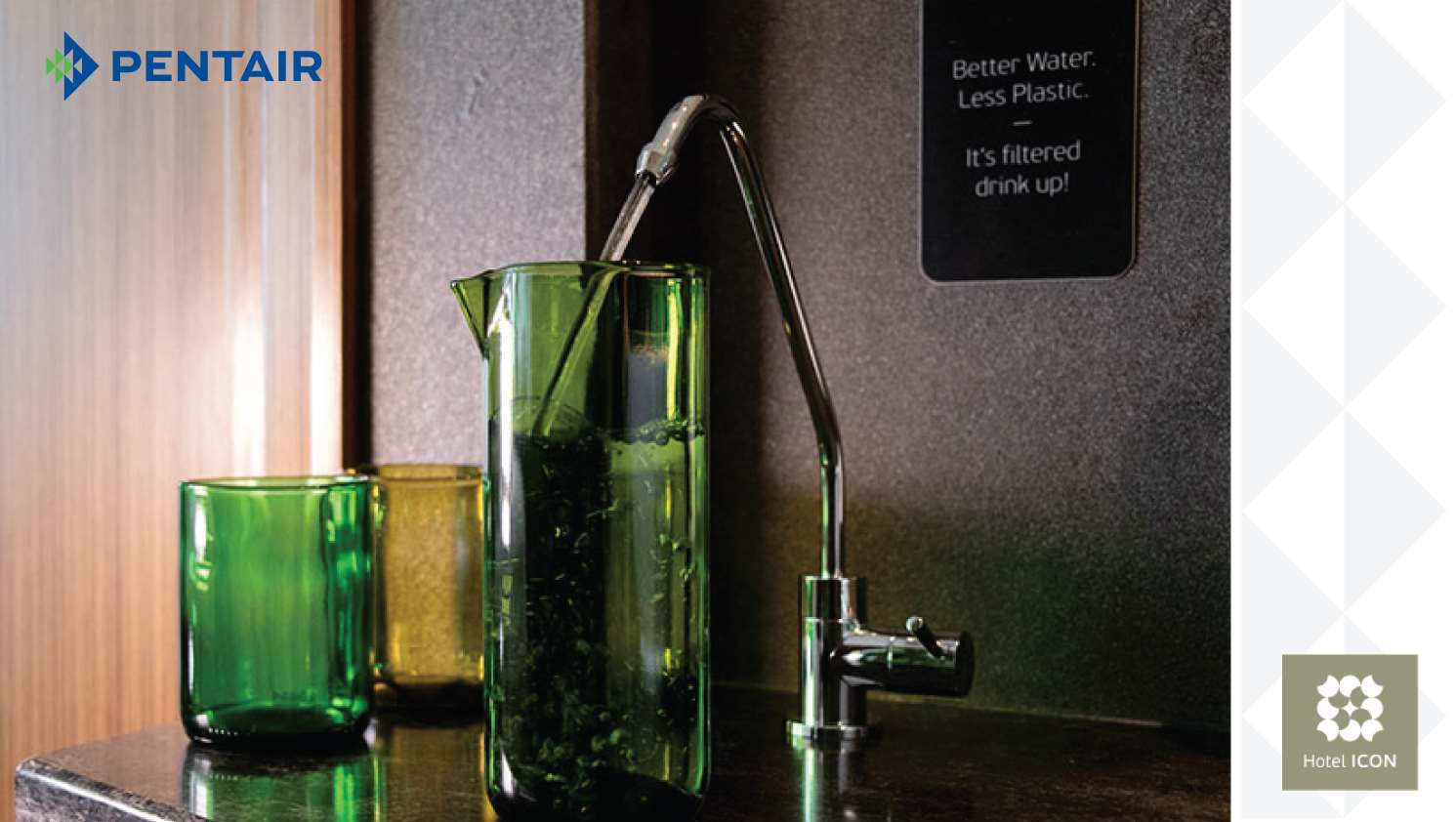
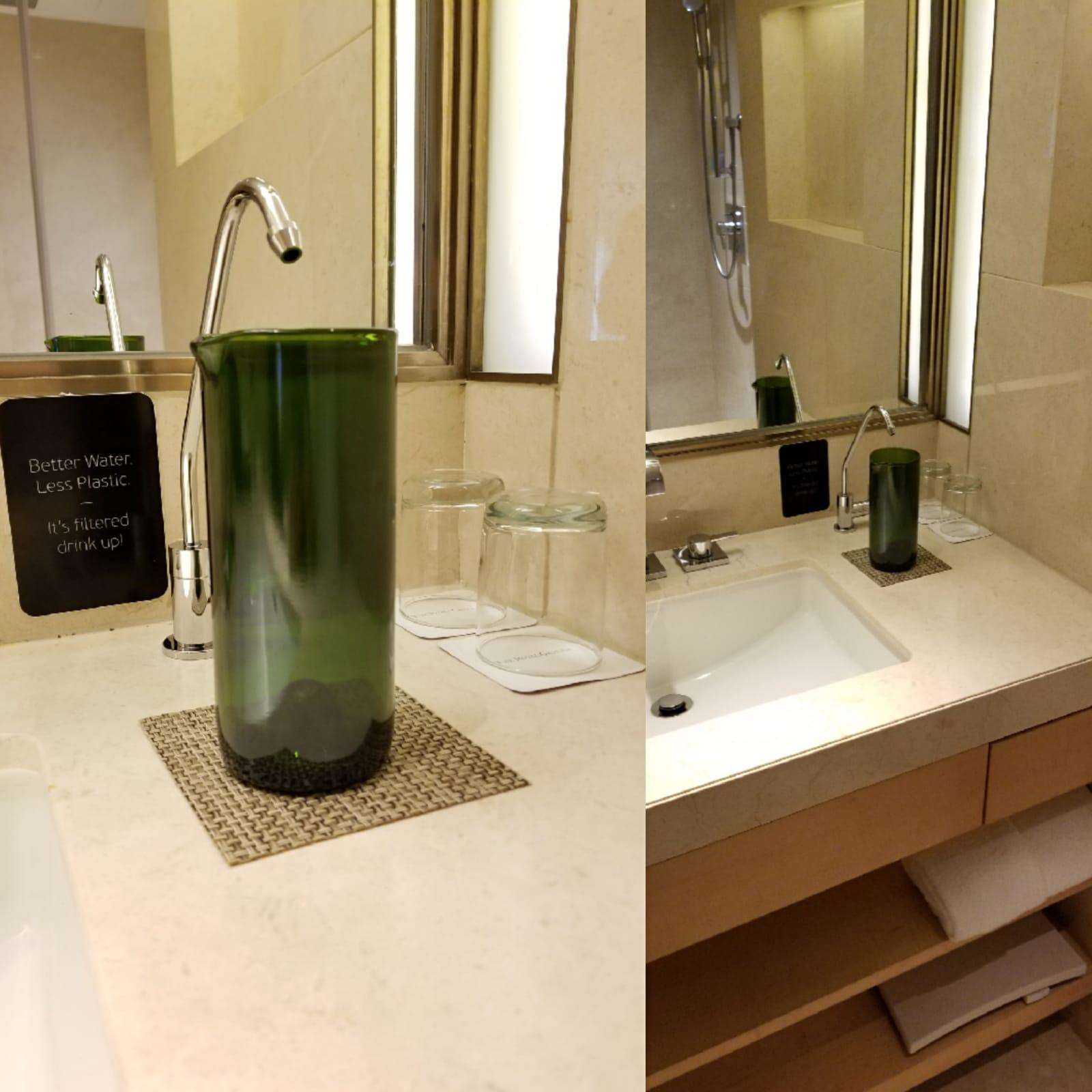
Pentair material supplied to Watermart shows in-room filtration installations and identifies Hard Rock Hotel Desaru Coast, Malaysia as an international reference. It demonstrates an under-sink and vanity-faucet format; it is not a claim that Watermart delivered that project or that the same configuration suits every property.

Hotel and Apartment Drinking-Water FAQs
Does every hotel room need an RO system?
No. Per-room RO is considered when dissolved contaminants need reduction and pressure, drainage, space, and service access are available. If the inlet already meets the dissolved-parameter targets, UF or carbon filtration may be simpler. Water-test results determine which processes should be compared.
When is central treatment preferable to per-outlet filters?
Evaluate central treatment when many outlets need consistent water quality and the property can maintain hygienic storage and distribution. Per-outlet systems are easier to phase, but they increase the number of cartridges, faucets, and sanitation points that must be recorded.
Can filtration guarantee savings over bottled water?
No. Compare the same period and boundary: occupancy, consumption, bottle purchasing and delivery, equipment, power, RO reject, consumables, sanitation, sampling, and technician time. The result depends on each property’s operating conditions.
When can treated water be served to guests or residents?
Only after the system has been commissioned and sanitized, consumables are logged, representative samples are tested, and the results meet applicable Indonesian drinking-water requirements. Equipment selection alone does not prove that water is ready to drink.
Request a Preliminary Study
Send the water-test results, room or unit count, occupancy, current bottle consumption, pressure, installation space, and required water quality to Watermart. We can compare POE, UF, carbon filtration, per-outlet RO, and central RO and estimate consumables and total cost of ownership.